
Chlorinated pools and sea water both strip skin and hair, and most people make it worse by letting the residue dry in place. The twenty minutes after you get out matter more than the hour you spent in the water.
What does chlorine actually do?
It strips sebum and disrupts the lipid barrier, which is why skin feels tight and squeaky after swimming.
It also raises skin pH, since pool water is alkaline, and the acid mantle takes hours to recover.
Chloramines, formed when chlorine reacts with sweat, urine and body oils, are the more irritating compounds. They are responsible for the characteristic pool smell, which means a strongly smelling pool is a poorly maintained one rather than a heavily chlorinated one.
For anyone with eczema, this reliably provokes flares.
What does it do to hair?
Strips natural oils, roughens the cuticle and leaves hair dry, tangled and brittle.
The green tint that affects blonde and lightened hair is not chlorine itself but copper, present in some water supplies and pool treatments, which oxidises and binds to the hair.
Coloured hair fades faster, and lightened hair is most vulnerable because the cuticle is already compromised.
What should you do before swimming?
Wet your hair thoroughly with clean water and apply conditioner or a leave-in before getting in. Saturated hair absorbs considerably less pool water, and the conditioner adds a barrier.
A swimming cap helps if you will wear one, and it is not watertight, so wetting the hair first still matters.
Apply a moisturiser or a barrier product to the skin, particularly for anyone with eczema. An emollient ointment before swimming is standard advice for eczema-prone children.
Shower briefly beforehand, which is both a courtesy and a way of reducing how much pool water your skin takes up.
What should you do afterwards?
Rinse promptly and thoroughly, ideally within a few minutes. Leaving chlorine or salt to dry on the skin is where most of the damage happens.
Use a gentle wash rather than soap, and only where needed.
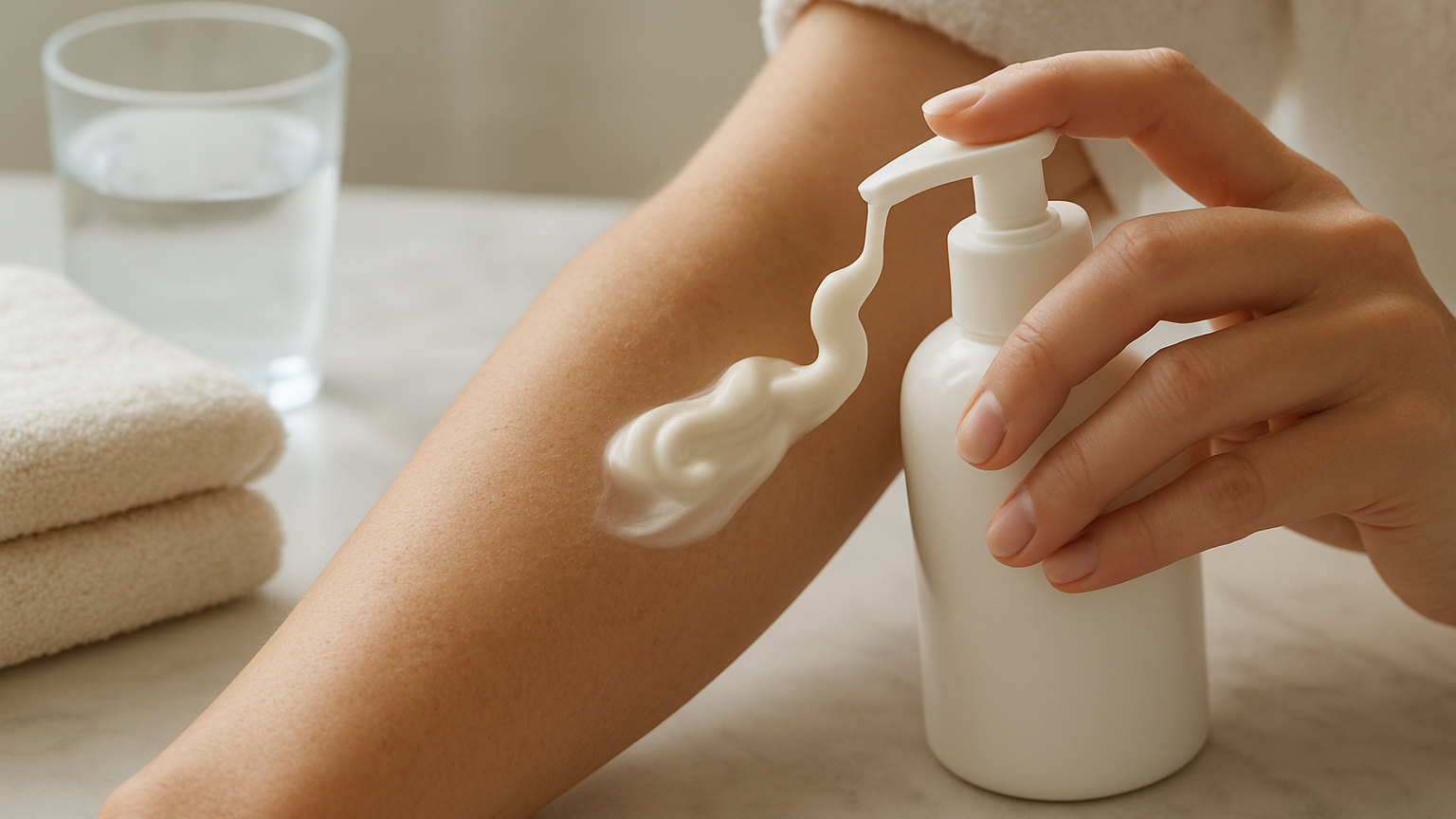
Pat dry and moisturise within three minutes. Generously, since the skin has just lost a good deal of what it had.
Wash hair with a gentle shampoo and follow with a conditioner or mask.
What about sea water?
Salt is drying through osmosis, drawing water out of the skin as it evaporates, and leaves a residue that continues doing so.
It is less irritating than chlorine for most people, and some with psoriasis or acne find it helps.
The combination with sun and wind is the problem rather than the salt alone. Rinse, moisturise and reapply sunscreen, which is the step most often skipped after a swim.
How do you remove build-up?
A chelating shampoo every few weeks for regular swimmers, which binds minerals and removes chlorine and copper deposits that ordinary shampoo leaves behind.
Clarifying shampoos remove product residue rather than minerals, so they address a different problem.
For green tints, a chelating shampoo is the effective treatment. Tomato ketchup and lemon juice circulate as remedies, and the first works marginally through acidity while being messy and the second damages hair.
What if you swim regularly?
The routine matters more than any single session. Pre-wet and condition every time. Rinse and moisturise every time.
A richer moisturiser than you would otherwise use, and a hair mask weekly rather than occasionally.
Consider a swimming cap seriously if you swim several times a week and your hair is coloured or fine.
Competitive and frequent swimmers commonly develop chronic dryness, and it responds to consistent barrier care rather than to reducing swimming.
When is it more than dryness?
Itchy red patches appearing after swimming suggest irritant dermatitis from chloramines, which improves with prompt rinsing and moisturising.
An itchy rash appearing hours later, particularly under swimwear, may be a reaction to something in the fabric or to trapped moisture.
Persistent eczema flares triggered by swimming are worth discussing with a GP, since a stronger emollient or a short course of topical steroid around swimming sessions is a reasonable approach rather than giving up the activity.


