
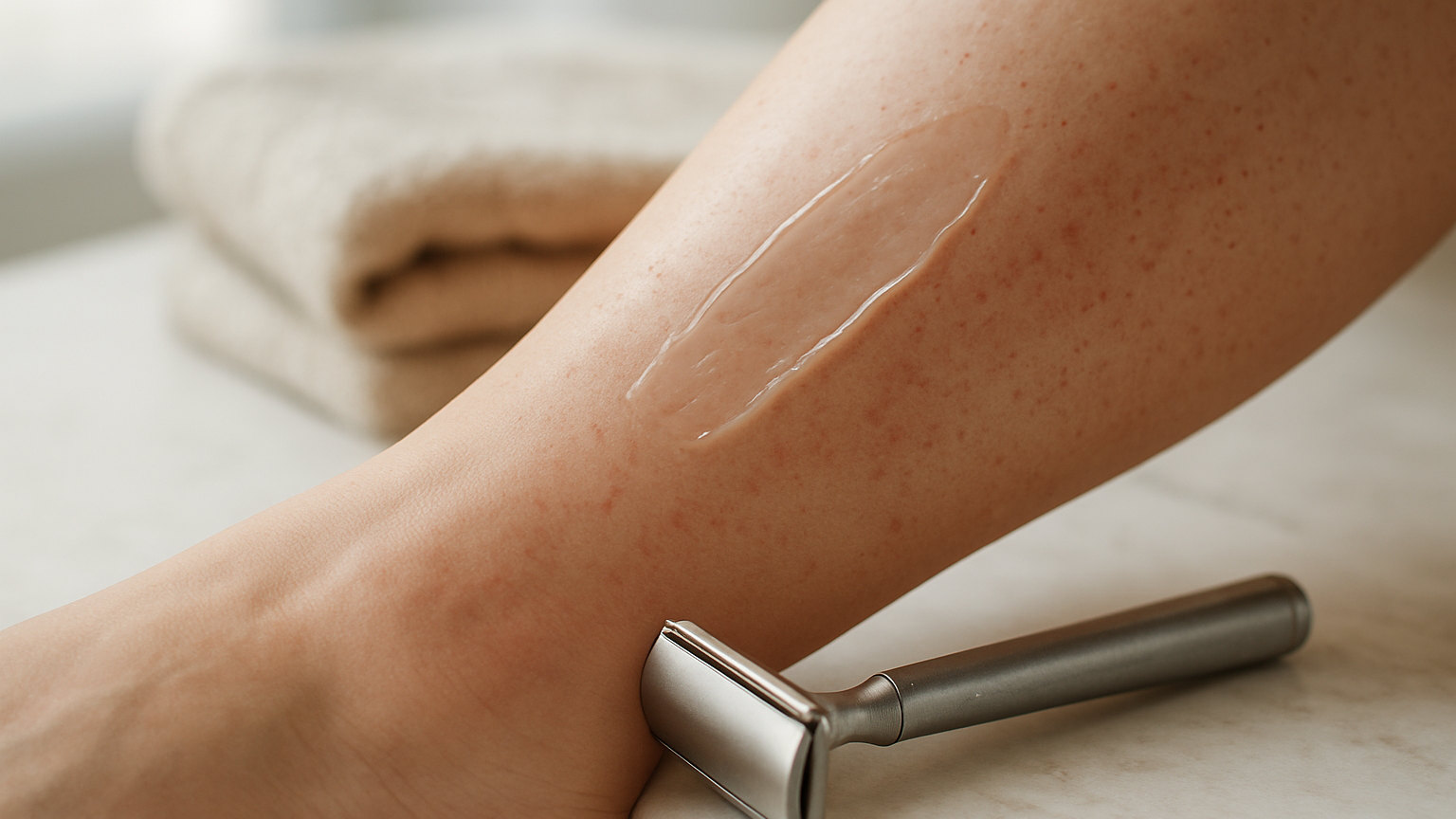
Razor burn is friction damage to the skin surface rather than an infection or an allergy. It appears within minutes to hours of shaving as redness, burning and small bumps, and almost all of it comes from two causes that are straightforward to fix.
What is actually happening?
A razor blade removes hair and, in the process, removes the top layer of skin cells and the lipids holding them together. That is unavoidable to a degree and is why shaving is a mild exfoliation.
When the blade drags rather than cuts, or when there is insufficient lubrication between blade and skin, the friction damages the barrier more deeply. The result is inflammation: redness, heat, stinging and sometimes small raised bumps.
It is a wound rather than a rash, which is why treating it as an allergy or an infection rarely helps.
What causes it most often?
A blunt blade, by a considerable margin. A dull blade does not cut cleanly, so it tugs at the hair and scrapes the skin, requiring more pressure and more passes.
Insufficient lubrication: shaving dry, with soap, or with water alone. Soap is particularly poor, since it strips the skin and provides little glide.
Too much pressure, going over the same area repeatedly, and shaving against the direction of growth on skin that does not tolerate it.
Shaving skin that is already dry, irritated or sunburnt.
How is it different from ingrown hairs?
Timing and appearance. Razor burn appears within minutes to hours, covers the whole shaved area diffusely, and feels like burning.
Ingrown hairs appear days later, as individual bumps each centred on a hair that has curled back into the skin. They itch or feel tender rather than burn, and they can become pustular.
Folliculitis is a third thing: infection of the follicles, producing pustules with a hair at the centre, often several days after shaving.
How do you treat it?
Stop shaving the area until it settles, which is usually two to three days. Continuing to shave over damaged skin is the most reliable way to make it worse.
Cool compresses for the immediate burning. A bland, fragrance-free moisturiser to support barrier repair.
Aloe vera gel is soothing. A very short course of hydrocortisone 1% from a pharmacy can help significant inflammation, and it is not for regular use.
What to avoid: alcohol-based aftershaves, which sting and dry; fragranced products; exfoliating anything; and anything containing witch hazel with a high alcohol content.
How do you prevent it?
Change the blade more often than feels necessary. Most people use a cartridge for two or three times as long as they should.
Shave at the end of a warm shower, when hair is softened and skin is hydrated. Hair absorbs water and becomes considerably easier to cut after two or three minutes.
Use a proper shaving cream, gel or oil, not soap and not water. Let it sit for a minute before starting.
Shave with the direction of growth, using light pressure and short strokes, rinsing the blade frequently.
Does shaving direction matter?
Considerably. Shaving against the grain gives a closer result and cuts the hair below the skin surface, which increases both irritation and the chance of ingrown hairs.
With the grain is gentler and less close. A reasonable compromise for anyone prone to irritation is with the grain first, then across it if a closer result is needed, and never against.
Growth direction varies across the face, neck and legs, and it is worth working out where yours changes rather than assuming it runs one way.
When is it something else?
If the rash spreads beyond the shaved area, itches intensely or appears a day or two later, that suggests contact dermatitis from a product rather than razor burn.
If there are pustules, spreading redness, warmth or pain increasing after a few days, that suggests infection and warrants a pharmacist or GP.
And if irritation happens every single time despite good technique, it is worth considering an electric shaver or another hair removal method entirely.


