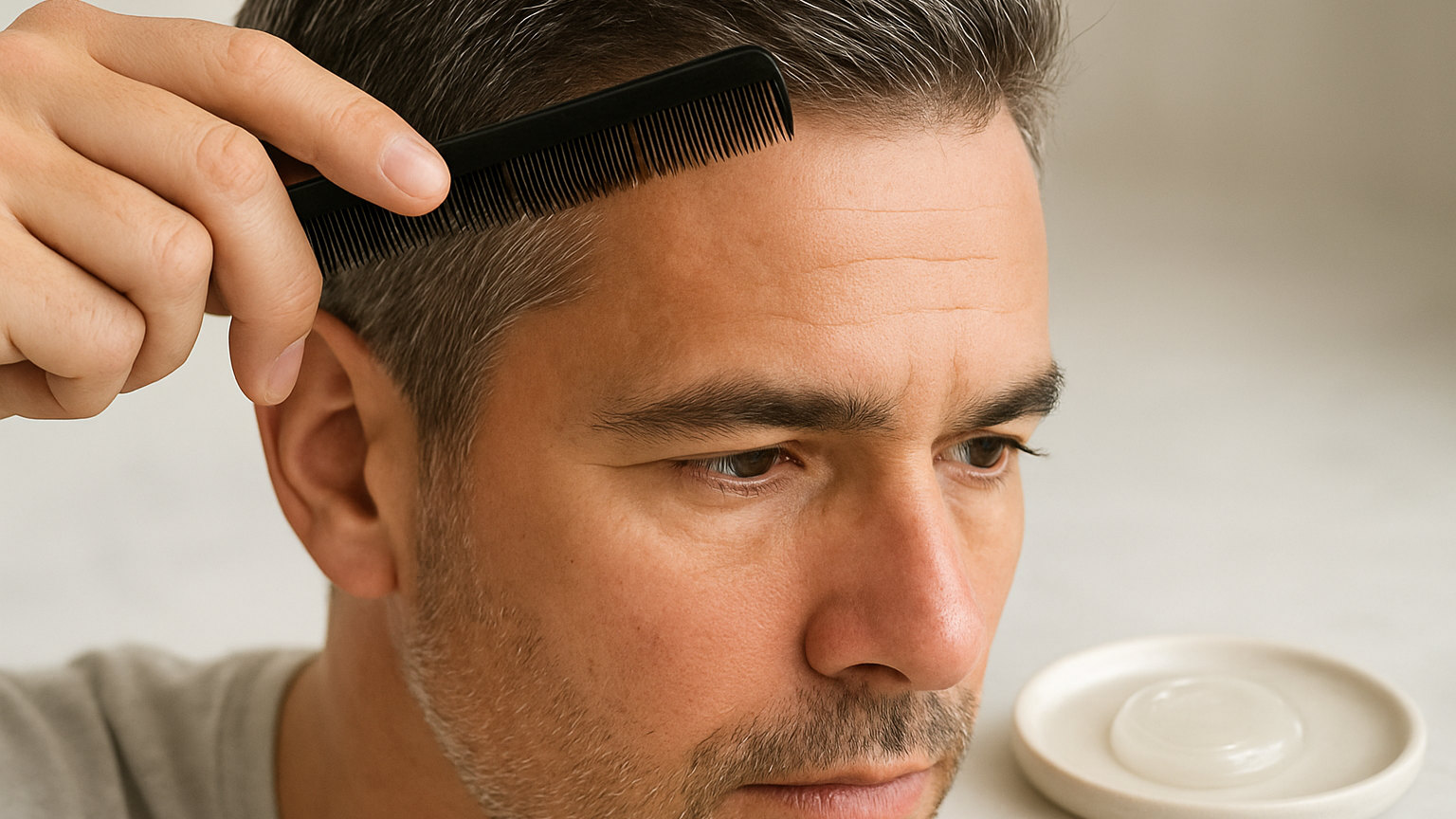
Most people own more hair tools than they use and fewer of the ones that would help. Four cover almost everything, and the expensive purchases are frequently made to fix a problem caused by using the wrong cheap tool.
What are the four?
A wide-tooth comb or detangling brush. A brush for dry hair, either a paddle or a boar bristle. A hairdryer with a nozzle and a temperature control. And one heat styling tool if you use heat at all.
That is a complete kit. Everything beyond it addresses a specific want rather than a general need.
What matters in a hairdryer?
Airflow above everything. A dryer with strong airflow dries faster at a lower temperature, which is the goal, and cheap dryers usually compromise on airflow rather than heat.
A temperature control matters, and a nozzle is essential, since directing air down the shaft rather than across it is most of what separates a smooth blow dry from a frizzy one.
A cool shot setting genuinely does something: it sets the cuticle flat and helps the style hold. An ionic setting reduces static and suits thick hair, and can leave fine hair flat.
Beyond that, price buys weight, noise and motor life rather than results.
Straighteners or a wand?
Whichever you will actually use, and there is little point owning both if one gathers dust.
Straighteners are more versatile than they look, since they can create waves and curls with a turn of the wrist as well as straightening. A wand does one thing well and cannot straighten.
In either case, accurate temperature control and even heat distribution matter more than the plate material or the brand. Cheap tools frequently have hot spots running well above the displayed setting, which is where unexpected damage comes from.
What about hot brushes and multi-stylers?
Hot air brushes combine drying and shaping in one step and suit anyone who finds a round brush and a dryer difficult to coordinate. They apply lower heat than straighteners, which is a genuine advantage.
Multi-stylers with interchangeable heads are convenient and expensive, and they do each job slightly less well than a dedicated tool. Worth it if the convenience means you use them; not worth it as a first purchase.
What is worth having for specific hair types?
A diffuser for curly or wavy hair, which is essential rather than optional and usually costs very little.
A microfibre towel or an old cotton t-shirt for anyone with damaged, curly or long hair, which reduces friction considerably compared with terry towelling.
Rollers, which produce volume and curl with no heat at all and are the most under-used tool available.
A silk or satin pillowcase, which is not a tool and does more for hair overnight than most products do during the day.
What can you skip?
Crimpers, unless you specifically want that texture. Hot rollers, which heated rollers do the same job as with more damage than cold ones.
Scalp massagers marketed for growth, which are pleasant and do very little the fingers cannot. Brushes claiming to straighten without heat.
Anything with a single fixed temperature, which is either too hot for fine hair or too cool for coarse and cannot be adjusted.
When is spending more justified?
When you use something several times a week. A dryer used daily justifies paying for better airflow and motor life; one used twice a month does not.
When your hair is fragile, since accurate temperature control genuinely reduces damage. And when a cheaper version has already failed for a specific reason you can name.
Buying an expensive tool to compensate for technique rarely works, since sectioning properly and drying to eighty per cent first make more difference than any upgrade.
How do you look after them?
Clean the dryer filter regularly, which is the most common cause of a dryer losing power and overheating. Wipe product residue off straightener plates when cool.
Remove hair from brushes after each use and wash them every few weeks. Do not wrap cords tightly around tools, which breaks the wiring at the base and is how most dryers die.