
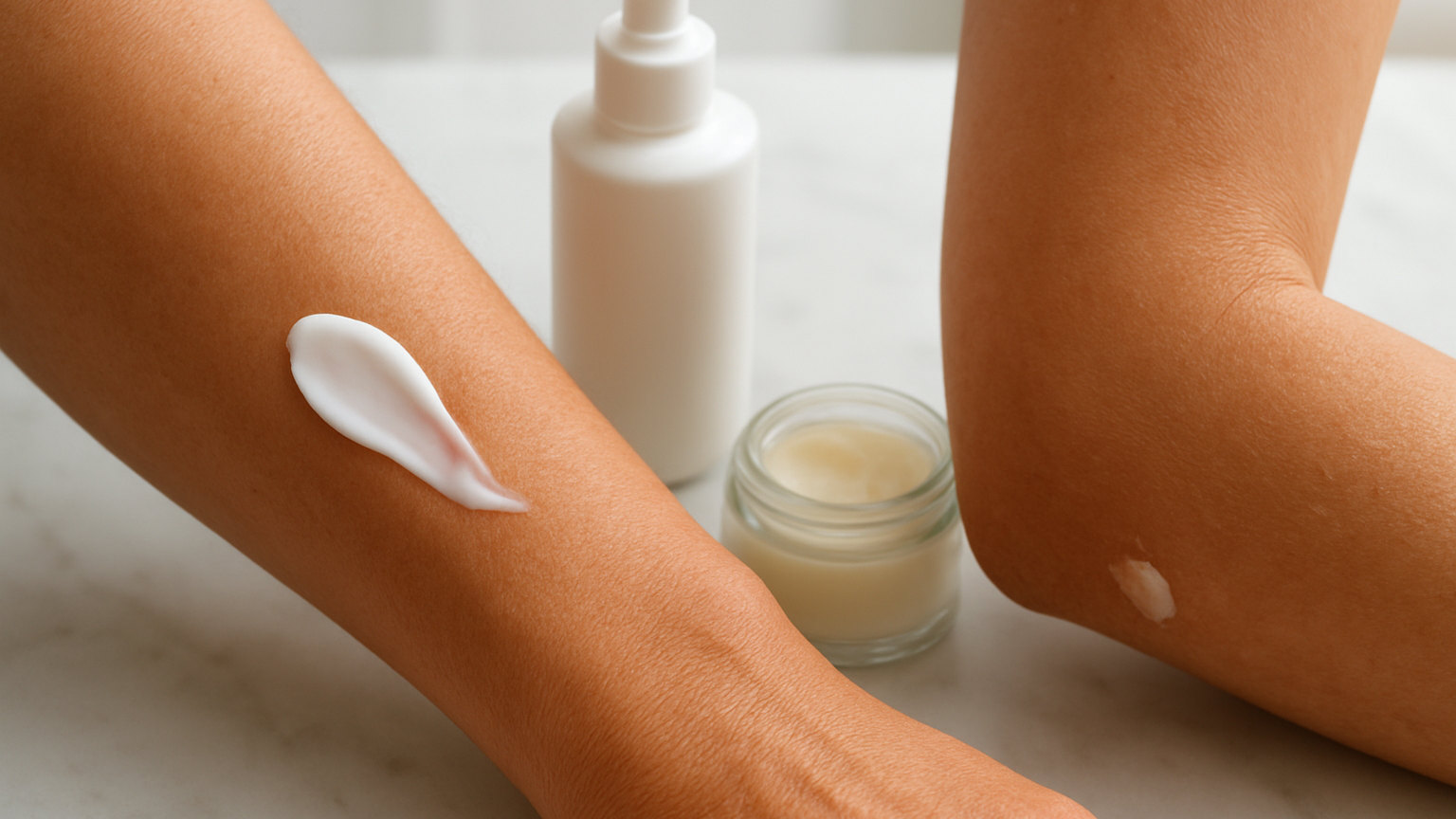
The bathroom shelf tends to accumulate a separate product for every body part. A few areas genuinely need something different. Most do not, and the products sold for them are frequently the same formulation with different packaging.
Which areas genuinely differ?
Feet, particularly heels, where skin is thickest and needs urea at twenty per cent or above to soften. An ordinary body lotion achieves very little there.
Hands, which are washed many times daily and need reapplication rather than a richer formula. The frequency is the difference rather than the ingredients.
The face, which is thinner, more sebaceous and more prone to congestion, so body products are often too heavy and too fragranced.
Intimate areas, where the skin is thin and the environment self-regulating, and where fragranced products cause real problems.
Underarms, where the product needs to work with rather than against deodorant.
Which do not?
Legs, arms, torso and back, which can all use the same moisturiser. There is no meaningful difference in what the skin there needs.
Elbows and knees, which need the same thing feet do rather than a separate product: urea at higher concentration.
The neck and chest, which behave like facial skin and are best served by extending your facial routine downward rather than buying something specific.
Is foot cream different from body lotion?
It should be, and often is not. A genuine foot cream contains urea at ten to twenty-five per cent, or salicylic acid, to soften thickened skin.
Many products sold as foot cream are ordinary moisturisers with a foot on the label. Check the ingredient list for urea and its percentage, which is frequently stated.
A high-urea cream also works on elbows, knees and hands, which is one product covering several areas rather than three.
Is hand cream different from body lotion?
Usually in texture rather than ingredients. Hand creams are often thicker and absorb faster so they do not leave hands slippery.
The functional difference is how often you apply it, not what is in it. Body lotion on hands works perfectly well if you reapply after washing.
Where a hand-specific product earns its place is convenience: a small tube that lives by the sink, which is what makes the habit happen.
What about products for specific concerns?
Those are worth having, since the active ingredient genuinely differs.
A salicylic acid wash for body acne. A lactic acid lotion for keratosis pilaris. Azelaic acid for pigmentation. High-urea cream for thickened skin.
The distinction is between a product defined by an active ingredient, which is doing something specific, and a product defined by a body part, which usually is not.
How many products do you actually need?
For most people: a gentle wash, a body moisturiser, a high-urea cream for feet and rough areas, a hand cream by the sink, and a sunscreen.
Add one active if you have a specific concern. That is six items covering everything from the neck down.
Anyone with several products for different limbs is almost certainly using variations of the same formulation.
How do you check whether two products are the same?
Compare the first five or six ingredients, which are listed in descending order by quantity down to one per cent.
If they match, the products are functionally the same regardless of what the front of the bottle says.
Then compare cost per hundred millilitres, which frequently reverses which one looks better value.
What is worth duplicating?
Location rather than formulation. The same moisturiser in the bathroom, the bedroom and by the kitchen sink gets used considerably more than one bottle in a cupboard.
Two textures across the year, a lighter one for summer and a richer one for winter, which is a more useful duplication than one product per body part.
What about products marketed by gender?
Largely packaging, fragrance and price. The underlying formulations for body washes, moisturisers and deodorants are frequently near-identical, and the same manufacturer often produces both.
Male skin is on average slightly thicker and oilier, which shifts texture preference toward lighter formulations. That is a preference rather than a requirement, and it varies more between individuals than between the aisles.
Comparing by ingredient list and cost per hundred millilitres rather than by which shelf it sits on usually finds the same product cheaper.


