
The bath aisle contains products doing quite different things, some genuinely useful and some working against the outcome they promise. Separating them is straightforward once you know what each is made of.
Which additives genuinely help?
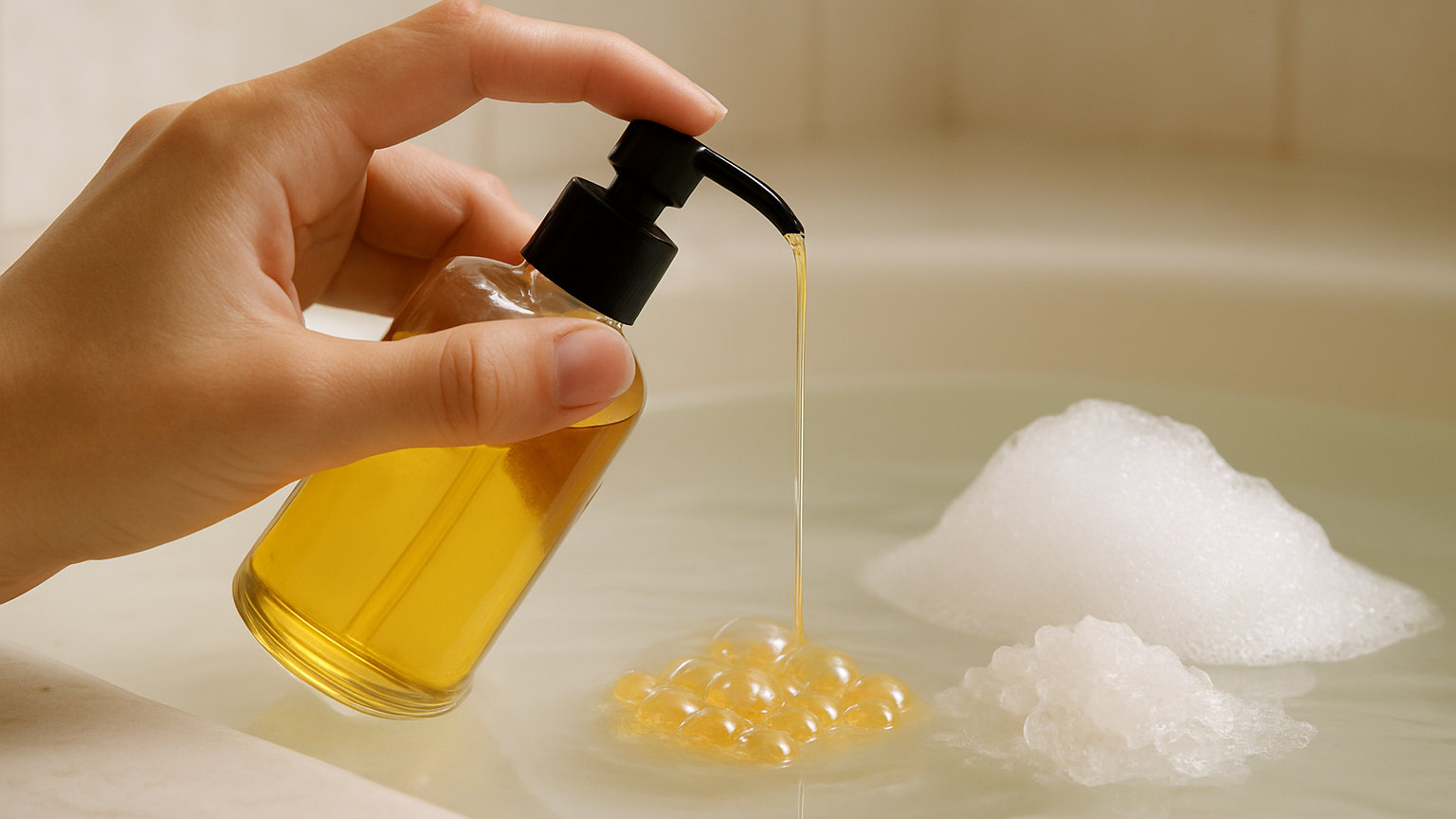
Emollient bath additives and dispersible bath oils, which leave a thin film on the skin that reduces water loss afterwards. Prescribed and recommended for eczema, and available cheaply from pharmacies.
Colloidal oatmeal, which is finely milled oat suspended in water. It soothes itching, has anti-inflammatory properties and reasonable evidence behind it.
Plain oils such as almond, olive or sunflower, which work as substitutes for a proper bath oil, though they float rather than dispersing and make the bath slippery.
What about bubble bath?
Bubble baths are surfactants. Foam is produced by the same class of chemicals that strip lipids from the skin, and prolonged immersion in a foaming solution is genuinely drying.
They are a common cause of dry itchy skin in children and of vulval irritation in girls and women.
This is the clearest example of a bath product working against the thing it is associated with: a long relaxing soak in bubbles leaves skin drier than a plain bath would.
Do Epsom salts do anything?
The claim is that magnesium sulfate is absorbed through the skin and relieves muscle soreness. The evidence for meaningful transdermal magnesium absorption is weak.
What does help muscle soreness is warm water and rest, which happen with or without the salts.
Epsom salts are cheap and harmless, and if a bath with them feels better than one without, that is a reasonable enough basis for using them. The mechanism claimed is not supported.
What about bath bombs?
Mostly bicarbonate of soda, citric acid, fragrance and colour. The fizzing is a chemical reaction and does nothing for skin.
Fragrance and dye are the concerns. Bath bombs are a recognised cause of contact dermatitis and, in women and girls, of vulval and urinary irritation, since the whole area is immersed in fragranced water for a prolonged period.
Anyone prone to thrush, cystitis or vulval irritation is generally advised to avoid them entirely.
For skin that tolerates them, they are a pleasant indulgence rather than skincare.
What about Dead Sea salts and mineral products?
Dead Sea salt baths have some supporting evidence for psoriasis specifically, and balneotherapy is used clinically in some settings.
For ordinary skin, the benefit over a plain warm bath is modest.
Salt baths can be drying at higher concentrations, so moisturising afterwards matters more rather than less.
What about milk, honey and food-based additions?
Milk contains lactic acid, which is a genuine humectant and mild exfoliant, and the concentration in a bath is very low.
Honey is humectant and antibacterial in wound dressings at high concentration, and diluted in a bath it does little.
These are pleasant traditions rather than treatments, and they are harmless.
What should you be careful about?
Slipperiness, which is the main practical hazard. Emollient bath additives and oils make baths genuinely treacherous, and this is a recognised cause of falls.
Guidance for eczema has shifted toward applying emollients directly to the skin rather than adding them to bathwater, partly for this reason and partly because direct application works better.
A non-slip mat is a sensible precaution for anyone using oils, and particularly for children and older adults.
What is the most effective thing you can do?
Moisturise within three minutes of getting out, on damp skin, which does more than any additive.
Keep the water lukewarm and the bath under fifteen minutes.
Use a bath oil or emollient additive if your skin is dry, skip the bubbles, and treat everything else as something you enjoy rather than something that treats.
Are any of them worth avoiding entirely?
Heavily fragranced and dyed products for anyone prone to vulval irritation, thrush or cystitis, where the whole area is immersed for a prolonged period.
Anything with glitter or undissolved particles, which can be irritating and, in the case of glitter, is an environmental problem as well as an awkward one to rinse away.
And anything marketed as detoxifying, since skin does not detoxify and the claim indicates a product sold on a mechanism that does not exist.


