
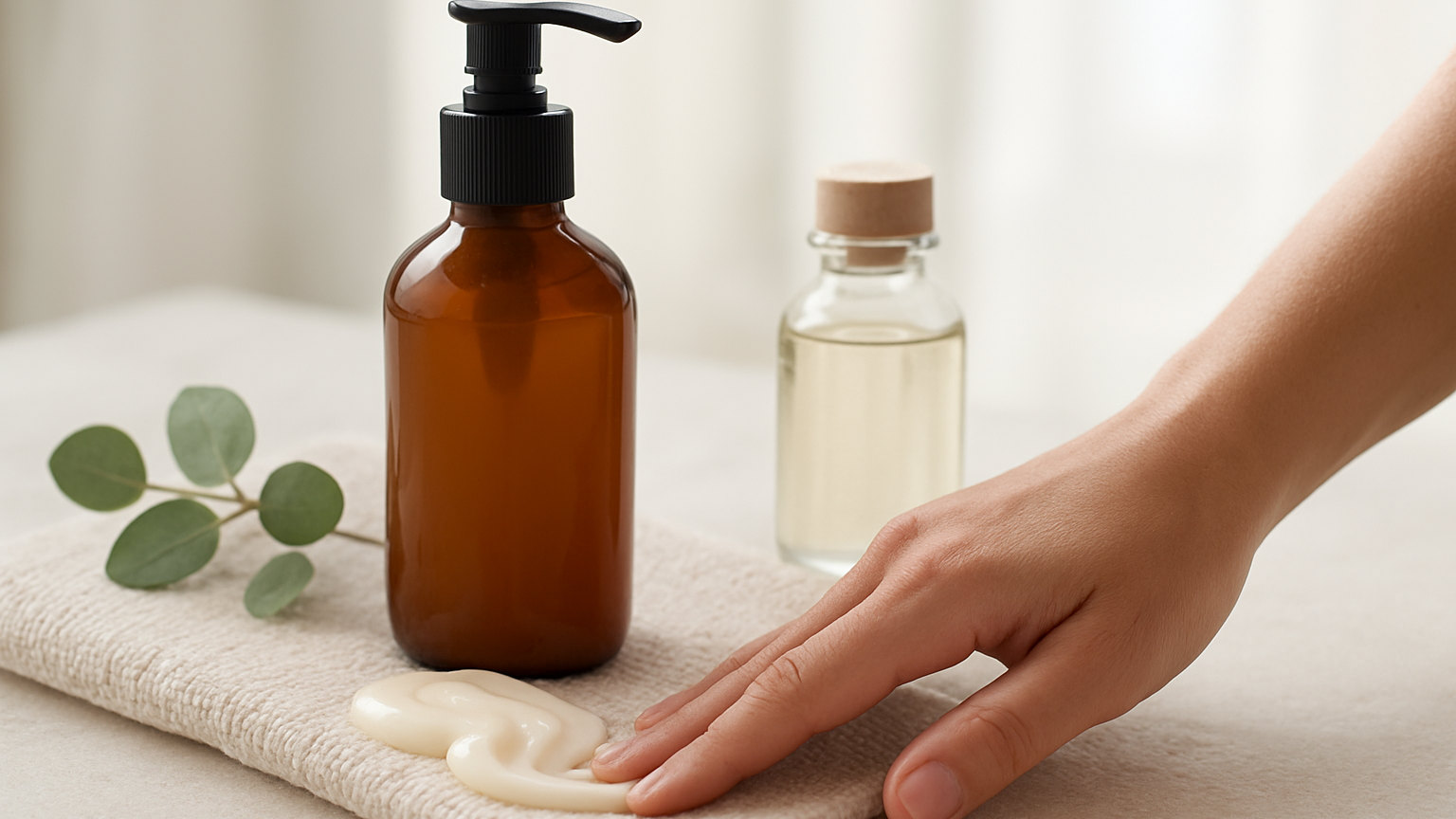
Winter skin problems are usually blamed on the cold outside. The bigger contributors are central heating and the hotter, longer showers people take when it is cold, and both are within your control.
Why is winter so much worse?
Cold air holds very little moisture, and heated indoor air holds even less relative to what it could. Indoor humidity in a centrally heated house frequently drops below twenty per cent, comparable to a desert.
Skin loses water to that dry air continuously.
Moving repeatedly between cold outdoors and heated indoors stresses the barrier further.
And showers get hotter and longer, precisely when the barrier can least afford it.
What should change about the shower itself?
Lower the temperature, which feels counterintuitive on a cold morning and is the single most effective change.
Shorten it to five to ten minutes. Use soap only on underarms, groin and feet.
Switch to a cream wash or emollient wash rather than a foaming gel, which strips more.
Pat dry rather than rubbing, and moisturise within three minutes, which matters more in winter than at any other time.
What should change about moisturiser?
Move up a texture: from lotion to cream, or from cream to ointment on the driest areas.
Look for an occlusive such as petrolatum or dimethicone, which matters considerably more in dry air than in humid air. A humectant alone can draw water out of the skin in very dry conditions if there is nothing to trap it.
Urea at ten per cent or higher for anywhere rough. Twenty per cent or above for heels, elbows and knees.
Apply twice daily rather than once, and make the change in October rather than in January.
Does a humidifier help?
Genuinely, and it addresses the cause rather than the symptom.
Raising bedroom humidity to around forty to fifty per cent reduces overnight water loss noticeably, and most people report an improvement within a week or two.
Clean it regularly, since a poorly maintained humidifier disperses bacteria and mould into the air.
Cheaper measures do something: drying laundry indoors, a bowl of water near a radiator, and lowering the thermostat a degree or two.
Which areas suffer most?
Shins and forearms, which have very few oil glands and are where winter dryness usually appears first.
Hands, which are washed repeatedly and exposed to cold air. Lips, which have no sebaceous glands at all.
Heels, which crack under pressure once the skin loses flexibility.
Elbows and knees, where thickened skin becomes rough and dark.
What about existing conditions?
Eczema flares reliably in winter, and consistent emollient use through the season prevents more flares than treating them does.
Psoriasis typically worsens with less sunlight and drier air.
Seborrhoeic dermatitis flares in cold weather independently of dryness, which is why the same scalp that was comfortable in July flakes in January.
Keratosis pilaris is at its worst in winter for almost everyone.
What about after being outside?
Warm up gradually rather than putting cold hands under hot water or against a radiator, which is what triggers chilblains.
Moisturise after coming in from the cold, since wind strips the surface directly.
Gloves worn before hands get cold rather than after, since rewarming is harder than staying warm.
When should you change back?
When skin starts feeling heavy or congested rather than comfortable, which usually happens sometime in spring.
Following the skin rather than the calendar is the practical approach: tightness after washing means it is time for something richer, and heaviness means it is time for something lighter.
The transitions catch more people out than the extremes do, in both directions.
Does sunscreen still matter?
Yes, and it is the step most people drop entirely between October and March.
Ultraviolet A persists year-round and passes through cloud and glass, so it continues contributing to pigmentation and skin ageing on the face, neck and hands regardless of the temperature.
Snow reflects a substantial proportion of ultraviolet upward, which is why skiing produces more burns than many beach holidays, and it reaches under the chin and nose where a hat provides no shade.


