
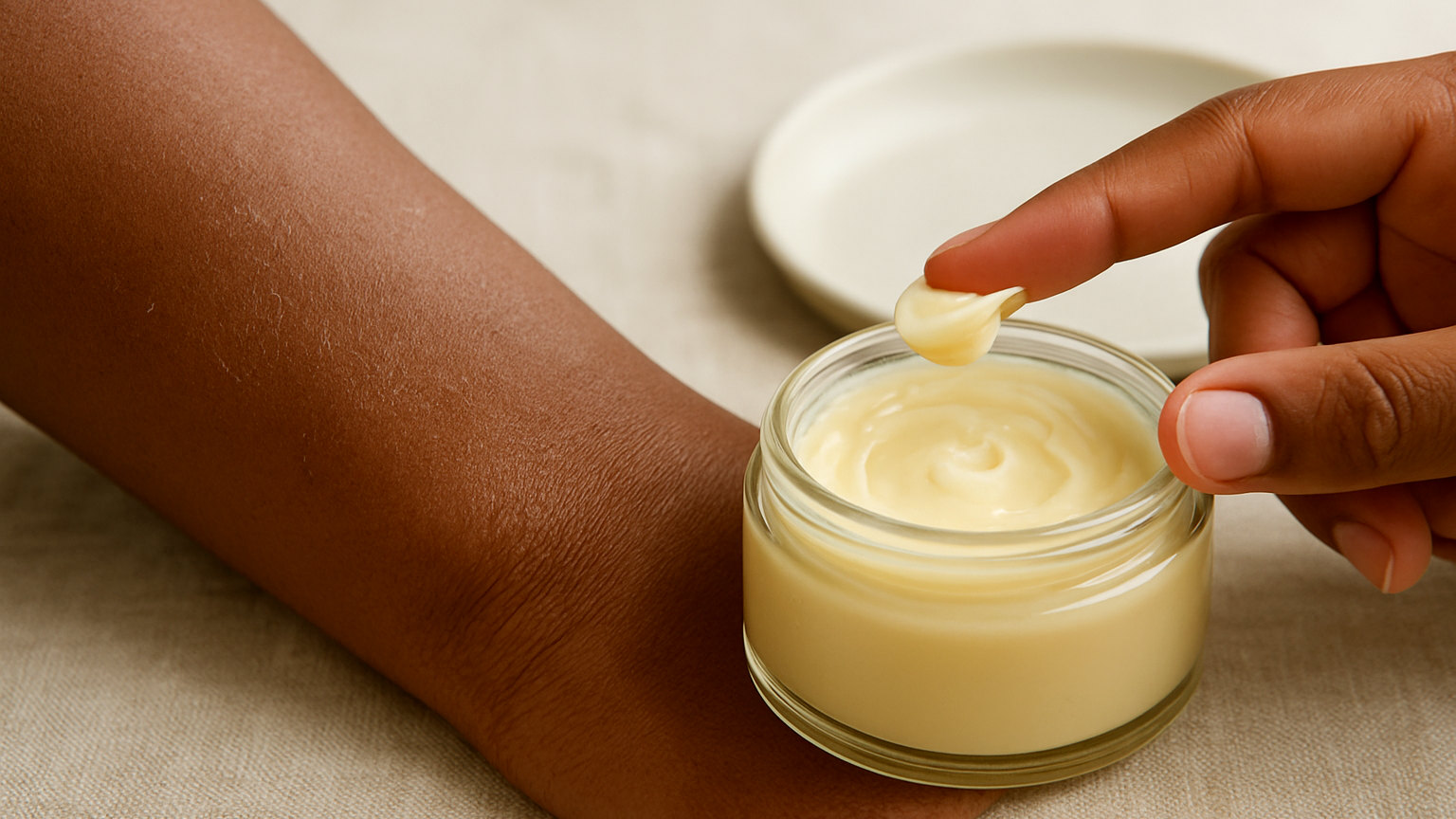
Eczema affects a substantial proportion of children and a meaningful proportion of adults. It is fundamentally a problem with the skin barrier, which is why the treatment that works best is the one people apply least consistently.
What is actually happening?
The skin barrier is defective, often through reduced production of filaggrin, a protein that helps bind skin cells together and retain water.
A leaky barrier loses water and lets irritants and allergens in, which triggers an immune response, which causes inflammation and itching.
Scratching damages the barrier further, which lets more in, which causes more inflammation. That itch-scratch cycle sustains itself long after the original trigger has gone.
This is why treating the barrier matters as much as treating the inflammation.
Where does it appear?
In adults, commonly the insides of the elbows and backs of the knees, the hands, neck, eyelids and around the wrists and ankles.
In infants, more often the face, scalp and outer limbs.
It can affect any area, including the trunk, and it is frequently symmetrical.
Long-standing eczema produces lichenification, where the skin becomes thickened and leathery from repeated scratching.
What triggers a flare?
Soap, detergent and anything foaming, which strip the barrier further.
Heat, sweat and sudden temperature changes. Cold dry air and central heating.
Wool and synthetic fabrics against the skin. Fragranced products, including laundry conditioner.
Stress, which raises cortisol and worsens barrier function. Illness and hormonal changes.
House dust mite, pet dander and pollen for some people. Certain foods in a minority, mostly children.
Hard water, which has been associated with eczema in children in several studies.
How do emollients work, and how much should you use?
They replace the lipids and water the barrier cannot hold, and used consistently they reduce the number of flares rather than just treating them.
The quantities recommended are far higher than most people use. Dermatology guidance suggests several hundred grams a week for whole-body application in adults.
Apply several times daily, including on days with no flare, which is the part most often abandoned.
Apply in the direction of hair growth rather than rubbing in circles, which reduces folliculitis.
Use it as a soap substitute as well, which removes the single biggest daily irritant.
Which emollient should you use?
The greasiest one you will actually use consistently. Ointments work best and feel unpleasant; creams are a reasonable compromise; lotions are the least effective.
Fragrance-free, always.
Many people use an ointment at night and a cream during the day, which is a practical arrangement.
Be aware that paraffin-based emollients are flammable when soaked into fabric, which is a genuine and under-publicised fire risk for anyone smoking or near open flames.
When are steroid creams appropriate?
For active flares, and they are widely under-used through fear rather than over-used.
Applied correctly to inflamed skin for a short course, topical steroids are safe and effective. Under-treating a flare prolongs it and leads to more total steroid use over time.
Potency should match the site and severity: mild for the face, stronger for thicker skin on the body.
The fingertip unit is the standard measure, roughly the amount squeezed from the tip of an adult finger, which covers an area equal to two adult palms.
Apply the steroid and the emollient at different times, leaving twenty to thirty minutes between.
What else is available?
Topical calcineurin inhibitors such as tacrolimus, which avoid steroid effects and suit the face and eyelids.
Antihistamines, which help sleep more than they help itch directly.
Bandaging and wet wraps for severe cases.
Phototherapy, and for severe eczema, immunosuppressants and newer biologic treatments such as dupilumab, available through dermatology.
When should you see a GP?
Eczema not controlled by emollients and over-the-counter hydrocortisone within a couple of weeks.
Signs of infection: weeping, yellow crusting, increasing pain, or a rapid worsening.
Small painful blisters and a rapid deterioration, which can indicate eczema herpeticum, a herpes infection of eczematous skin. It needs same-day treatment.
Eczema affecting sleep, work or daily life, which warrants referral rather than tolerating.


