
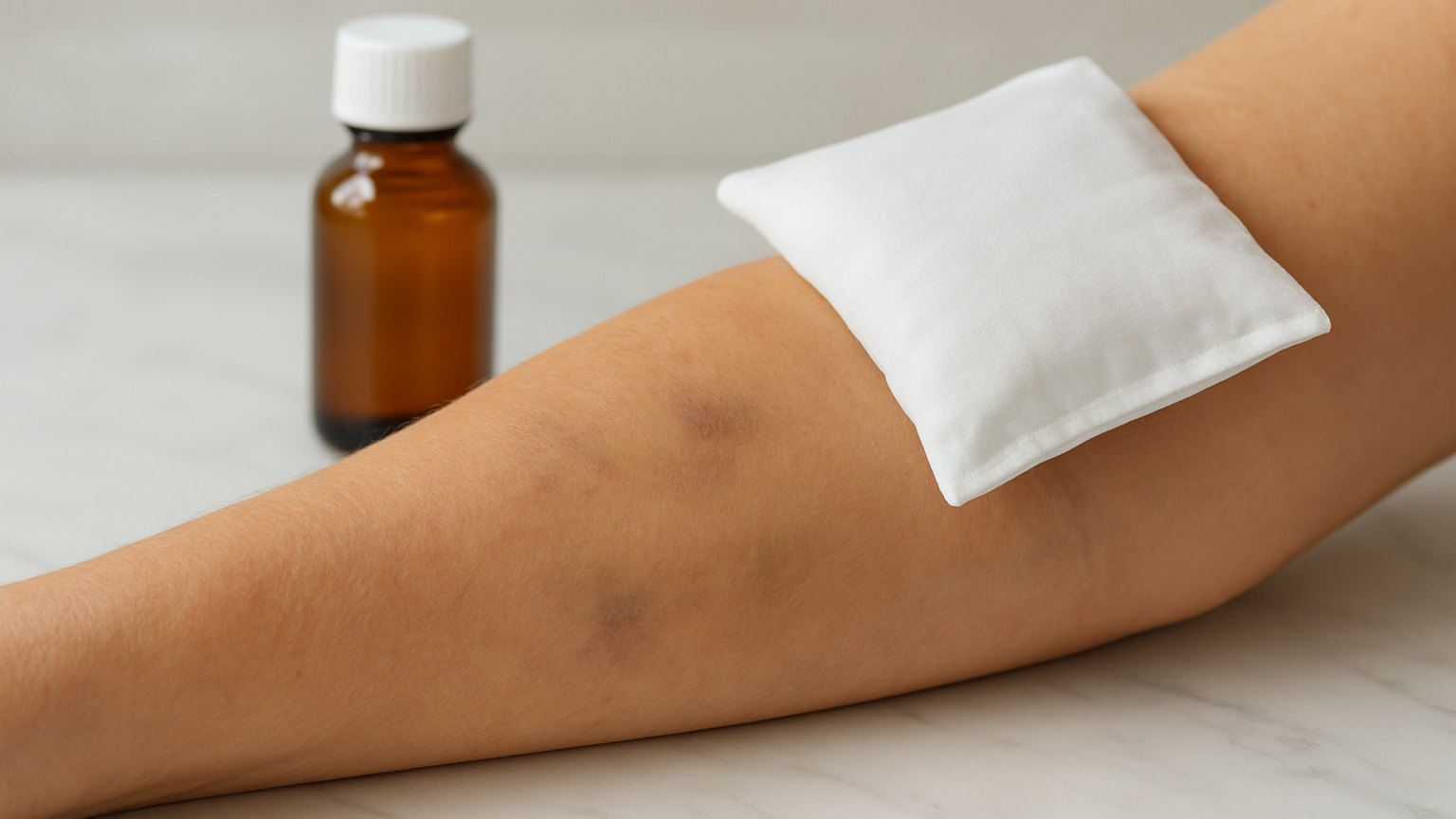
Bruising happens when small blood vessels under the skin break and leak. How easily that happens depends on how fragile the vessels are, how much support the surrounding tissue provides, and how well the blood clots.
Why does it increase with age?
Skin thins and loses collagen, so blood vessels have less structural support around them.
The fat layer beneath the skin reduces, removing cushioning.
Cumulative sun damage weakens the connective tissue further, which is why bruising is worse on sun-exposed areas such as the forearms and backs of the hands.
The result is senile purpura, flat purple patches on the forearms and hands appearing after minimal trauma. It is common, harmless and largely irreversible, though sun protection prevents further weakening.
Which medications cause it?
Anticoagulants such as warfarin, apixaban and rivaroxaban, which are prescribed precisely to reduce clotting.
Antiplatelet drugs including aspirin and clopidogrel.
Corticosteroids, both oral and topical, which thin the skin over time. Long-term inhaled steroids can contribute.
Some antidepressants, particularly SSRIs, which affect platelet function.
Supplements including fish oil, ginkgo, garlic and vitamin E in high doses.
Never stop a prescribed medication over bruising. Raise it with whoever prescribed it.
Do deficiencies cause it?
Vitamin C deficiency does, and severe deficiency is scurvy, which causes bleeding gums, easy bruising and poor wound healing. It is uncommon in the UK and does occur, particularly with very restricted diets or alcohol dependence.
Vitamin K deficiency affects clotting and is uncommon in adults with normal digestion.
Iron deficiency does not directly cause bruising, though it frequently accompanies conditions that do.
Supplementing without a documented deficiency does not reduce bruising, which is worth knowing before buying anything.
Do women bruise more easily?
On average yes, related to differences in skin thickness, subcutaneous fat distribution and hormonal effects on blood vessels.
Bruising can also vary across the menstrual cycle.
It is a difference in tendency rather than a sign of a problem.
How do you reduce it?
Protect the skin: long sleeves, and padding on furniture edges if you knock into things.
Sun protection, which prevents further thinning of the connective tissue.
Moisturise regularly, since well-hydrated skin is more pliable and tears less.
Review supplements with a pharmacist, since several common ones affect clotting.
For an acute bruise, apply a cold compress for the first day to reduce bleeding, then warmth afterwards to help reabsorption. Arnica has limited evidence and is unlikely to do harm.
What is the normal course of a bruise?
Red initially, then blue or purple within a day or two as the blood loses oxygen.
Green after around five to seven days as haemoglobin breaks down, then yellow or brown before fading.
Most resolve within two weeks. Bruises on the legs take longer, since blood pressure in the lower limbs is higher.
A bruise that is still tender and swollen after two weeks, or that forms a firm lump, is worth checking.
What pattern is worth investigating?
Bruising in unusual places: the trunk, back or face, rather than the limbs.
Very large bruises from minor knocks, or bruises with no remembered cause at all.
Bruising alongside bleeding gums, frequent nosebleeds, heavy periods, or blood in urine or stools.
Tiny red or purple pinpoint spots that do not blanch when pressed, called petechiae, which can indicate a low platelet count.
A sudden change in how easily you bruise.
When should you see a GP?
Any of the patterns above, which warrant a blood count and clotting check.
Bruising with unexplained fatigue, weight loss, fever, night sweats or recurrent infections, which needs prompt assessment.
Bruising in a child that is unexplained or in unusual places.
And urgently, for a non-blanching rash with fever or feeling very unwell, which can indicate meningococcal infection and is a medical emergency.
Most easy bruising turns out to be skin thinning or medication, and the checks are simple and worth having when the pattern is unusual.


