
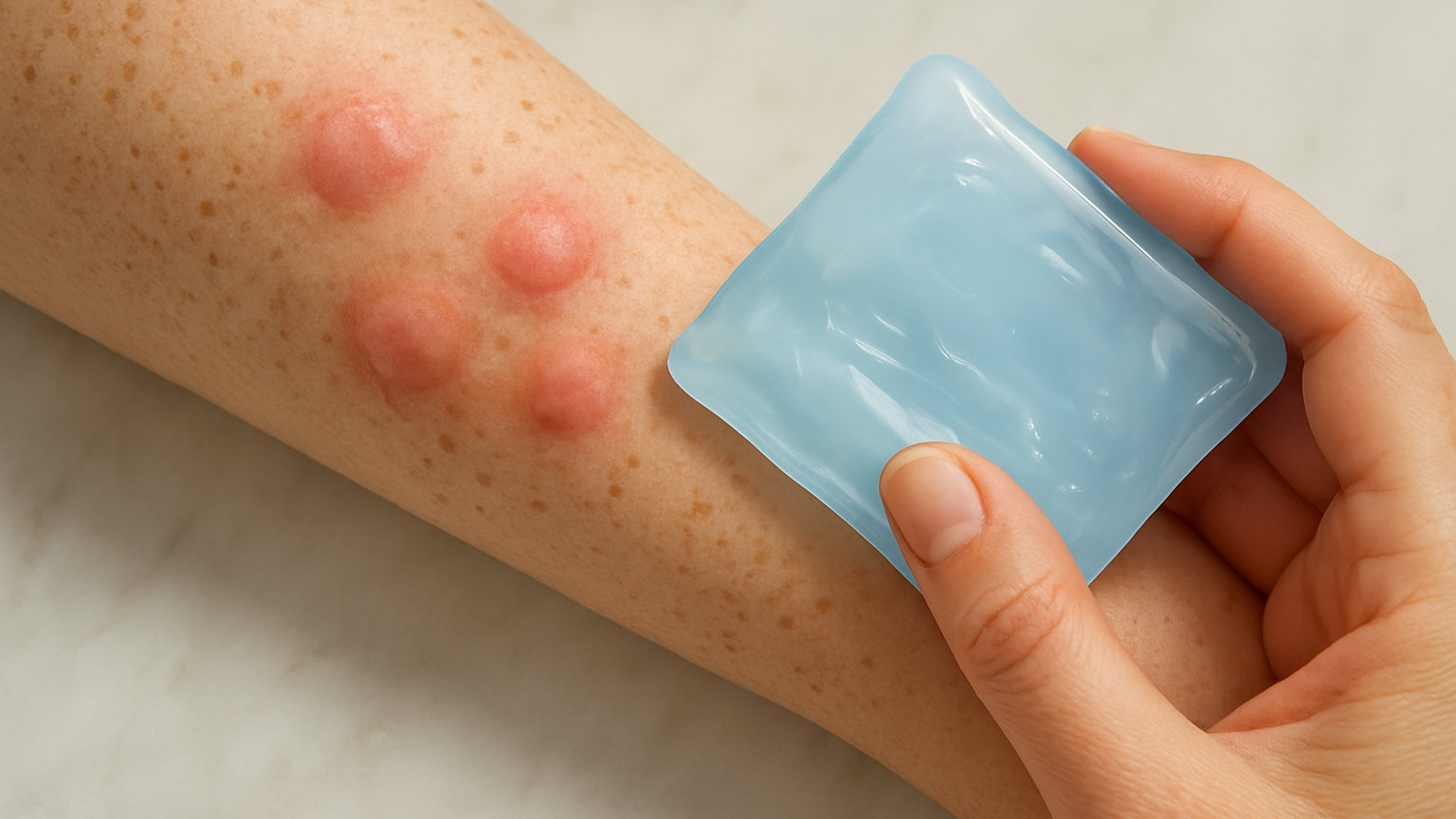
Hives, medically called urticaria, are raised itchy weals that appear rapidly and move around the body. They are common, usually harmless, and occasionally a sign of something needing urgent attention.
What are hives?
Raised pink or pale weals surrounded by redness, varying from a few millimetres to large patches, and intensely itchy.
The defining feature is that individual weals last less than twenty-four hours and then fade completely, while new ones appear elsewhere.
They are caused by mast cells in the skin releasing histamine, which makes small blood vessels leak fluid into the surrounding tissue.
A rash that stays fixed in one place for days is not urticaria and needs a different explanation.
What causes acute hives?
Viral infections, which are the commonest cause overall, particularly in children.
Foods, most often nuts, shellfish, eggs, milk and certain fruits.
Medications, particularly antibiotics, aspirin and non-steroidal anti-inflammatories, and opiates.
Insect stings and bites. Latex.
Physical triggers: pressure, cold, heat, sunlight, water and exercise each produce recognised forms.
Acute urticaria resolves within six weeks and frequently within days.
What is chronic urticaria?
Hives occurring most days for more than six weeks.
In the majority of cases no external cause is found, and a substantial proportion are autoimmune, where the body produces antibodies that activate mast cells directly.
It is not usually an allergy, which surprises people who spend months eliminating foods.
It is treated with regular antihistamines, sometimes at higher than standard doses under medical guidance, and additional treatments including omalizumab for resistant cases.
Most cases resolve eventually, though it can take months to years.
What is angioedema?
Swelling in the deeper layers of skin, which produces puffiness rather than weals, most often around the eyes, lips, hands and feet.
It frequently occurs alongside hives and is usually harmless in that context.
Swelling of the tongue, throat or lips that affects breathing or swallowing is a medical emergency requiring an ambulance.
ACE inhibitors, a common blood pressure medication, can cause angioedema without hives, sometimes years after starting the drug, and that needs medical review.
What helps with itching?
Non-drowsy antihistamines such as cetirizine, loratadine or fexofenadine, taken regularly rather than only when symptoms appear.
A cool shower or a cold compress, since cooling reduces histamine release.
Loose cotton clothing, and keeping the room cool, since heat aggravates it.
An emollient kept in the fridge.
Avoiding alcohol, which dilates blood vessels, and identified triggers where they are known.
Which rashes need urgent attention?
A rash that does not fade when pressed, tested by rolling a clear glass over it, alongside fever, headache, neck stiffness, drowsiness or feeling very unwell. This can indicate meningococcal infection and needs emergency help.
Any rash with swelling of the face, lips, tongue or throat, difficulty breathing, wheeze, dizziness or collapse, which suggests anaphylaxis. Call an ambulance and use an adrenaline auto-injector if one is available.
A widespread rash with fever and blistering or peeling skin, which can indicate a severe drug reaction.
Rapidly spreading redness with pain and fever, which can indicate cellulitis or a deeper infection.
What about rashes that are not hives?
Contact dermatitis, which appears where something touched the skin and stays put.
Heat rash, small itchy bumps from blocked sweat ducts in hot weather.
Pityriasis rosea, which begins with a single larger patch followed by a widespread rash over days and resolves over weeks.
Fungal rashes, which have a defined scaly edge and clear centre.
Viral rashes, which are common in children and usually settle.
Scabies, which is intensely itchy, worse at night, and affects the finger webs and wrists.
When should you see a GP?
Hives lasting more than six weeks, which need assessing as chronic urticaria.
Any rash you cannot explain that persists beyond a week or two.
Hives following a new medication, which should be reported rather than simply stopping if the drug is important.
Any rash with systemic symptoms: fever, joint pain, weight loss or feeling generally unwell.
And urgently, for any of the emergency features described above.


