
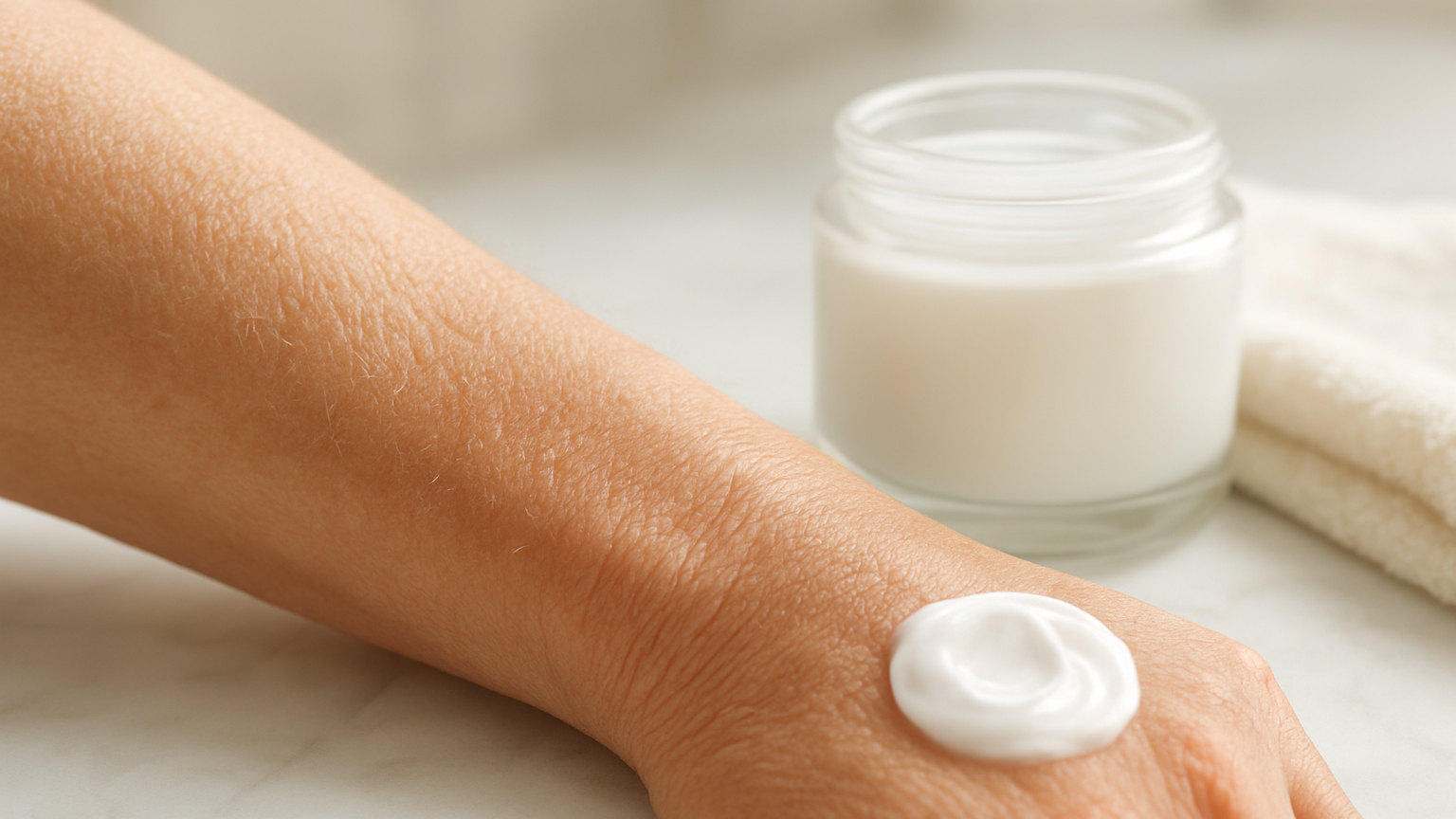
Most dry skin responds to gentler washing and consistent moisturising. Skin that does not is worth thinking about differently, since several causes are medical and a few are straightforward to rule out.
What counts as very dry?
Skin that is persistently rough, flaky and tight regardless of moisturising, and that cracks, splits or fissures, particularly on the shins, hands, heels and elbows.
Itching that disturbs sleep. Visible scaling, sometimes described as fish-scale or crazy-paving in appearance.
Skin that stings when moisturiser is applied, which usually means the barrier is significantly compromised.
What are the everyday causes?
Hot showers and baths, soap and foaming washes, and washing too frequently.
Central heating and low indoor humidity, which drops below twenty per cent in a heated house.
Cold and wind. Hard water, which requires more product and leaves residue.
Age, since sebum production declines from the forties onward and the skin barrier thins.
Over-exfoliating, which is a common self-inflicted cause and produces skin that stings and flakes more the harder you scrub.
What medical causes are worth considering?
An underactive thyroid, which causes dry, coarse skin alongside fatigue, cold intolerance, weight gain and hair thinning. It is common, easily tested and frequently missed.
Diabetes, which causes dryness particularly on the legs and feet.
Kidney disease, which produces dryness and severe itching.
Iron deficiency and other nutritional deficiencies.
Medications: diuretics, statins, retinoids and some others.
Coeliac disease and other malabsorption conditions.
Anyone with severe dryness that does not respond to good skincare over a couple of months should have these considered rather than buying a richer cream.
What is ichthyosis?
A group of inherited conditions causing persistently dry, scaly skin, present from childhood.
Ichthyosis vulgaris is the commonest form, affecting perhaps one in a few hundred people. It produces fine white or grey scaling, usually on the shins and arms, with sparing of the flexures, and it is associated with the same filaggrin gene changes seen in eczema.
It is managed rather than cured, with urea-containing emollients and keratolytics rather than plain moisturisers.
Acquired ichthyosis, appearing in adulthood, is uncommon and warrants investigation, since it can be associated with underlying conditions.
What actually works?
Urea, which is the single most useful ingredient for severe dryness. At ten per cent it hydrates; at twenty to forty per cent it breaks down the bonds holding dead cells together and genuinely reduces scaling.
Lactic acid, which similarly hydrates and exfoliates.
Ointments rather than creams or lotions for the worst areas, applied at night.
Emollient used as a soap substitute, replacing all washing products.
Quantity: several hundred grams a week for whole-body application, applied several times daily.
What should the routine be?
Short lukewarm showers, five minutes or less, with an emollient wash rather than soap.
Pat dry and moisturise within three minutes while the skin is still damp.
A urea cream on the roughest areas: shins, elbows, knees, heels and hands.
An ointment at night on anything cracked, with cotton clothing over it.
A humidifier in the bedroom through winter, which addresses the cause rather than the symptom.
No exfoliating while the skin is compromised, which is counterintuitive when it looks flaky.
What about cracks and fissures?
Deep cracks are open wounds rather than cosmetic problems, particularly on heels and fingertips.
Clean, apply an antiseptic, and seal with a liquid skin product or a plaster, which allows healing.
Use urea around the crack rather than in it. Avoid filing the crack itself.
See a GP for anything bleeding, painful, weeping or showing spreading redness.
When should you see a GP?
Dryness that has not improved after two months of consistent proper care.
Dryness with fatigue, weight change, cold intolerance, hair thinning or constipation, which points toward thyroid disease.
Severe itching, particularly without a rash, which can indicate systemic causes including liver, kidney and thyroid conditions.
Skin that has become dry suddenly rather than gradually.
And any cracking, weeping or infection, which needs treating rather than moisturising.


