
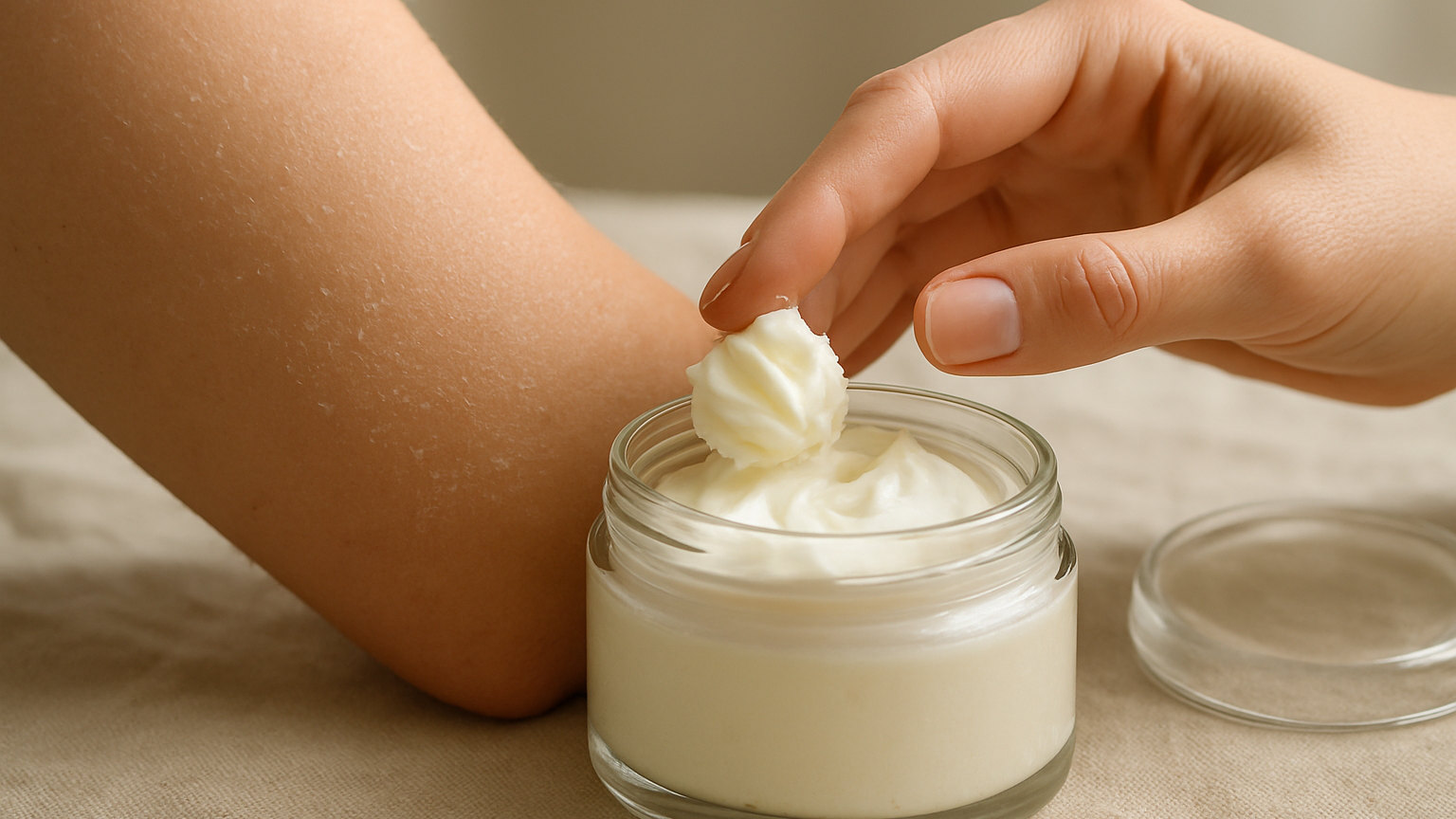
Arms are where roughness gets noticed first, partly because they are visible and partly because the outer upper arm and the forearm have very few oil glands. Several different things produce a rough arm, and they need different responses.
What are the usual causes?
Simple dryness, most commonly. Few sebaceous glands, frequent washing and exposure to weather.
Keratosis pilaris, which produces small rough bumps around follicles, typically on the outer upper arms.
Eczema, which is itchy, red and often affects the inner elbow crease.
Thickened skin over the elbows, which is normal and responds to different treatment from the rest of the arm.
Sun damage on the forearms and backs of hands, which produces roughness, pigmentation and thinning over decades.
How do you tell them apart?
Location and texture do most of the work.
Keratosis pilaris sits on the outer upper arm, feels like sandpaper, and consists of distinct small bumps each around a follicle. Usually not itchy.
Eczema is itchy first and rough second, tends to affect the inner elbow, and produces red inflamed patches rather than discrete bumps.
General dryness is diffuse, fine and flaky rather than bumpy, and improves quickly with moisturiser.
If moisturising for two weeks resolves it, it was dryness.
What treats general dryness?
Moisturiser applied within three minutes of washing, on damp skin, which does more than any change of product.
A cream rather than a lotion. Something containing glycerin or urea alongside an occlusive.
Shorter, cooler showers and soap only where it is needed rather than over the whole arm.
Most arm dryness resolves within a fortnight of doing those three things consistently.
What treats keratosis pilaris?
Chemical exfoliation rather than scrubbing. Urea at ten to twenty per cent, or lactic acid at around twelve per cent, applied daily.
Four to eight weeks for texture. Redness takes longer and only fades if the area is not being repeatedly irritated.
Scrubbing makes it worse by inflaming the follicles, which is the universal instinct and the wrong one.
It returns if treatment stops, so a maintenance routine of a few times a week is realistic.
What about elbows?
The skin there is thicker by design, since it takes constant flexion and pressure, so ordinary moisturiser achieves little.
Urea at twenty per cent or above, applied daily, is considerably more effective. Applied at night with a long-sleeved top over it works better still.
Gentle filing on dry skin can help if it is very thickened, and only lightly.
Dark elbows are usually thickened skin plus friction pigmentation rather than dirt, and they respond to urea and reduced friction rather than to scrubbing, which makes the pigmentation worse.
What about the forearms in later life?
Thin, fragile skin on the forearms that bruises easily and tears with minor knocks is largely cumulative sun damage combined with age-related thinning.
Long-term topical or oral steroid use contributes.
It cannot be reversed, and it can be improved somewhat with consistent moisturising and a retinoid over many months. Sun protection from now prevents further thinning.
Protecting the area physically, with long sleeves, matters practically for anyone whose skin tears easily.
What should you avoid?
Scrubs and exfoliating gloves on bumpy or inflamed skin. Hot water. Fragranced body washes and lotions on anything itchy.
Picking at bumps, which causes marks that outlast the roughness by months.
Assuming a single product will fix everything, since a keratosis pilaris cream does little for eczema and an eczema treatment does little for keratin plugging.
When should you see a GP?
Itching that does not settle, or that disturbs sleep. Any patch that is spreading, weeping, crusting or bleeding.
A single persistent rough scaly patch that does not respond to moisturiser, particularly on a sun-exposed forearm, which can be an actinic keratosis and is worth checking.
Skin that tears or bruises with minimal trauma. And any new mole or changing mark.
Does it change with the seasons?
Noticeably, and in both directions. Cold air and central heating dry the arms out from October onward, and keratosis pilaris is at its worst in winter for almost everyone.
Summer brings the opposite problem: more sun exposure on forearms that are usually covered, and more frequent washing and swimming.
The practical response is a richer cream through winter and a lighter one plus sunscreen through summer, which is the same seasonal adjustment that applies to the face and is almost never made below the neck.


