
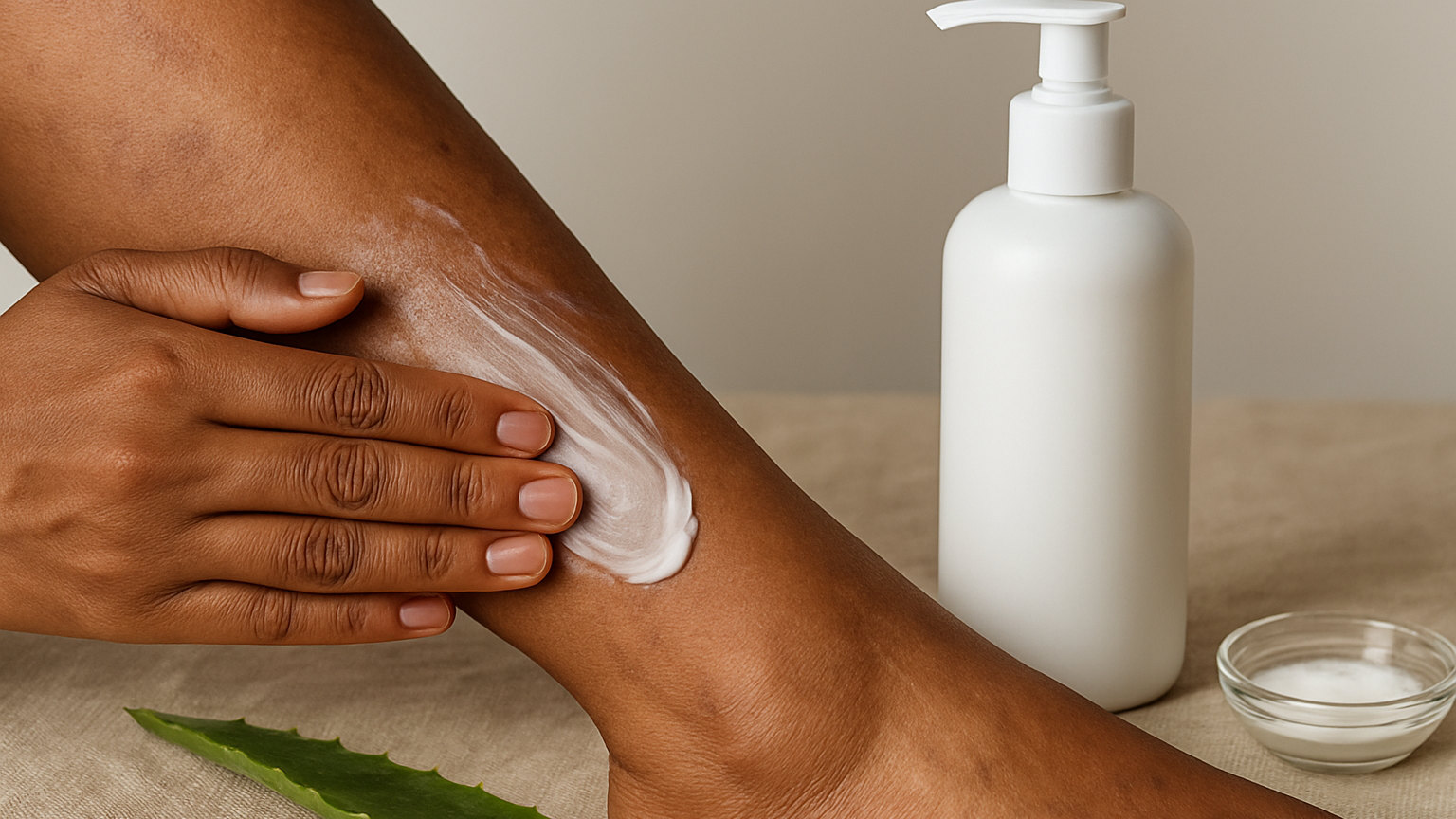
Marks left after spots, ingrown hairs, insect bites or injuries fade considerably more slowly on the body than on the face. The ingredients that work are the same; the timescale is roughly double.
Why are body marks slower?
Body skin is thicker and turns over more slowly than facial skin, and the lower legs slower still.
Lesions on the body, particularly on the back and chest, tend to be deeper, so the inflammation that triggered the pigment went further down.
The area is also more likely to be re-irritated by clothing, shaving or friction before it has had a chance to clear.
Six to twelve months is realistic for body marks against three to six for facial ones.
What kind of mark is it?
Post-inflammatory hyperpigmentation is brown or grey-brown, flat, and follows an episode of inflammation. It fades over months.
Post-inflammatory erythema is pink or red, flat, and is dilated blood vessels rather than pigment. Common in lighter skin, and it fades over months too but responds to different treatments.
A scar is textural: raised, depressed or shiny, and it will not fade in the same way regardless of what you apply.
Pressing on the mark distinguishes the first two. Redness that blanches under pressure is vascular; brown that does not is pigment.
What ingredients work on pigment?
Azelaic acid, which inhibits pigment production, is well tolerated, and is one of the few options safe in pregnancy.
Niacinamide, which blocks the transfer of pigment to surrounding cells.
Vitamin C, which inhibits pigment formation and adds antioxidant protection.
Retinoids, which speed cell turnover and improve texture at the same time.
Alpha hydroxy acids such as glycolic and lactic, which clear pigmented cells from the surface faster.
Tranexamic acid, which has good evidence and is more commonly used for melasma.
What works on redness?
Different things, which is why treating post-inflammatory erythema as pigment produces disappointing results.
Niacinamide and azelaic acid both help. Time helps most.
Vascular laser and intense pulsed light are the effective clinical options, since the target is blood vessels rather than pigment.
What matters most?
Sun protection, without which nothing else will work. Ultraviolet restimulates the melanocytes producing the pigment, so an unprotected mark can persist indefinitely while you treat it.
This is the commonest reason body pigmentation does not improve, since the areas involved are frequently exposed in summer and rarely have sunscreen applied.
Clothing is more reliable than sunscreen for large areas.
What about dark knees, elbows and knuckles?
Usually a combination of thickened skin and friction pigmentation rather than dirt, and scrubbing makes both worse.
Urea at twenty per cent softens the thickening. Azelaic acid or a retinoid addresses the pigment. Reducing friction, such as kneeling less or resting elbows less on hard surfaces, addresses the cause.
It takes several months and the results are partial.
Velvety thickened darkening in body folds, particularly the neck and underarms, is acanthosis nigricans and is associated with insulin resistance, which warrants a GP appointment rather than a cosmetic approach.
What should you avoid?
Scrubbing, which causes friction, inflammation and therefore more pigment.
Skin lightening creams from unregulated sources, which frequently contain mercury or potent steroids and cause lasting harm. These are marketed hardest at exactly the people most affected by pigmentation.
Strong peels on already irritated skin, which can trigger rebound pigmentation, particularly in deeper skin tones.
Picking at anything, which is what created most of these marks in the first place.
How do you track progress?
Photographs every fortnight in the same light, since gradual fading is invisible day to day.
Give it three months before concluding something is not working, and six before changing approach.
If nothing has improved after six months of consistent treatment and sun protection, a GP can offer prescription options including hydroquinone and stronger azelaic acid, or refer for laser assessment.
Can you prevent them forming?
Largely, and it is considerably easier than fading them afterwards. The pigment is produced in response to inflammation, so anything that reduces the inflammation reduces the mark.
Do not pick, squeeze or scratch. Treat spots, bites and ingrown hairs promptly rather than leaving them to become inflamed. Use a sharp blade and shave with the grain.
And protect any healing area from the sun, since ultraviolet during the healing phase is what turns a temporary mark into one lasting a year.


