
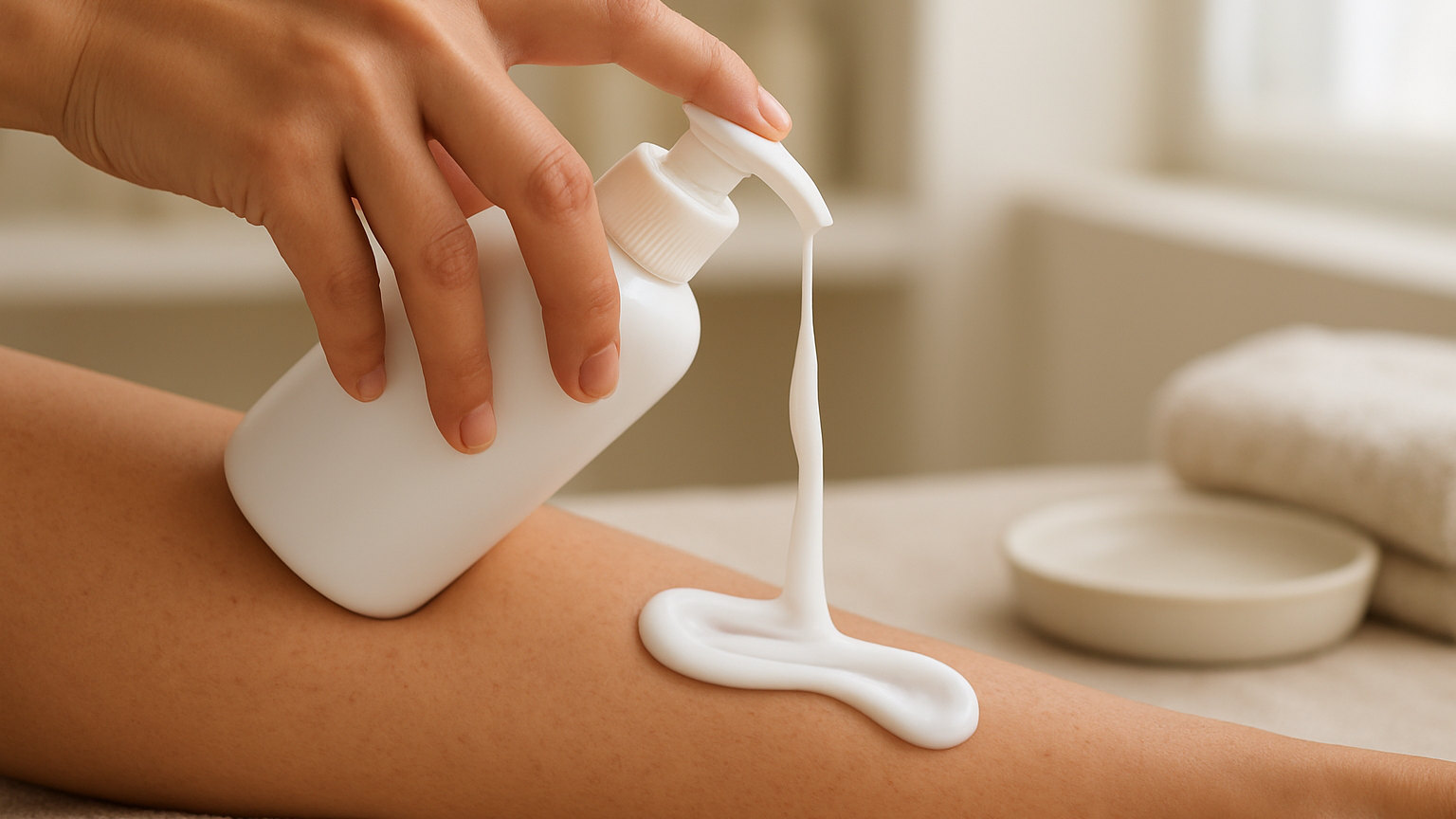
Two things determine whether body moisturising works: when you apply it and how much. Both are more important than which product, and both are usually wrong.
When should you apply it?
Within three minutes of getting out of the shower or bath, on damp skin.
Skin absorbs water during washing, and that water begins evaporating immediately. Moisturiser applied to damp skin traps it; moisturiser applied an hour later has considerably less to work with.
Pat dry rather than rubbing, leaving the skin slightly damp rather than bone dry.
This single change resolves a good proportion of ordinary dry skin without any product change at all.
How much should you use?
Considerably more than most people apply. A full body application takes a substantial amount, and running out quickly is a sign you are using enough rather than a sign of waste.
Dermatology guidance for emollient use in eczema suggests several hundred grams a week for whole-body application, which is far more than a typical bottle allows.
If a bottle of body lotion lasts you six months, you are not using enough for it to do anything.
What is the difference between lotion, cream and ointment?
Water content, essentially. Lotions are mostly water, absorb quickly and are the least effective for genuinely dry skin.
Creams are a balance of oil and water, suit most people, and are the sensible default.
Ointments are largely oil with little or no water, greasy, and by far the most effective for very dry, cracked or eczematous skin. Best used at night.
The rule is that the drier the skin, the greasier the product should be, and comfort is usually what makes people choose wrongly.
Which ingredients matter?
Humectants draw water into the skin: glycerin, urea, lactic acid, hyaluronic acid.
Emollients smooth and soften the surface: shea butter, squalane, plant oils, fatty alcohols.
Occlusives prevent water leaving: petrolatum, dimethicone, lanolin, mineral oil.
An effective body moisturiser contains all three. Many pleasant ones contain only the first two, which is why they feel lovely and stop working within an hour.
What about urea?
The most useful single ingredient for body skin, and it does two different things.
At five to ten per cent it is a humectant and improves barrier function. At twenty per cent and above it breaks down the bonds between dead skin cells, which softens thickened rough skin.
That makes higher concentrations genuinely effective on elbows, knees, heels and keratosis pilaris, where an ordinary moisturiser achieves very little.
It can sting on broken or very inflamed skin, so start lower if the skin is cracked.
Which areas need the most?
Shins and forearms, which have very few oil glands and are where dryness usually appears first.
Elbows, knees and heels, which need something with urea rather than a standard lotion.
Hands, which are washed repeatedly and need reapplication rather than a single morning application.
The back, which is neglected because it is hard to reach. A long-handled lotion applicator solves it.
Does fragrance matter?
For anyone with dry, itchy, eczema-prone or reactive skin, yes. Fragrance is the commonest cause of contact allergy in cosmetics, and it is being applied to a large surface area of compromised skin.
Fragrance-free rather than unscented, since unscented can mean a masking fragrance was added.
For skin that tolerates it, fragrance is a preference and worth having if it makes you apply the product consistently.
How often?
Once daily after washing for most people, twice in winter or for genuinely dry skin.
Anyone with eczema should apply emollient several times daily, including on days with no flare, since consistent use is what prevents flares rather than treating them.
Keeping a bottle where you get dressed rather than in a cupboard is the difference between a habit and an intention.
Does anything else help dry skin?
Reducing what dries it in the first place, which is often more effective than adding product.
Shorter, cooler showers. Soap only on underarms, groin and feet rather than the whole body. A shower filter in a hard water area, which helps some people noticeably.
A humidifier in a heated bedroom through winter, which addresses the cause rather than the symptom. Even lowering the thermostat a degree or two makes a measurable difference to indoor humidity.


