
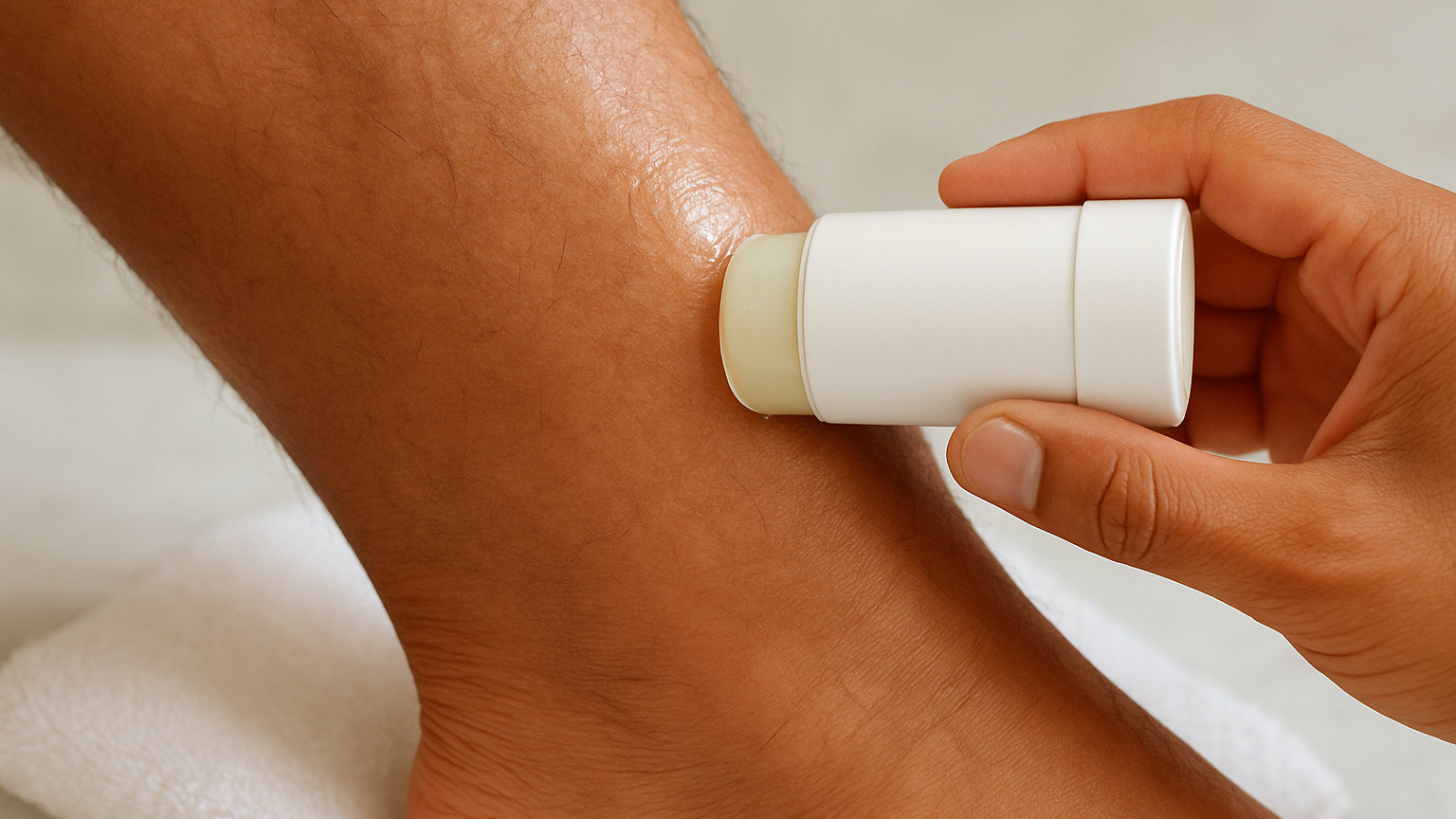
Chafing is friction damage to the skin surface, made considerably worse by moisture and heat. It affects anyone who moves, and the interventions that work all happen before it starts rather than after.
What causes it?
Repeated rubbing, either of skin against skin or of fabric against skin.
Moisture from sweat is the main aggravating factor. Damp skin has a higher coefficient of friction than dry skin and is softer, so it abrades more readily.
Salt left behind as sweat evaporates adds an abrasive element, which is why chafing often worsens toward the end of long exercise rather than at the start.
Heat, tight or rough seams, wet clothing and prolonged activity all contribute.
Where does it happen?
Inner thighs, which is the most common site and affects people of every size.
Underarms and the bra line. The groin. Under the breasts, in skin folds, and around the waistband.
Nipples, which affects runners particularly and is caused by fabric rather than skin contact. It can bleed through a shirt, which is startling the first time.
Feet, where the same mechanism produces blisters.
How do you prevent it?
A barrier product applied before, which is the single most effective measure. Anti-chafing balms, petroleum jelly, or a silicone-based sports balm.
Balms in stick form last longer than petroleum jelly for prolonged exercise, which sweats off within an hour or two.
Antiperspirant applied to the area, which reduces the moisture that makes friction worse. This works well for inner thighs and underarms.
Powders containing cornstarch or talc, which absorb moisture. Less effective once genuinely wet.
What should you wear?
Close-fitting technical fabrics that wick moisture, rather than cotton, which absorbs and holds it.
Seamless or flat-seamed garments. Cycling shorts or thigh bands under a skirt or dress, which is the most reliable solution for inner thigh chafing.
For nipple chafing, a well-fitting technical top, or plasters or specific nipple covers for long distances.
Nothing loose enough to move against the skin repeatedly, and nothing tight enough to dig in.
How do you treat it once it has happened?
Clean gently with water and pat dry rather than rubbing. Avoid soap on raw skin.
Apply a bland barrier such as petroleum jelly, or a zinc oxide cream, which protects while it heals.
Stop the activity causing it until it has healed, which is the part people resist. Continuing turns superficial chafing into an open wound.
Keep it dry and exposed to air where practical. Loose clothing.
Most cases heal within a few days.
What if it keeps happening in a skin fold?
Persistent redness and soreness in a fold is intertrigo, which is inflammation from moisture and friction, frequently complicated by yeast or bacterial overgrowth.
It looks like a red, sometimes shiny patch in the fold, occasionally with satellite spots at the edges, which suggests candida.
Treatment is keeping the area dry, a barrier cream, and an antifungal cream if yeast is involved. A GP can confirm and prescribe a combined preparation.
Absorbent material in the fold, weight management where relevant, and breathable clothing all reduce recurrence.
When does it need medical attention?
Spreading redness, warmth, swelling or pus, which suggests bacterial infection.
Skin that is broken and not healing within a week. Significant pain.
Anyone with diabetes, who should have any non-healing skin break assessed, particularly on the feet.
And recurrent intertrigo that does not settle with basic measures, since a persistent fungal or bacterial component usually needs treating properly.
Is it about weight?
Not particularly, which is worth stating since the assumption causes a good deal of unnecessary embarrassment.
Inner thigh chafing affects people across the whole weight range, including athletes and very slim people, because it depends on gait, thigh shape, clothing and sweat rather than size alone.
Skin fold intertrigo is more associated with weight, and it is a mechanical and moisture problem rather than a hygiene one.
Does it leave marks?
Frequently, and they last longer than the chafing did. Repeated friction produces post-inflammatory pigmentation, which is why long-standing inner thigh chafing often leaves a darker patch.
Deeper skin tones are more affected, since melanocytes there respond more strongly to inflammation.
Preventing further friction is the main treatment, alongside azelaic acid or niacinamide and time. Scrubbing the area makes it worse by adding the friction that caused it.


