
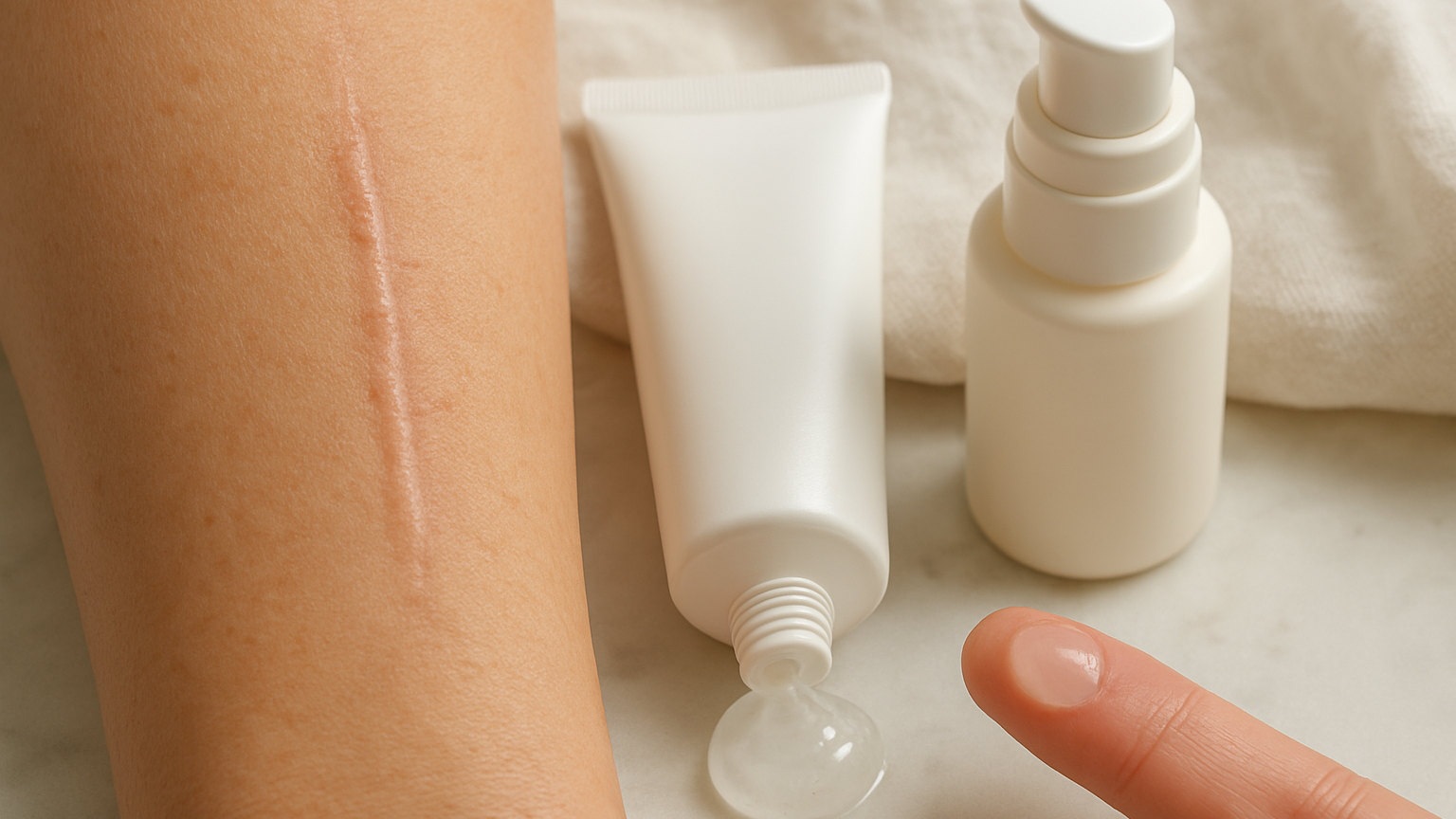
Scars can be improved but not erased. What determines the outcome most is what happens in the first six to twelve months, and the interventions with the best evidence are cheaper and simpler than most of what is sold.
How do scars form?
When a wound extends into the dermis, the body repairs it with collagen laid down quickly and in a disorganised pattern rather than the neat basketweave of normal skin.
That tissue is structurally different: less elastic, without hair follicles or sweat glands, and often a different colour and texture.
Remodelling continues for twelve to eighteen months, during which the scar gradually flattens and pales. That window is when treatment can influence the result.
What are the types?
Normal or fine-line scars, which flatten and pale over a year or two.
Hypertrophic scars, which are raised, red and confined to the boundaries of the original wound. They often improve over years.
Keloid scars, which grow beyond the original wound edges, continue expanding and do not regress. They are more common in deeper skin tones and on the chest, shoulders, upper back and earlobes.
Atrophic scars, which are depressed below the surface, as after acne or chickenpox.
Contracture scars, from burns, which tighten and can restrict movement.
What has the best evidence?
Silicone, in gel or sheet form, which is the most consistently supported topical treatment and is recommended in clinical guidelines.
It works by hydrating and occluding the scar, which appears to signal the tissue to reduce collagen production. Applied for twelve to twenty-four hours a day, for at least two to three months, starting once the wound has fully closed.
Sheets and gels are comparably effective, and gels are easier on awkward areas and under clothing.
Sun protection is the second. Ultraviolet on a healing scar causes lasting darkening, and a scar protected for its first year looks considerably better than one that was not. Sunscreen or clothing, consistently, for at least twelve months.
Does massage help?
Modestly, with reasonable supporting evidence for improving pliability and reducing itching.
Once the wound is fully closed, firm circular massage for five to ten minutes twice daily, using a plain moisturiser. It helps most with tightness and raised texture.
It is not a substitute for silicone and works well alongside it.
What about vitamin E and other remedies?
Vitamin E applied topically has been studied repeatedly and does not improve scar appearance. It causes contact dermatitis in a proportion of people, which can make things worse.
Onion extract gels have mixed and generally weak evidence. Aloe vera, cocoa butter and coconut oil moisturise without affecting the scar tissue.
Lemon juice and other lightening remedies risk irritation and pigmentation.
What can a doctor do?
Steroid injections for hypertrophic and keloid scars, which flatten them and are the standard treatment. Usually a course of several.
Pressure therapy and silicone under pressure for keloids. Cryotherapy for smaller keloids.
Laser treatment, both vascular lasers for redness and fractional lasers for texture.
Surgical revision, which is used selectively and carries a risk of a worse scar, particularly with keloids, so it is usually combined with other treatment.
How do you tell a keloid from a hypertrophic scar?
Boundaries. A hypertrophic scar stays within the footprint of the original injury; a keloid extends beyond it into normal skin.
Keloids also continue growing over months to years, may itch or feel tender, and do not flatten on their own.
Anyone with a history of keloids should mention it before any procedure that breaks the skin, including piercings, cosmetic tattooing and surgery, since prevention is considerably easier than treatment.
What should you do with a new scar?
Let the wound close fully first, following whatever aftercare you were given.
Then start silicone gel or sheeting and continue for at least three months. Protect it from the sun for a year. Massage once it is fully healed. Moisturise.
And be patient: a scar at three months looks considerably worse than the same scar at eighteen, and a great deal of money is spent on treatments during a period when it would have improved anyway.


