
Generalised itching is usually dry skin, and the treatment for that is straightforward. A meaningful minority of cases are something else, and itching without a rash is the pattern worth taking seriously.
Why does dry skin itch?
Because a compromised barrier allows irritants in and lets nerve endings in the upper skin become more easily stimulated.
Dry skin also produces microscopic cracks, and inflammatory mediators released around them stimulate itch receptors directly.
It is worse at night, partly because there is less distraction and partly because skin temperature rises in bed, and warmth intensifies itch.
What makes it worse?
Hot showers and baths, which strip lipids and provide temporary relief followed by considerably worse itching as the skin dries.
Soap and foaming washes used over the whole body. Central heating and low humidity. Wool and rough fabrics against the skin.
Scratching, which damages the barrier further and creates an itch-scratch cycle that sustains itself long after the original cause has gone.
Alcohol, spicy food and stress all lower the itch threshold.
What is the treatment for dry-skin itching?
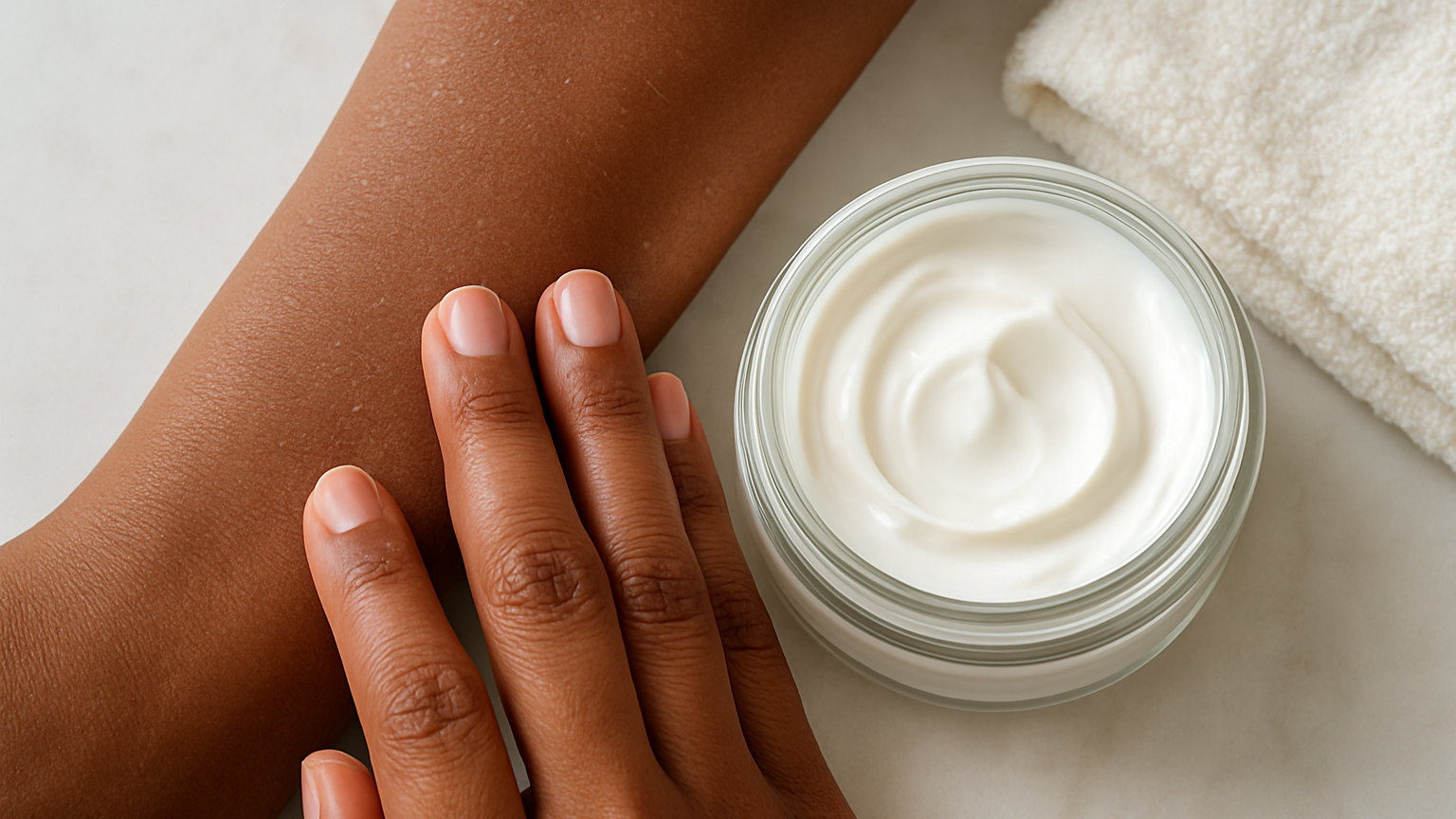
Emollients, applied generously and several times daily. This is the whole treatment and it works if done properly.
Apply within three minutes of washing, on damp skin. Use something greasy enough: a cream or ointment rather than a lotion.
Lukewarm rather than hot water, shorter showers, and soap only where needed.
Keeping an emollient in the fridge provides genuine relief, since cooling the skin interrupts the itch signal.
An antihistamine helps some people at night, mostly through sedation rather than by treating the itch directly.
Which skin conditions cause it?
Eczema, which produces itchy dry patches, typically in the elbow and knee creases and on the hands.
Psoriasis, with thicker scaly plaques. Urticaria, which produces raised weals that come and go within hours.
Scabies, which is intensely itchy, worse at night, and often affects the finger webs, wrists and waist. It requires specific treatment and treating the whole household, and it is frequently missed for months.
Contact dermatitis from a product, which usually corresponds to where something was applied.
When is itching not a skin problem?
The key pattern is itching without any visible rash, which is worth taking to a GP.
Iron deficiency. Thyroid disease, both over and underactive. Liver conditions, particularly where bile flow is obstructed, which classically causes itching of the palms and soles. Kidney disease.
Some blood disorders, including polycythaemia, which classically causes itching after a warm bath or shower.
Diabetes, and some cancers including lymphoma, where persistent unexplained itching can be an early sign.
Medications, particularly opioids, some blood pressure drugs and statins.
What about itching in pregnancy?
Mild itching is common and usually harmless, from stretching skin and hormonal change.
Intense itching, particularly of the palms and soles and particularly at night, needs urgent medical assessment. It can indicate intrahepatic cholestasis of pregnancy, which affects the liver and carries risks to the baby.
This is one to raise promptly with a midwife rather than treat with moisturiser.
How do you break the itch-scratch cycle?
Keep nails short. Cool the skin rather than scratching: a cold compress, a chilled emollient, or a cool shower.
Cotton clothing and cotton gloves at night if you scratch in your sleep.
Treat the underlying dryness consistently rather than only when itching, since the cycle restarts easily.
When should you see a GP?
Itching lasting more than a few weeks despite consistent emollient use. Itching with no rash at all.
Itching that disturbs sleep, or that comes with weight loss, fever, night sweats, jaundice or fatigue.
Sudden severe itching, particularly at night with a partner affected too, which suggests scabies.
And any itching in pregnancy affecting the palms and soles, which should be same-day.
Why does water sometimes trigger it?
Itching that starts within minutes of contact with water of any temperature, with no rash, is aquagenic pruritus. It typically affects the arms, legs and trunk and settles within an hour.
Most cases are idiopathic and harmless. It is worth mentioning to a GP because it is occasionally associated with polycythaemia vera and some other blood conditions, which a simple blood test can exclude.
Practical measures help: shorter cooler showers, adding a dispersible bath oil, patting rather than rubbing dry, and applying emollient immediately afterwards. An antihistamine before showering helps some people.


