
A clean shirt that smells the moment it warms up is a laundry problem rather than a hygiene one. Bacteria and the compounds they produce survive a normal wash, particularly in synthetic fabrics, and they reactivate the moment they meet fresh sweat.
Why do synthetics hold odour?
Polyester and other synthetic fibres are oleophilic, meaning they attract and hold oils. Body oils and the odour compounds dissolved in them bind to the fibre and are difficult to wash out.
Cotton absorbs water and releases oils more readily, so it holds odour far less.
The smooth surface of synthetics also allows particular bacteria to colonise more effectively.
This is why a polyester gym top smells after one wear while a cotton shirt does not, and why washing at forty degrees frequently fails to fix it.
Why does a normal wash not remove it?
Because standard detergents at low temperatures remove visible dirt without necessarily killing bacteria or dissolving the bound oils.
Washing at thirty degrees is better for clothes and the environment and considerably less effective against bacteria.
Machines themselves accumulate biofilm in the drum, seal and detergent drawer, which can recontaminate a load. A machine that smells is putting that smell onto everything in it.
What should you change about washing?
Wash at sixty degrees where the fabric allows, which kills most bacteria. Check labels, since many synthetics cannot take it.
Use a laundry sanitiser or an oxygen-based additive for anything that cannot be washed hot. These work at lower temperatures and are the practical answer for gym kit.
Do not overload the machine, since clothes need room to move for detergent to reach them.
Use the correct amount of detergent. Too little leaves residue behind; too much also leaves residue, which traps odour.
Dry promptly and fully. Damp clothes left in the machine or on an airer develop the musty smell within hours.
How do you remove a set-in smell?
Soak before washing, which is the step that works when washing alone does not.
A soak in a solution of white vinegar and water for an hour breaks down the alkaline residues that hold odour.
Alternatively, a soak in bicarbonate of soda and water, or in an oxygen bleach solution, which is safe for colours.
Then wash as hot as the fabric allows with a normal dose of detergent and no fabric conditioner.
Repeat if necessary, since set-in odour in synthetics sometimes needs two or three treatments.
Why should you avoid fabric conditioner?
Because it coats fibres with a waxy layer designed to soften them, and that layer traps oils and odour rather than releasing them.
It also reduces the absorbency and wicking of technical fabrics, which is why sportswear labels specifically advise against it.
For anything you sweat in, skip it entirely. White vinegar in the conditioner drawer softens without coating and helps with residue.
What about the machine itself?
Run a hot maintenance wash, at ninety degrees where possible, monthly with no clothes in it. A machine cleaner or a large dose of soda crystals works.
Wipe the rubber door seal, where biofilm accumulates and where black mould appears first.
Clean the detergent drawer and the filter. Leave the door ajar between washes so the drum dries.
A machine that smells will make clean clothes smell, and this is frequently the missing piece.
What about the yellow stains?
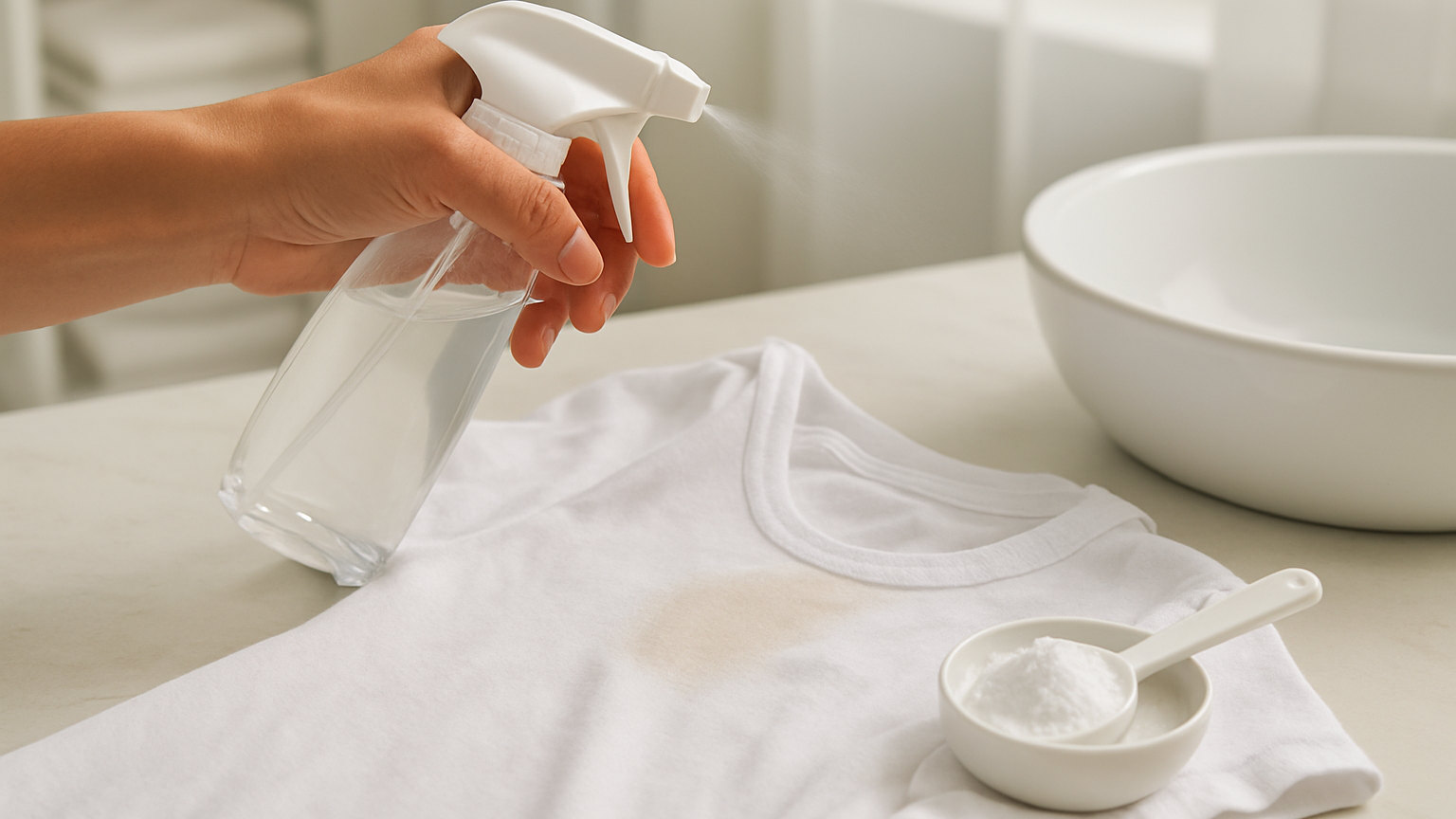
Yellowing under the arms of white shirts is a reaction between aluminium salts in antiperspirant and proteins in sweat, set permanently by heat.
Prevention is easier than removal: use less product, let it dry fully before dressing, wash shirts promptly, and avoid tumble drying anything already marked, since heat sets the stain.
An oxygen bleach soak lifts recent staining. Established yellowing is frequently permanent.
Aluminium-free deodorants do not cause it, which is one of the genuine arguments for them.
What helps day to day?
Air clothes rather than putting them straight into a basket, since damp fabric in a pile is where bacteria multiply.
Wash gym kit promptly rather than leaving it in a bag. Rinse it if a wash is not possible for a day or two.
Choose natural fibres or merino wool for anything worn against the skin all day, since both hold odour considerably less than polyester.


