
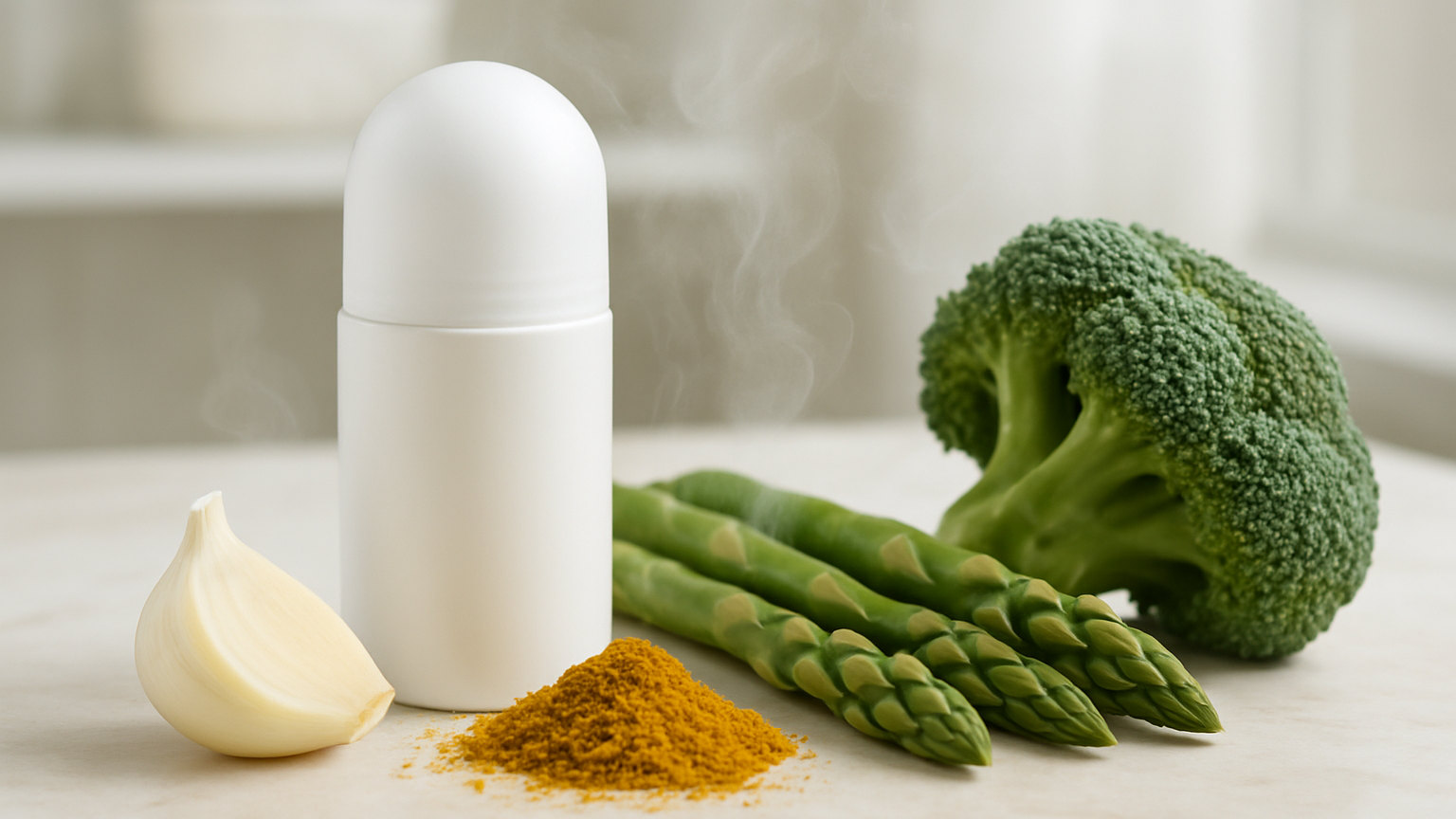
Some foods genuinely change how you smell, and not by leaving a residue in the mouth. The compounds are absorbed into the bloodstream and released through the lungs and skin, which is why brushing your teeth and showering do not help.
Why does garlic persist for so long?
Garlic contains sulphur compounds, principally allyl methyl sulfide, which is absorbed into the blood and only slowly metabolised.
It is released through the lungs in breath and through the skin in sweat for up to forty-eight hours after eating.
That is why garlic breath outlasts any amount of tooth brushing, and why it can be detected on the skin the following day.
Onion, leek and chives work the same way at lower intensity.
Which other foods affect it?
Cruciferous vegetables, including broccoli, cabbage and Brussels sprouts, which contain sulphur compounds.
Spices such as cumin, fenugreek and curry spices, which contain volatile compounds excreted through sweat. Fenugreek is notable enough that it produces a distinctly maple-like odour in sweat and urine.
Alcohol, which is partly excreted through the lungs and skin, and which also increases sweating.
Red meat, where some studies have found observers rate the body odour of heavy meat eaters as less pleasant, though the evidence is limited.
Asparagus affects urine rather than sweat, and whether you can smell it is itself genetic.
What about low carbohydrate diets?
Ketogenic and very low carbohydrate diets produce ketones, including acetone, which is excreted through the breath and sweat.
The result is a distinctive sweet or nail-varnish-like smell on the breath and, less strongly, on the skin.
It is a sign the diet is doing what it is intended to do rather than a health problem in itself, and it typically reduces after the first few weeks.
Fasting and crash dieting produce the same effect.
Does it change what deodorant can do?
Partly. Deodorant works on the underarm, where bacteria act on apocrine secretion.
Food-derived compounds are released through eccrine sweat over the whole body and through the breath, so an underarm product addresses only part of it.
This is why someone who has eaten a great deal of garlic can shower, apply antiperspirant and still be noticeable, and it is worth knowing rather than concluding the product has failed.
Does anything reduce it?
Time, mostly. The compounds clear over one to two days.
Drinking water and staying hydrated dilutes sweat somewhat.
Some evidence suggests raw apple, lettuce, mint and green tea reduce garlic breath specifically, through polyphenols that break down the sulphur compounds. That applies to breath rather than skin.
Reducing the intake before an occasion where it matters is the only reliable approach.
Does dairy or gluten affect it?
Not in the general population, despite frequent claims.
Someone with lactose intolerance or coeliac disease may experience digestive symptoms including flatulence, which is a different thing from body odour.
Eliminating foods to address body odour without a diagnosed intolerance is not supported and risks an unnecessarily restricted diet.
When does a smell suggest something medical?
A sweet or acetone-like smell in someone not on a low carbohydrate diet, which can indicate uncontrolled diabetes and warrants prompt attention.
An ammonia-like smell, which can indicate kidney problems, and is also seen after prolonged intense exercise when protein is being metabolised for fuel.
A musty or fishy smell, which is associated with liver disease and, rarely, with trimethylaminuria, a metabolic condition where the body cannot break down trimethylamine.
Any sudden change in body odour without a change in diet or habits.
What is trimethylaminuria?
A rare inherited condition, sometimes called fish odour syndrome, where an enzyme deficiency prevents the breakdown of trimethylamine produced during digestion.
The compound accumulates and is released in sweat, breath and urine, producing a strong fishy odour that washing does not affect.
It is managed through diet, avoiding foods high in choline and carnitine such as eggs, offal, fish and legumes, sometimes alongside antibiotics or supplements.
It is worth naming because people with it are frequently told for years that they simply need to wash more, and a GP can arrange testing.


