
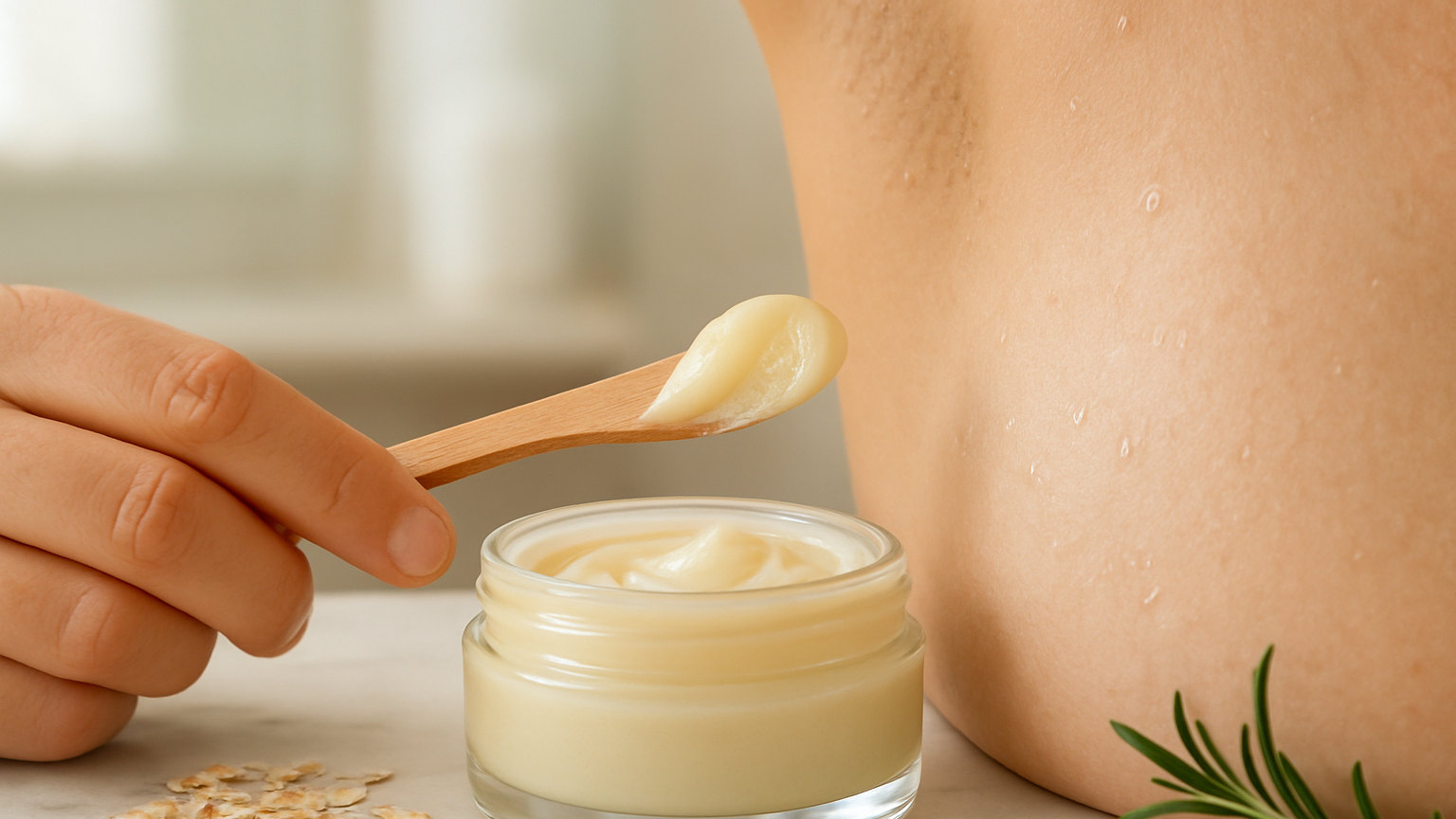
Natural deodorants work on odour and do nothing about wetness, because they contain no antiperspirant. Whether that is adequate depends entirely on which of the two is your actual problem.
What do they contain?
Bicarbonate of soda, which raises the skin pH and makes it inhospitable to the bacteria producing odour. Effective and the commonest cause of irritation.
Magnesium hydroxide, which works similarly and is considerably gentler.
Zinc oxide or zinc ricinoleate, which bind odour compounds rather than killing bacteria.
Absorbent starches such as arrowroot or tapioca, which soak up some moisture without reducing sweat production.
Essential oils for fragrance and mild antibacterial effect, and coconut or shea butter as a base.
Do they actually work?
For odour, yes, for many people. Reducing the bacterial population or neutralising the compounds they produce addresses the smell directly.
For wetness, no. Nothing in them reduces sweat production, so anyone whose problem is damp shirts rather than smell will find them inadequate.
They also tend to need reapplying, particularly in hot weather or after exercise, where an antiperspirant would last a day or more.
Why does bicarbonate cause a rash?
Because it is strongly alkaline, at around pH 9, and underarm skin sits at around 5.
Applied daily to thin, frequently shaved skin, it disrupts the barrier and causes irritant contact dermatitis in a substantial minority. It presents as a red, itchy, sometimes burning rash in the underarm, occasionally with darkening afterwards.
It is irritation rather than allergy in most cases, so it is dose-dependent: less product, less often, or a lower concentration frequently resolves it.
Magnesium hydroxide formulations avoid it almost entirely and are the sensible choice for anyone who has reacted.
Is there really a detox period?
There is an adjustment period, and detox is the wrong word for it, since skin does not detoxify.
What happens is that stopping an antiperspirant means sweating returns to its normal level, which feels dramatic after months of reduced flow. The underarm bacterial population also shifts, and that takes a week or two to settle.
Odour is frequently worse for one to two weeks before improving. That is real, and the explanation is bacterial rather than toxicological.
Washing daily and giving it a fortnight before judging is reasonable. Anyone still struggling after a month is unlikely to find it suits them.
What about crystal deodorants?
Alum stones, usually potassium alum or ammonium alum. Worth knowing that these contain aluminium, which makes the aluminium-free framing they are often sold under misleading.
The molecule is larger than in conventional antiperspirants and is generally thought not to plug ducts in the same way, so they act as deodorants rather than antiperspirants.
They work reasonably for mild odour, need applying to damp skin, and are cheap and long-lasting.
Do essential oils do anything?
Some have demonstrated antibacterial activity in laboratory conditions, and tea tree and eucalyptus among them.
In a deodorant at cosmetic concentrations, the effect is modest and largely secondary to fragrance.
They are also a common cause of contact allergy. Linalool, limonene, citral and geraniol are all plant-derived and all recognised allergens, so a product being natural says nothing about how well your skin will tolerate it.
Who do they suit?
Anyone whose problem is odour rather than wetness. Anyone who reacts to conventional antiperspirants. Anyone who dislikes the yellow staining aluminium causes on shirts.
Anyone who prefers to avoid aluminium for their own reasons, which is a legitimate preference even though the safety concerns are not evidence-based.
Who do they not suit?
Anyone with genuinely excessive sweating, who needs an antiperspirant rather than a deodorant.
Anyone who has reacted to bicarbonate, unless switching to a magnesium formulation.
And anyone who needs reliable all-day protection in a formal setting without the option to reapply.
Do you have to choose one or the other?
No, and using both is a sensible compromise that rarely gets suggested.
A conventional antiperspirant on days where wetness matters, such as work, interviews or hot weather, and a natural deodorant on quieter days gives the skin a break from the aluminium salts while keeping the protection where it counts.
Alternating also avoids the full adjustment period, since the bacterial population never shifts as dramatically as it does with a complete switch.


