
Sweating during exercise is thermoregulation working correctly, and it is not a problem to be solved. What causes trouble is sweat left in place afterwards, and that is entirely avoidable.
What is happening?
Eccrine glands across the body release watery sweat, which cools the skin as it evaporates. That is the mechanism, and evaporation rather than the sweat itself is what does the cooling.
Humid conditions reduce evaporation, which is why you sweat more and feel hotter in humid weather despite the same temperature.
Fitter people sweat sooner and more efficiently, which is an adaptation rather than a sign of poor condition.
Salt is lost alongside water, and the white residue on skin and clothing afterwards is that salt.
What should you wear?
Technical fabrics that wick moisture away from the skin rather than cotton, which absorbs and holds it against you.
Close-fitting rather than loose for anything that rubs, since loose fabric moving repeatedly is what causes chafing.
Merino wool is worth knowing about for longer sessions and cooler weather, since it manages moisture well and resists odour considerably better than polyester.
Seamless or flat-seamed garments for anything long. Cycling shorts under a skirt or looser shorts for inner thigh chafing.
What should you do before?
Remove makeup, or at least foundation, since sweating under a base traps sebum and bacteria against the skin.
Apply a barrier balm to anywhere that chafes: inner thighs, underarms, nipples, the bra line, feet.
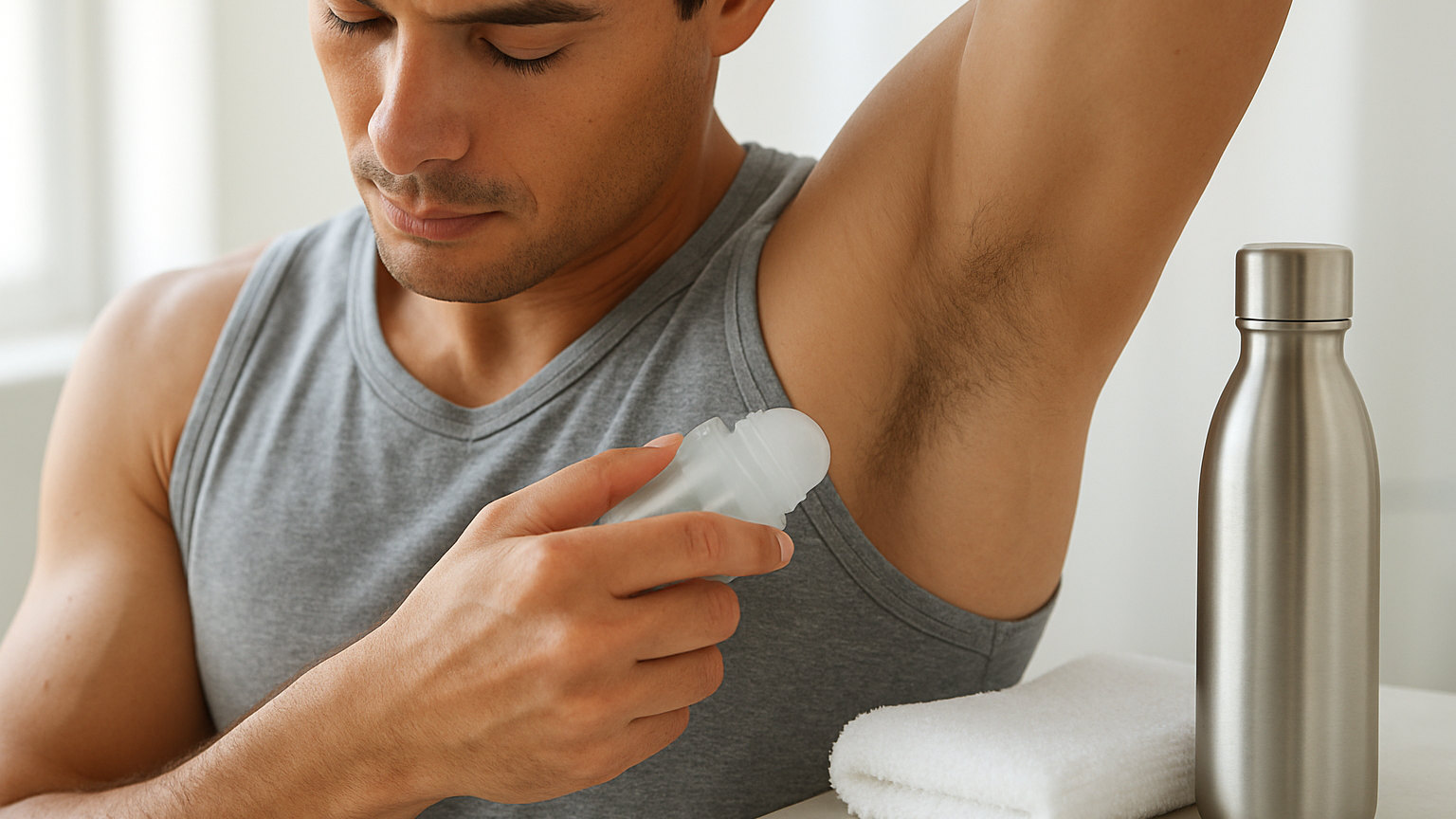
Apply antiperspirant the night before rather than immediately beforehand, which works considerably better and avoids stinging.
Tie hair back off the face.
What matters most afterwards?
Getting out of damp clothing promptly, which is the single most important thing.
Sweat drying inside synthetic fabric against the skin is where body acne, folliculitis and fungal problems come from. The exercise did not cause them; the forty minutes sitting in wet kit afterwards did.
Shower promptly. If that is impossible, change tops, wipe down with a cloth or a cleansing wipe, and shower as soon as you can.
Cleanse the face gently, moisturise, and reapply sunscreen if going back outside.
Does sweating cause acne?
Not directly. Sweat is mostly water and salt and does not block pores.
What causes trouble is the mixture of sweat, sebum, makeup and bacteria left in place under occlusive fabric, plus friction from equipment and clothing.
Fungal folliculitis is particularly worth knowing about: uniform itchy bumps on the back and chest, worse in heat, no blackheads. It does not respond to acne treatment and does respond to antifungal shampoo used as a body wash.
What about salt on the skin?
Salt left to dry is mildly abrasive and drying, which contributes to both chafing and irritation on longer sessions.
It is why chafing frequently worsens toward the end of a long run rather than at the start.
Rinsing promptly deals with it. For open water and sea swimming, the same applies with more urgency.
Do you need to replace electrolytes?
For most sessions under an hour, water is sufficient and a normal diet replaces what is lost.
For longer or very hot sessions, or for heavy sweaters, electrolyte replacement becomes relevant, and sodium is the one that matters most.
Salt marks on clothing and a gritty feel on the skin indicate a salty sweater, who loses more sodium than average and benefits more from replacement.
What about odour in kit?
Wash promptly rather than leaving it in a bag, and rinse it if a wash is not possible for a day or two.
Wash at sixty degrees where the fabric allows, or use a laundry sanitiser, since bacteria persist through a cool wash in synthetics.
Skip fabric conditioner entirely, which coats fibres and traps odour, and which reduces the wicking that technical fabric is designed for.
Should you apply antiperspirant before exercising?
Not immediately beforehand, since it will largely wash away in the first few minutes and can sting on freshly shaved skin.
Applied the night before to dry skin, it works considerably better and is still active during the session.
There is also no need to suppress sweating during exercise, since that is the mechanism cooling you. The reason to use antiperspirant around exercise is odour and clothing rather than the sweating itself, and showering promptly afterwards addresses both more effectively.


