
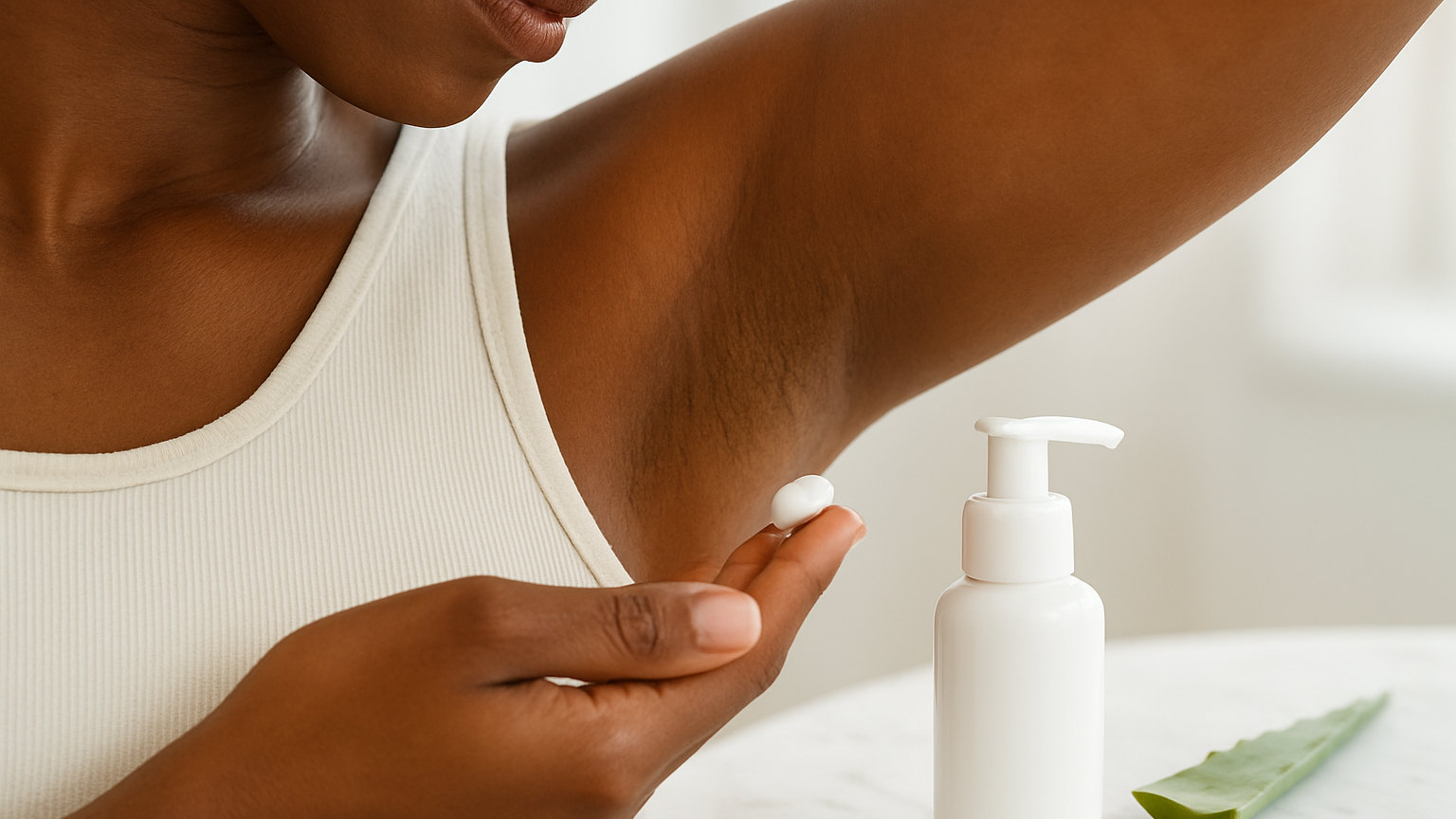
The underarm gets shaved, has product applied daily, is enclosed and warm, folds against itself, and rubs against clothing. It is also the one body area almost nobody moisturises, which explains a good deal of what goes wrong there.
What makes it different?
The skin is thin and has a compromised barrier compared with most of the body.
It contains apocrine glands, which become active at puberty and produce the secretion bacteria break down into odour, alongside a high density of eccrine sweat glands.
It is a fold, so it is warm, moist and occluded, which favours bacterial and fungal growth.
And it carries coarse hair growing in several directions at once, which makes hair removal awkward.
What causes irritation?
Shaving, particularly with a blunt blade or against multiple growth directions.
Deodorant applied immediately afterwards, which stings because the barrier has just been removed and contributes to chronic irritation over time.
Fragrance and alcohol in products. Bicarbonate of soda in natural deodorants, which is alkaline and irritates a substantial minority.
Friction from clothing, and sweat trapped against the skin.
What should a routine look like?
Wash daily with a gentle cleanser, since apocrine secretion and bacteria accumulate.
Shave at night rather than in the morning, and apply deodorant the following day. This single change resolves a surprising proportion of underarm irritation.
Moisturise, which is the step nobody takes. A bland fragrance-free cream applied a few times a week supports the barrier.
Gentle chemical exfoliation with lactic or glycolic acid once or twice a week, which clears build-up and prevents ingrown hairs without friction.
Avoid scrubbing entirely.
What causes bumps?
Razor burn, which appears within hours across the whole shaved area and feels like burning.
Ingrown hairs, appearing days later as individual tender bumps each with a hair visible beneath.
Folliculitis, producing pustules around individual follicles, often after sweating or shaving.
Contact dermatitis from a product, which is itchy, red and follows the shape of where the product was applied.
Blocked sweat glands, producing small clear or itchy bumps, particularly in hot weather.
What is hidradenitis suppurativa?
A chronic inflammatory condition affecting areas with apocrine glands: underarms, groin, under the breasts and between the buttocks.
It produces recurrent painful lumps and boils, which can rupture, discharge and form tunnels and scars under the skin.
It affects perhaps one in a hundred people and is frequently mistaken for recurrent boils or poor hygiene for years before diagnosis, which is one of the reasons it is worth naming.
It is associated with smoking, weight and family history, and it is not caused by hygiene or shaving.
Treatment includes topical and oral antibiotics, hormonal treatment, biologics for severe disease, and surgery. Early diagnosis makes a real difference, so recurrent painful lumps in these areas warrant a GP appointment rather than waiting.
When does a lump need checking?
This matters more than the rest of the article. The underarm contains lymph nodes, and a lump there is not always a skin problem.
Small tender lumps that appear with an infection and settle within a couple of weeks are usually reactive lymph nodes.
A lump that is painless, hard, fixed in place, growing, or has persisted more than two to three weeks needs a GP appointment.
The same applies to any lump alongside unexplained weight loss, night sweats or fatigue, and to any new breast change, since underarm nodes drain the breast.
This is not a wait-and-see situation.
What about hair removal?
Shaving with the grain in short strokes, without stretching the skin taut, causes the least trouble.
Waxing and epilation give longer results and cause more ingrown hairs for some people.
Laser removes the shaving irritation entirely and reduces both bumps and darkening, which is why it suits anyone whose underarms react to every shave.
Trimming is the lowest-risk option and reduces odour nearly as effectively as removal.
What should you avoid?
Applying deodorant to freshly shaved or broken skin. Scrubbing. Fragranced products on irritated skin.
Squeezing any lump or boil, which spreads infection and increases scarring.
And ignoring a persistent lump, which is the one item on this list that could matter enormously.


