
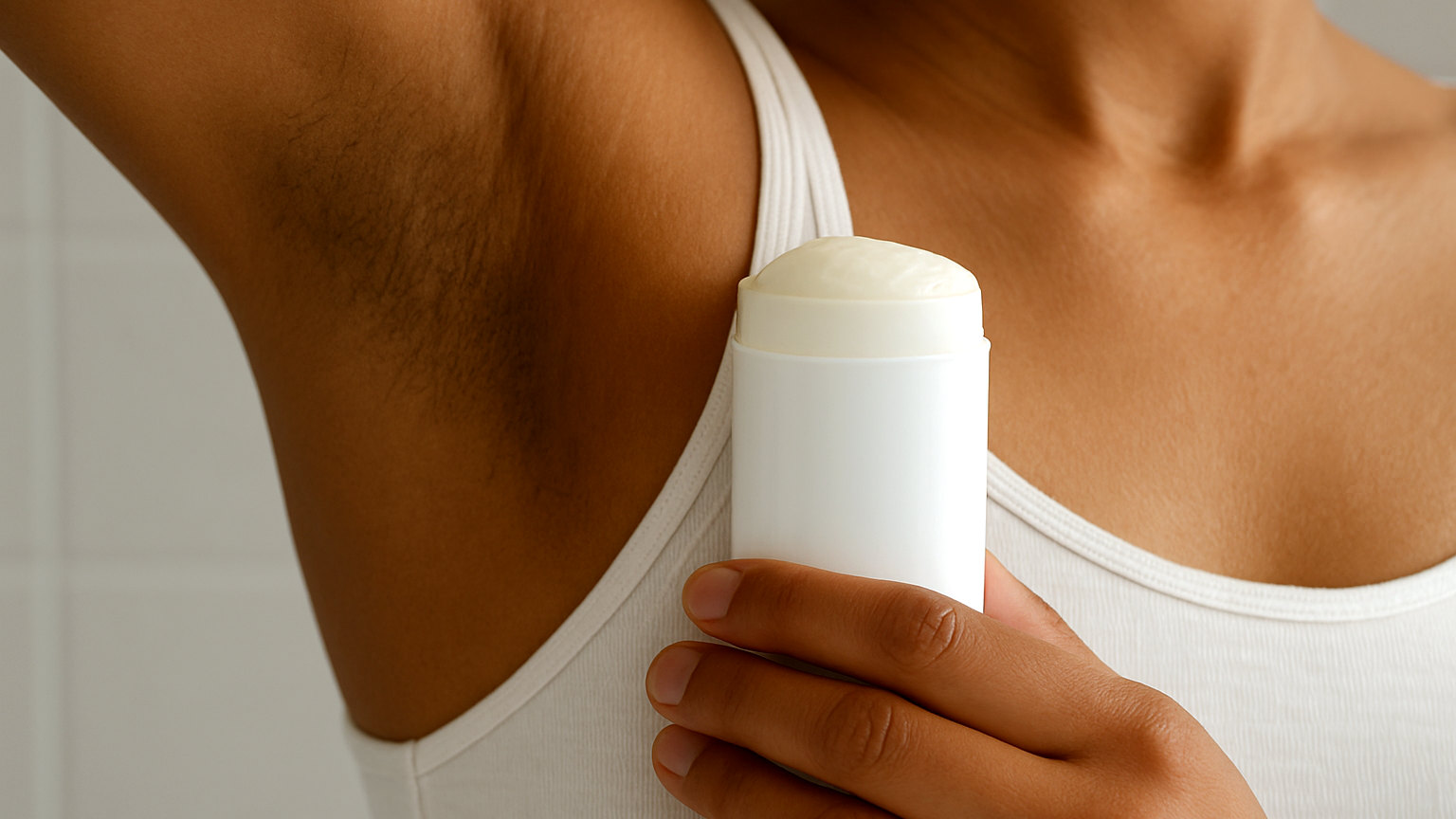
Daily deodorant is close to universal in Britain and is a cultural habit rather than a physiological requirement. Whether you need it depends substantially on genetics, and a meaningful proportion of the world's population does not.
Who genuinely does not need it?
People with a particular variant of the ABCC11 gene, which determines whether the odourless precursor compound is secreted into apocrine sweat at all.
Without that precursor, the bacteria have nothing to work on and very little odour is produced. The same variant also produces dry, flaky earwax rather than wet.
The variant is present in the large majority of people of East Asian descent and is rare in European and African populations, which is why deodorant use varies so markedly by region.
If you have dry earwax and have never noticed underarm odour, you may be in that group.
Does daily use harm anything?
Not in itself. The safety concerns about aluminium and breast cancer have been investigated repeatedly and are not supported by the evidence.
What daily use can cause is irritation, particularly on skin that is also shaved regularly. Fragrance, alcohol and bicarbonate are the usual culprits.
Some people develop contact dermatitis to a specific ingredient after years of uneventful use, which presents as an itchy red rash confined to where the product goes.
Does it affect the skin bacteria?
Yes, and the practical implications are not fully established.
Studies have found that antiperspirant use shifts the underarm bacterial population, and that stopping produces a period of adjustment as it rebalances.
Some research suggests antiperspirant users develop a population more dominated by odour-producing species, which would explain why odour is often worse in the first fortnight after stopping.
Whether this matters beyond odour is not known.
What happens if you stop?
Sweating returns to its normal level, which feels dramatic after months of reduced flow but is simply the baseline.
Odour is frequently worse for one to two weeks while the bacterial population shifts, then settles for many people.
Some people find they do not need it at all afterwards. Others find they do, which is equally valid information.
Trying it during a quiet fortnight in cooler weather is more informative than trying it in July before a week of meetings.
What reduces the need for it?
Washing the underarms daily with soap and water, which removes both the bacteria and the secretion they act on.
Trimming or removing underarm hair, which reduces the surface area holding sweat and bacteria. This makes a genuine difference.
Natural fibres and looser clothing. Washing clothes properly, since bacteria persist in fabric and reactivate on contact with fresh sweat.
Reducing garlic, onion, spices and alcohol, which are excreted through sweat.
Is it different for children?
Apocrine glands become active at puberty, so children do not produce adult body odour and do not need deodorant.
Once puberty begins, typically from around eight to thirteen, a simple deodorant is reasonable if odour appears.
A deodorant rather than an antiperspirant is generally suggested first, and fragrance-free suits sensitive young skin better.
Persistent strong body odour in a young child before any other signs of puberty is worth mentioning to a GP.
Does it change with age?
Apocrine activity declines in later life, so body odour of the classic underarm kind often reduces.
A different odour can develop from around the forties, produced by the oxidation of skin lipids into a compound called 2-nonenal, which has a grassy or greasy character and is not addressed by underarm products.
Washing, clean clothing and moisturising address that more effectively than deodorant does.
What is the reasonable position?
Use it if you need it, and do not assume you need it daily without checking.
Many people who apply it every morning out of habit would find they need it three or four times a week, which reduces irritation and cost.
And it is worth knowing that a meaningful proportion of the world does not use it at all, not through neglect but because they produce almost no odour.


