
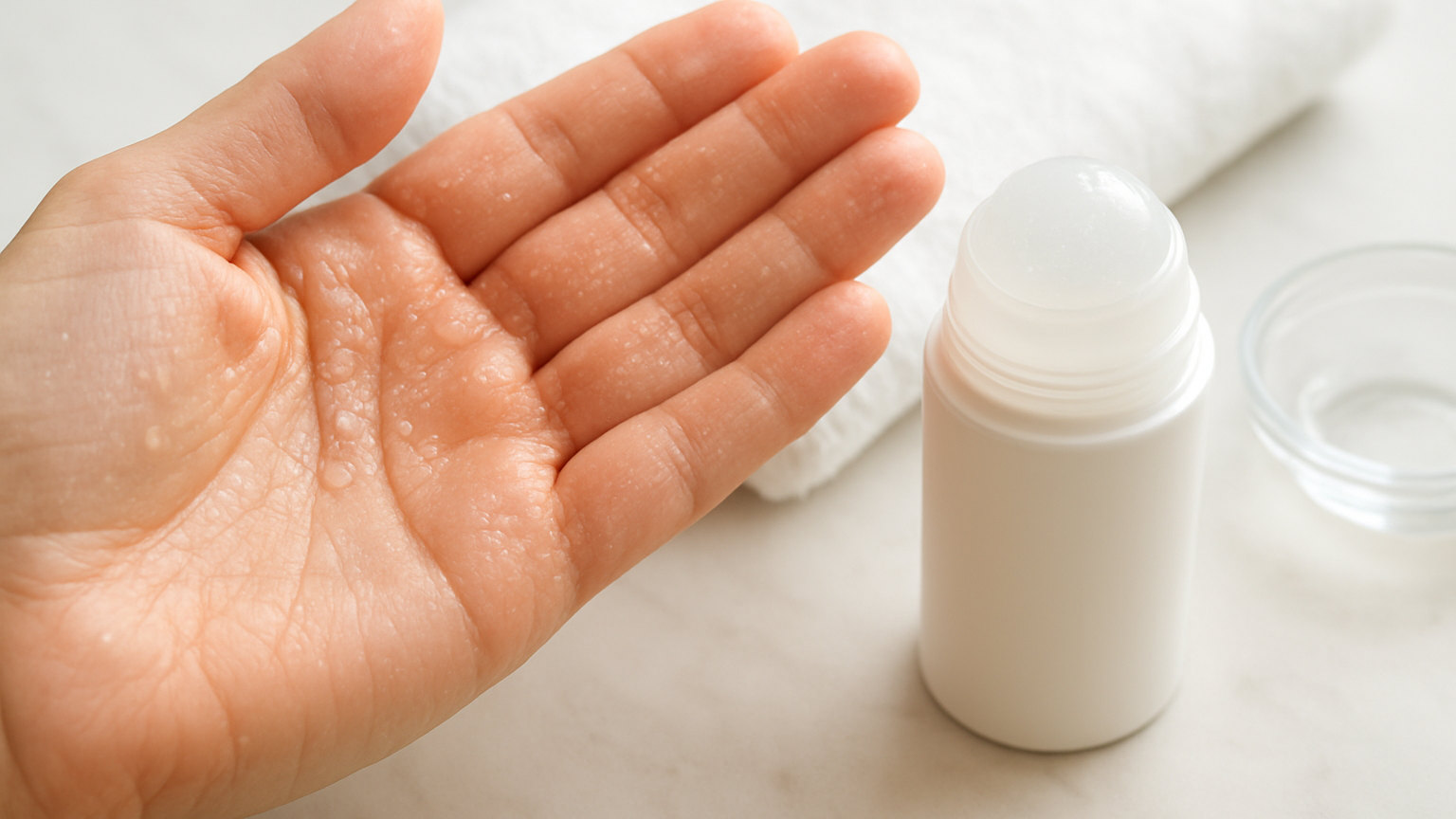
Sweating more than temperature or exertion explains is hyperhidrosis. It affects a meaningful proportion of the population, has several effective treatments, and is one of the most under-reported conditions in this whole area.
What is actually happening?
Eccrine sweat glands are overactive, responding excessively to signals from the sympathetic nervous system rather than to genuine need for cooling.
The glands themselves are normal. The signalling is what differs.
It commonly affects the underarms, palms, soles and face, which are the areas with the highest gland density.
What is the difference between primary and secondary?
Primary hyperhidrosis has no underlying disease. It typically begins in childhood or adolescence, affects specific areas symmetrically, occurs during waking hours and stops during sleep. It often runs in families.
Secondary hyperhidrosis is caused by something else. It is more likely to be generalised across the whole body, to include night sweats, and to have begun suddenly in adulthood.
That distinction determines whether investigation is needed, and the two features that matter most are night sweats and sudden adult onset.
What causes secondary sweating?
An overactive thyroid, which is among the commonest. Diabetes and hypoglycaemia. Menopause, where hot flushes and night sweats are the characteristic pattern.
Infections, including tuberculosis. Some cancers, particularly lymphoma, where night sweats with weight loss and fever are a recognised combination.
Medications, notably some antidepressants, opioids and hormone treatments. Alcohol and drug withdrawal.
Anxiety disorders, which increase sympathetic activity generally.
What treatments are available?
Aluminium chloride hexahydrate at twenty per cent, available from pharmacies, applied to completely dry skin at night. This is the first-line treatment and works for a substantial proportion.
Iontophoresis, where the affected area is placed in water and a weak electrical current passed through. Genuinely effective for palms and soles, requiring regular sessions.
Botulinum toxin injections, which block the nerve signal to the glands. Highly effective for underarms, lasting four to six months, and available on the NHS in some areas for severe cases.
Oral medications such as oxybutynin or glycopyrronium, which reduce sweating generally and cause dry mouth and other anticholinergic effects.
Microwave thermolysis, which destroys underarm glands permanently.
Surgery, specifically endoscopic thoracic sympathectomy, which is a last resort and carries a significant risk of compensatory sweating elsewhere that can be worse than the original problem.
What helps day to day?
Applying antiperspirant at night to dry skin, which improves results considerably for most people.
Natural fibres and looser clothing. Underarm shields or absorbent pads. Darker or patterned fabrics, which show marks less than pale plain ones.
Identifying triggers where possible: caffeine, alcohol, spicy food and stress all increase sympathetic activity.
Keeping ambient temperature down and carrying a spare shirt for situations where it matters.
Does anxiety cause it?
Anxiety worsens it and does not cause primary hyperhidrosis, and the relationship runs in both directions.
Sweating causes social anxiety, which increases sympathetic activity, which increases sweating. That loop is real and is one of the strongest reasons to treat it rather than manage it privately.
Many people with hyperhidrosis avoid certain clothes, jobs, handshakes and social situations, and report a substantial impact on quality of life.
When should you see a GP?
If it interferes with daily life, work or social situations, which is sufficient reason on its own.
If it started suddenly in adulthood, is generalised across the body, or occurs at night.
If it comes with weight loss, fever, palpitations, tremor or fatigue, which point toward an underlying cause.
And if over-the-counter antiperspirants have not helped, since prescription-strength options and referral to dermatology exist.
What should you expect?
A GP will usually start with strong antiperspirant, arrange blood tests if secondary causes seem plausible, and consider referral if that fails.
Treatment is generally effective, which is worth saying because the commonest outcome for this condition is that nobody asks and nothing is done.
What about night sweats specifically?
Worth separating from daytime sweating, since the causes differ and the threshold for investigation is lower.
Primary hyperhidrosis stops during sleep, so genuine night sweats point elsewhere: menopause, thyroid problems, infection, some medications, anxiety, and less commonly lymphoma and other conditions.
Occasional night sweats from a warm room or heavy bedding are not the same thing. Persistent drenching sweats that soak nightwear or bedding, particularly with weight loss, fever or fatigue, warrant a GP appointment rather than a change of duvet.


