
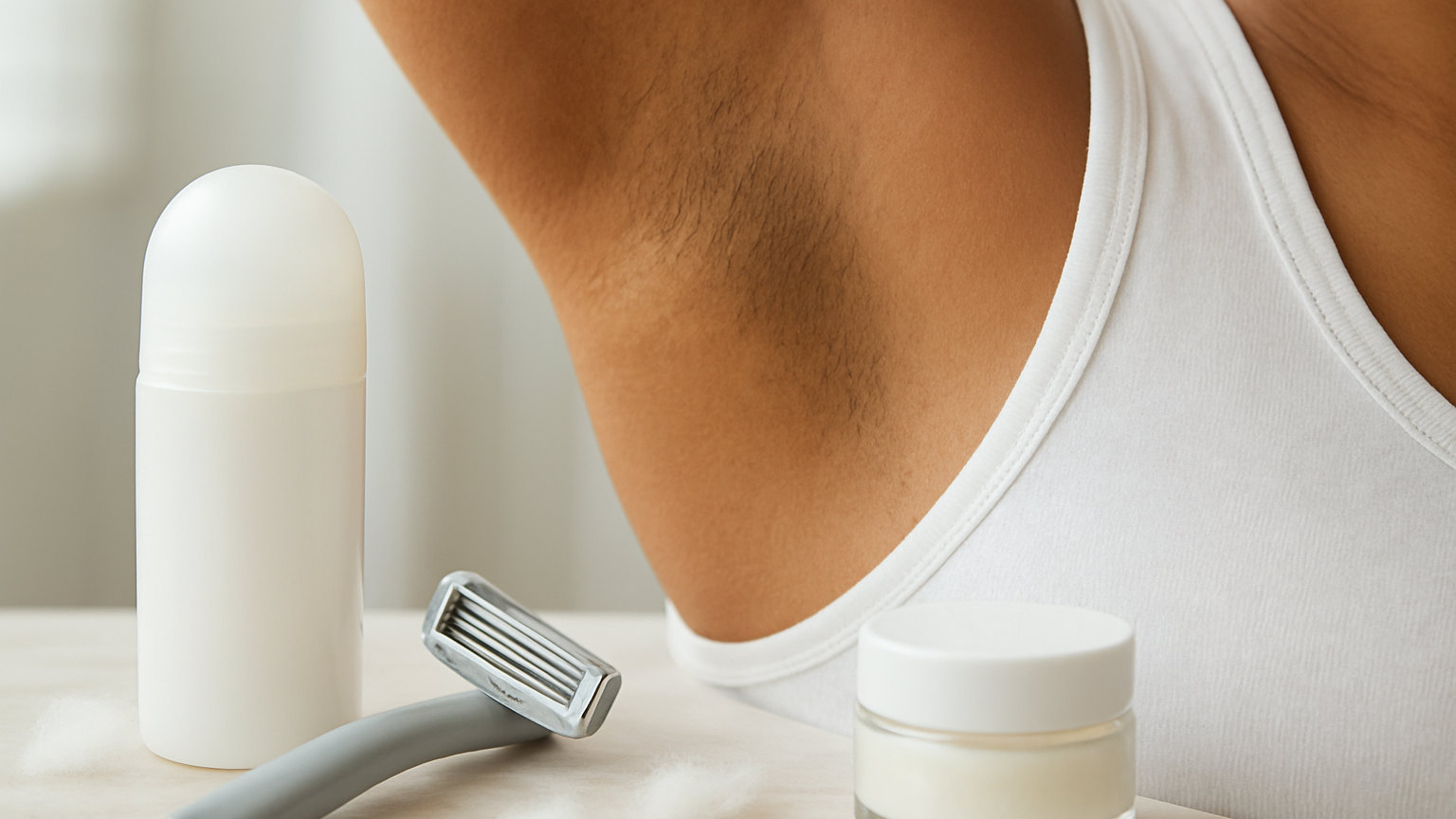
Dark underarms are extremely common, rarely discussed, and usually caused by something other than what people assume. Several different mechanisms produce the same appearance, and they need different responses.
What causes it?
Post-inflammatory hyperpigmentation, which is the commonest cause. Repeated irritation from shaving, deodorant, friction and waxing triggers melanocytes to produce more pigment.
Stubble showing through thin skin, which is a shadow rather than pigment at all and disappears entirely with a different hair removal method.
Friction from clothing and skin rubbing on skin, which causes both thickening and pigmentation.
Product residue and dead skin build-up, which contributes a surface layer.
Acanthosis nigricans, which is velvety, thickened darkening associated with insulin resistance and needs a GP rather than a cosmetic approach.
How do you tell them apart?
Stretch the skin and look closely. Visible hair follicles beneath the surface indicate stubble shadow rather than pigment.
Flat brown discolouration that persists regardless of hair removal is post-inflammatory pigmentation.
Skin that feels thickened and velvety rather than smooth, particularly if the neck or groin are also affected, suggests acanthosis nigricans.
A red, itchy, actively irritated underarm is current irritation, and treating that comes before treating any pigment.
Why are some people more affected?
Melanocytes in medium and deep skin tones are more active and more responsive to inflammation, so the same irritation produces more pigment and it lasts longer.
This is why underarm darkening is a far more common concern in deeper skin tones, and why advice written for lighter skin frequently misses the point.
It is biology rather than hygiene or neglect, which is worth stating plainly given how much embarrassment attaches to it.
What should you stop doing?
Scrubbing, which is the universal instinct and adds friction, inflammation and therefore more pigment.
Shaving daily with a blunt blade. Applying deodorant immediately after shaving, which stings because the barrier has just been removed and contributes to chronic irritation.
Using fragranced or alcohol-heavy products on already irritated skin.
Skin lightening creams from unregulated sources, which frequently contain mercury or potent steroids and cause lasting harm. These are marketed hardest at exactly the people most affected.
What helps?
Reducing irritation first, which is the whole foundation. A sharp blade, shaving with the grain, or switching to trimming, waxing or laser.
Shaving at night and applying deodorant in the morning, which gives the skin hours to recover.
A fragrance-free or sensitive deodorant, and a bland moisturiser applied to the underarm, which almost nobody does.
Azelaic acid or niacinamide for the pigment itself. Gentle chemical exfoliation with lactic or glycolic acid twice a week, which clears surface build-up without friction.
Time, since post-inflammatory pigmentation fades over three to twelve months once irritation stops.
Does laser hair removal help?
Frequently yes, for two reasons. It removes the stubble shadow component entirely, and it removes the repeated shaving irritation causing the pigment.
The caveat is that the heat itself can trigger pigmentation in deeper skin tones with the wrong device or settings. Ask specifically which laser will be used, insist on a test patch, and be wary of any clinic that does not raise the question first.
Nd:YAG lasers are the safer choice for deeper skin tones and practitioner experience matters more here than almost anywhere.
How long does it take?
Three to six months for superficial pigmentation with consistent treatment and no further irritation. Up to a year or more for long-standing darkening.
Photographs every fortnight in the same light are more reliable than daily observation.
The commonest reason nothing improves is that the irritation causing it has continued throughout.
When should you see a GP?
If the darkening is velvety and thickened rather than flat, particularly if the neck, groin or knuckles are also affected, since acanthosis nigricans is associated with insulin resistance and warrants investigation.
If it appeared rapidly without any change in habits. If there is a persistent rash, scaling or itching.
And if nothing has improved after six months of consistent care, since prescription options exist.


