
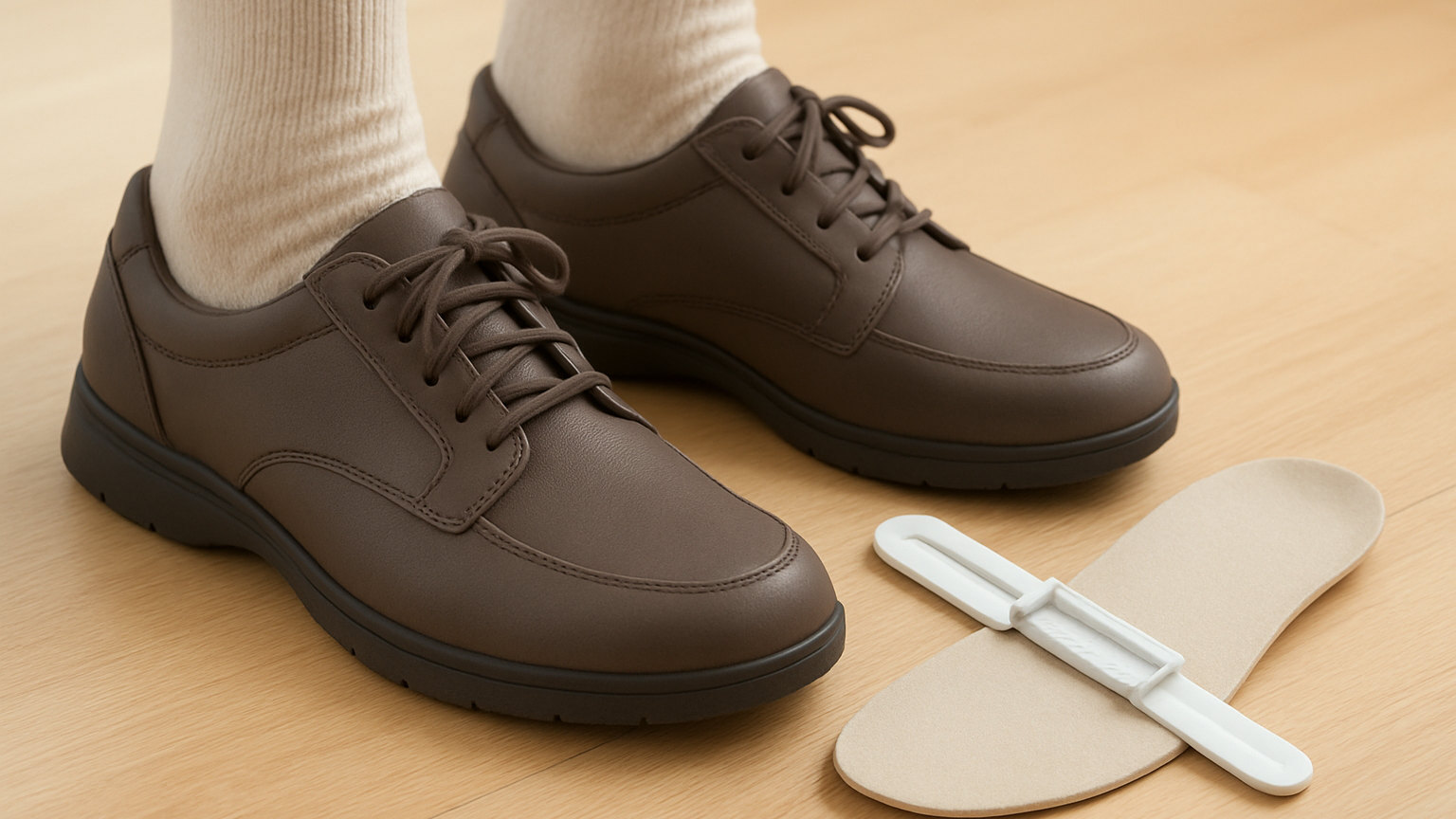
A great many foot problems are footwear problems: bunions progressing, corns, ingrown toenails, cracked heels, blisters and neuromas all relate to what the foot is being asked to fit into. The fitting rules that prevent most of them take two minutes to apply.
When should you buy shoes?
Late afternoon or evening, when feet are at their largest. Feet swell across the day by a measurable amount, and shoes fitted first thing frequently pinch by mid-afternoon.
Have both feet measured, since most people have one foot larger and should fit to the larger one.
Get remeasured periodically. Feet change size and shape across adult life, particularly after pregnancy and with age, as the ligaments loosen and the arch flattens.
How should a shoe fit?
A thumb's width between the longest toe and the end of the shoe, which is not always the big toe.
The widest part of the foot should sit at the widest part of the shoe, and there should be no pressure across the joints at the base of the toes.
The heel should be held firmly without slipping, since heel slip causes blisters and makes the toes grip.
You should be able to wiggle your toes freely.
A shoe that needs breaking in does not fit. Leather softens slightly; it does not change shape enough to fix a bad fit.
What about width?
Width is as important as length and is far less often considered. Many people buy a size up to accommodate a wide foot, which leaves the shoe too long and causes the foot to slide.
Brands offering width fittings are worth seeking out. A correctly fitted wide shoe is more comfortable than a longer standard one.
Feet also broaden with age, so the width you wore at twenty-five may not be the one you need at fifty.
What do heels do?
They shift body weight forward onto the ball of the foot. At higher heights, a substantial proportion of body weight moves to the forefoot, which is not designed to carry it.
That contributes to metatarsalgia, calluses under the ball, and Morton's neuroma, a thickening of nerve tissue between the toes producing burning pain and numbness.
Narrow toe boxes push the big toe inward, which contributes to bunion progression in people already predisposed.
Regular high heel wear also shortens the calf muscles and Achilles tendon over time, which is why flat shoes can feel uncomfortable afterwards.
Are flat shoes better?
Not automatically. Completely flat shoes with no support, including ballet pumps and flip-flops, provide no arch support and no cushioning.
Flip-flops in particular require the toes to grip to keep them on, which alters gait and contributes to heel and arch pain over a summer.
A small heel of two to three centimetres is generally more comfortable than completely flat for most people.
What matters most is cushioning, a supportive sole and a secure fastening rather than the heel height alone.
What should you look for generally?
A firm heel counter, the part around the back that holds the heel in place. Squeeze it: it should resist rather than collapse.
A sole that bends at the ball of the foot rather than in the middle. A shoe that folds in half offers no support.
Adjustable fastening, laces or straps, which accommodate swelling and hold the foot in place.
Breathable materials, since enclosed synthetic shoes cause the moisture that leads to athlete's foot and odour.
Do you need to alternate?
Yes, for two reasons. Shoes take around twenty-four hours to dry out fully, and wearing the same pair daily means they never do.
The cushioning also compresses and takes time to recover. Alternating extends the useful life of both pairs.
Replace shoes when the sole is worn unevenly or the cushioning has flattened, which is usually sooner than people do.
When should you see a podiatrist?
Persistent foot pain, which is not normal and usually has a treatable cause.
Recurring corns, calluses or blisters in the same place, which indicate a pressure problem that footwear or an orthotic can address.
Bunions or hammer toes that are progressing or painful.
Numbness, burning or tingling, which can indicate a neuroma or nerve compression.
And anyone with diabetes, who should have regular foot checks regardless of symptoms.


