
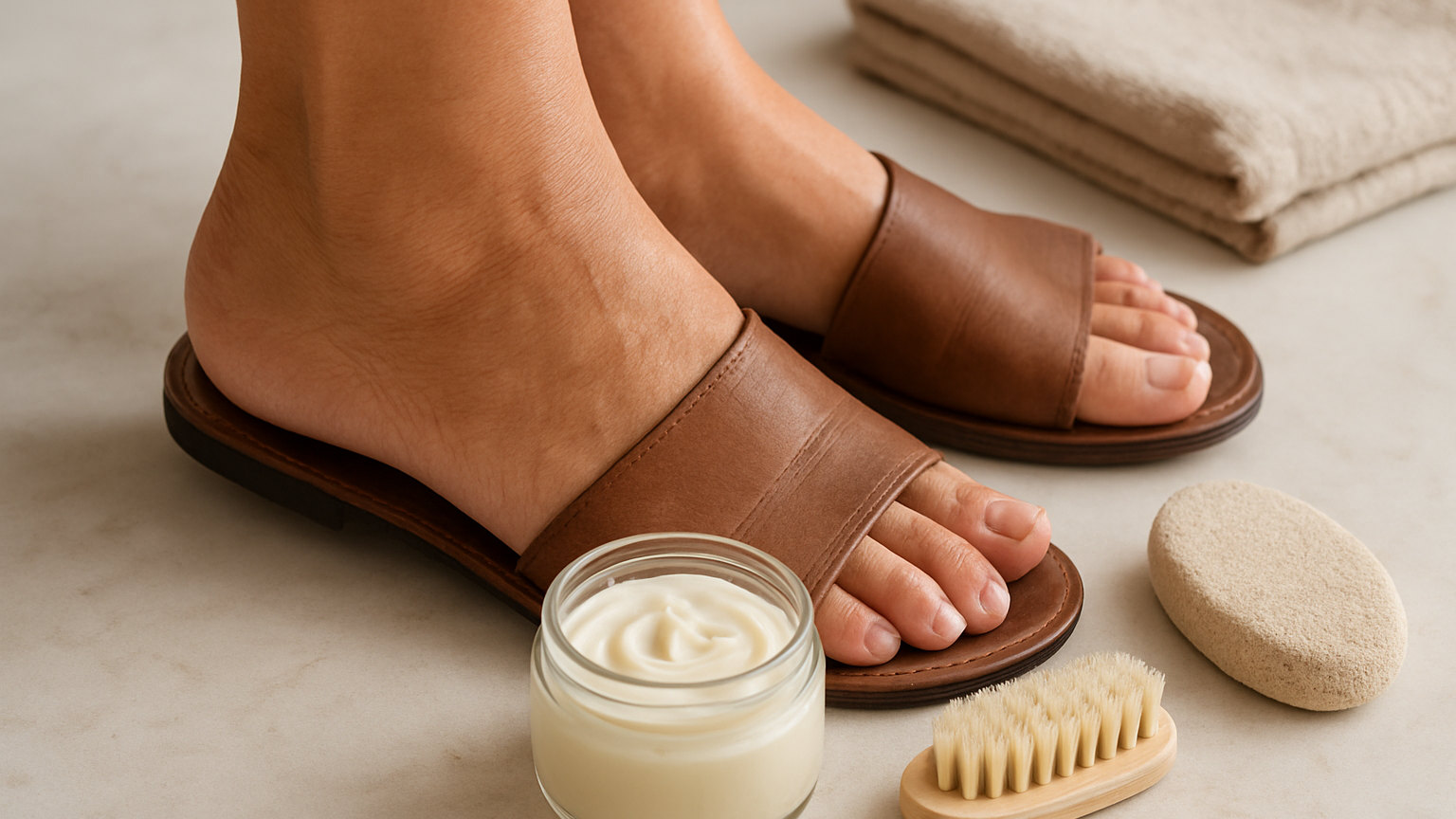
Feet get more attention in summer and more damage. Open footwear, heat, swimming pools and bare skin combine to produce a set of problems that barely exist in winter.
Why do heels crack in summer?
Open-backed shoes are the main cause. When the heel is unrestrained, the fat pad spreads sideways with each step, and skin that has thickened under pressure splits at the edge.
Sandals, flip-flops and mules all do this. Add dry air, barefoot walking on hard surfaces and more exposure, and the result is the seasonal spike in cracked heels.
The fix is a high-urea cream at night with cotton socks, gentle filing on dry skin two or three times a week, and closed-in shoes or silicone heel cups where practical.
What do flip-flops do?
They require the toes to grip to keep them on, which alters gait and puts strain through the arch and calf.
They provide no arch support and no cushioning, and the thin sole transmits impact directly.
Regular wear over a summer contributes to plantar fasciitis, heel pain and metatarsalgia, and the connection is frequently missed because the pain develops gradually.
They are fine for a pool or a beach and poor for walking any distance. Sandals with a back strap and a supportive footbed are a considerably better default.
Do feet need sunscreen?
Yes, and the tops of the feet are among the most commonly burnt areas of the body.
Skin there is thin, rarely exposed for most of the year, and easy to forget when applying sunscreen.
Melanoma occurs on the feet, including on the soles and under the nails, where it is frequently found late. Acral melanoma affects people of all skin tones and is proportionally more common in deeper skin tones.
Apply sunscreen to the tops of the feet, including between the straps, and reapply after swimming.
Check the soles and between the toes occasionally for anything new or changing.
Why do feet swell in hot weather?
Blood vessels dilate to release heat, and fluid pools in the lower limbs, particularly when standing or sitting still for long periods.
It is usually harmless and settles overnight. Flights, long car journeys and hot weather are common triggers.
Elevating the feet, moving regularly, staying hydrated and avoiding tight footwear all help.
Swelling in one leg only, or with pain, redness or warmth, needs urgent assessment, since it can indicate a clot.
Persistent swelling in both legs warrants a GP appointment, since it can relate to heart, kidney or liver conditions.
What about pools and communal areas?
Verrucas and athlete's foot both spread on wet communal floors, which is why summer is peak season for both.
Wear flip-flops in changing rooms, communal showers and around pools, which is the single most effective preventive measure.
Dry thoroughly between the toes afterwards.
Cover any verruca with a waterproof plaster or a verruca sock before swimming.
What about sweat and odour?
Heat increases sweating and enclosed summer shoes worn without socks are a reliable route to odour.
Wearing socks with trainers, even invisible ones, absorbs moisture that would otherwise soak into the shoe.
Alternate pairs so each dries for twenty-four hours. Antiperspirant applied to the soles at night works and is rarely suggested.
Leather over synthetic linings, since plastic holds moisture against the skin.
How do you get feet ready for sandals?
Start six weeks before rather than the night before, since softening thickened skin takes time.
A high-urea cream nightly, gentle filing two or three times a week, and toenails cut straight across.
Treat any fungal nail infection early, since it takes twelve to eighteen months for a toenail to grow out.
Moisturise daily and use cuticle oil on the toes, which is quick and makes a visible difference.
What should you watch for?
Any new dark mark on the sole or under a toenail, which needs a GP appointment rather than watching.
Cracks that bleed or become painful. Spreading redness or warmth.
And anyone with diabetes should check their feet daily in summer particularly, since barefoot walking and open footwear increase the chance of unnoticed injury.


