
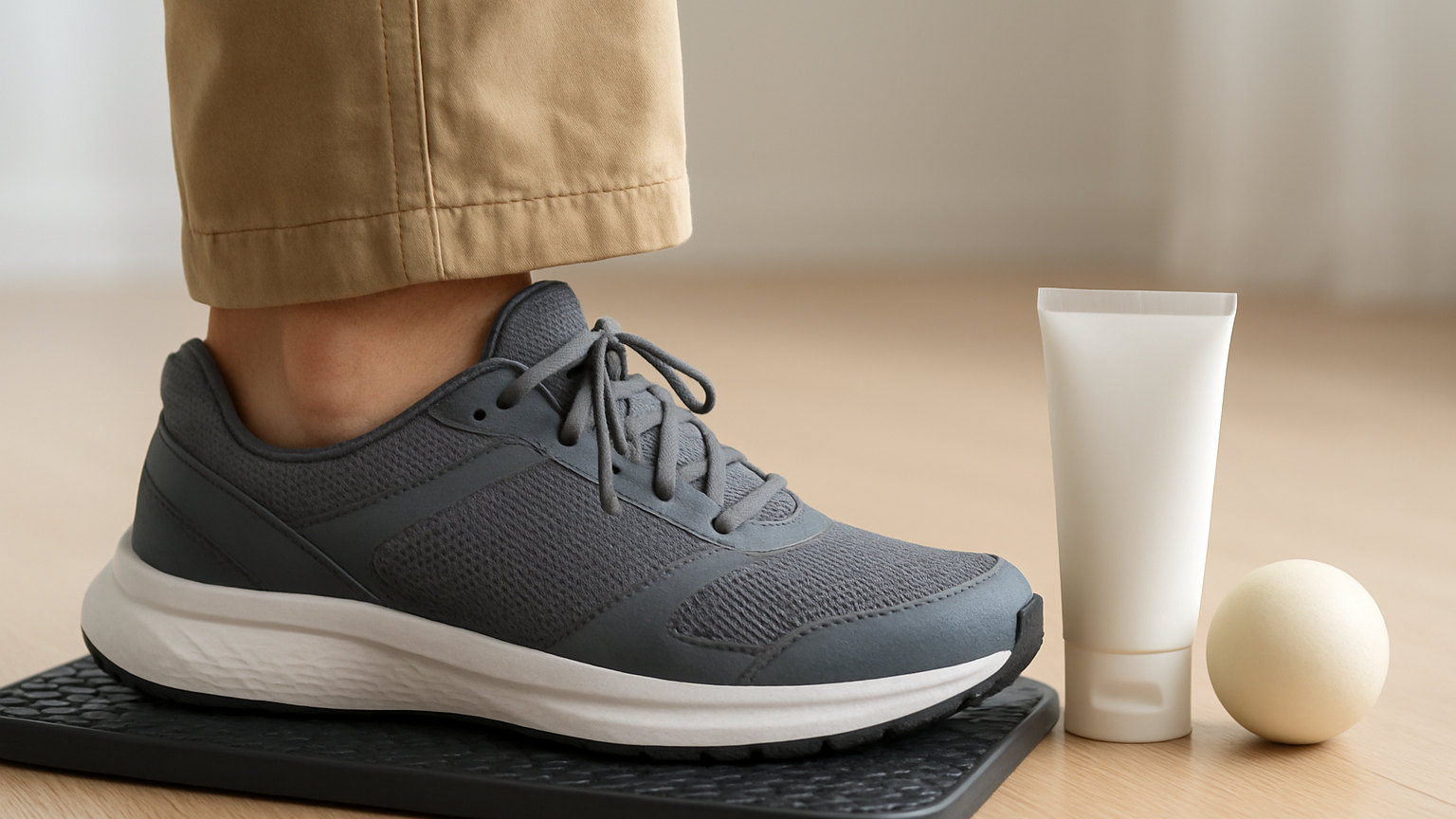
Standing still on a hard floor is harder on feet than walking, since the same tissues are loaded continuously without the pumping action that movement provides. Anyone doing it for a shift needs a different approach from someone at a desk.
Why is standing still worse than walking?
Walking activates the calf muscles, which act as a pump pushing blood back up the legs. Standing still removes that pump, so blood and fluid pool in the lower legs and feet.
The same structures also bear load continuously rather than in alternation, so the plantar fascia, the fat pads and the small muscles never get a break.
Hard floors transmit impact and pressure directly, with none of the give that a softer surface provides.
What footwear helps?
Cushioning first, since the fat pads under the heel and ball are being compressed all day.
A firm heel counter that holds the heel in place, and a sole that bends at the ball of the foot rather than in the middle.
Adjustable fastening, since feet swell across a shift and a shoe that fits at eight in the morning may pinch by four.
Enough room in the toe box. A thumb's width beyond the longest toe.
Avoid completely flat shoes with no support, and avoid heels. A small heel of two to three centimetres is generally more comfortable than either extreme.
Replace work shoes considerably more often than you would replace ordinary ones, since the cushioning compresses and stops working long before the shoe looks worn out.
Do insoles help?
Frequently, yes. A cushioned insole adds shock absorption to a shoe that lacks it, and off-the-shelf arch supports help many people with arch or heel pain.
Replace them every six to twelve months with regular use, since the cushioning flattens.
Custom orthotics from a podiatrist are worth considering for anyone with persistent pain or an identified biomechanical issue, and they are not necessary as a starting point.
What about the floor?
Anti-fatigue matting genuinely works, and the mechanism is not just softness. Standing on a slightly unstable surface causes small continuous adjustments in the leg muscles, which keeps the calf pump working.
Studies have found reduced reported discomfort with anti-fatigue mats compared with hard flooring.
If you have any influence over your workspace, a mat at any fixed standing position is the highest-value change available.
What can you change about how you stand?
Shift weight regularly rather than standing symmetrically for long periods.
Use a footrest or a low box and alternate placing one foot on it, which changes the load and reduces strain on the lower back as well.
Walk for a minute or two every half hour where possible, which restores the calf pump.
Calf raises during quiet moments, which pump fluid back up the legs and take a few seconds.
Do compression socks help?
For swelling and aching, yes, and they have reasonable evidence behind them for people who stand for long periods.
They apply graduated pressure, tightest at the ankle, which supports venous return.
Mild compression is available without prescription and is adequate for most people. Anyone with arterial disease or diabetes should ask a GP or podiatrist first, since compression is not appropriate in some circumstances.
What should you do at the end of a shift?
Elevate the legs above heart level for fifteen to twenty minutes, which drains pooled fluid.
Stretch the calves and the plantar fascia, since tight calves increase load through the foot.
Roll the sole over a ball or a frozen bottle, which combines stretch with cooling.
Change out of work shoes immediately rather than wearing them home.
A high-urea foot cream at night, since standing all day contributes to callus and cracked heels.
When should you see someone?
Pain lasting more than two or three weeks, which is not something to accept as part of the job.
Swelling in one leg only, or with pain, redness or warmth, which needs urgent assessment.
Persistent swelling in both legs that does not settle overnight, which warrants a GP appointment.
Recurrent corns, calluses or blisters in the same spot, which indicate a pressure problem a podiatrist can address with padding or orthotics.
Numbness, burning or tingling, which can indicate nerve compression or a neuroma.


