
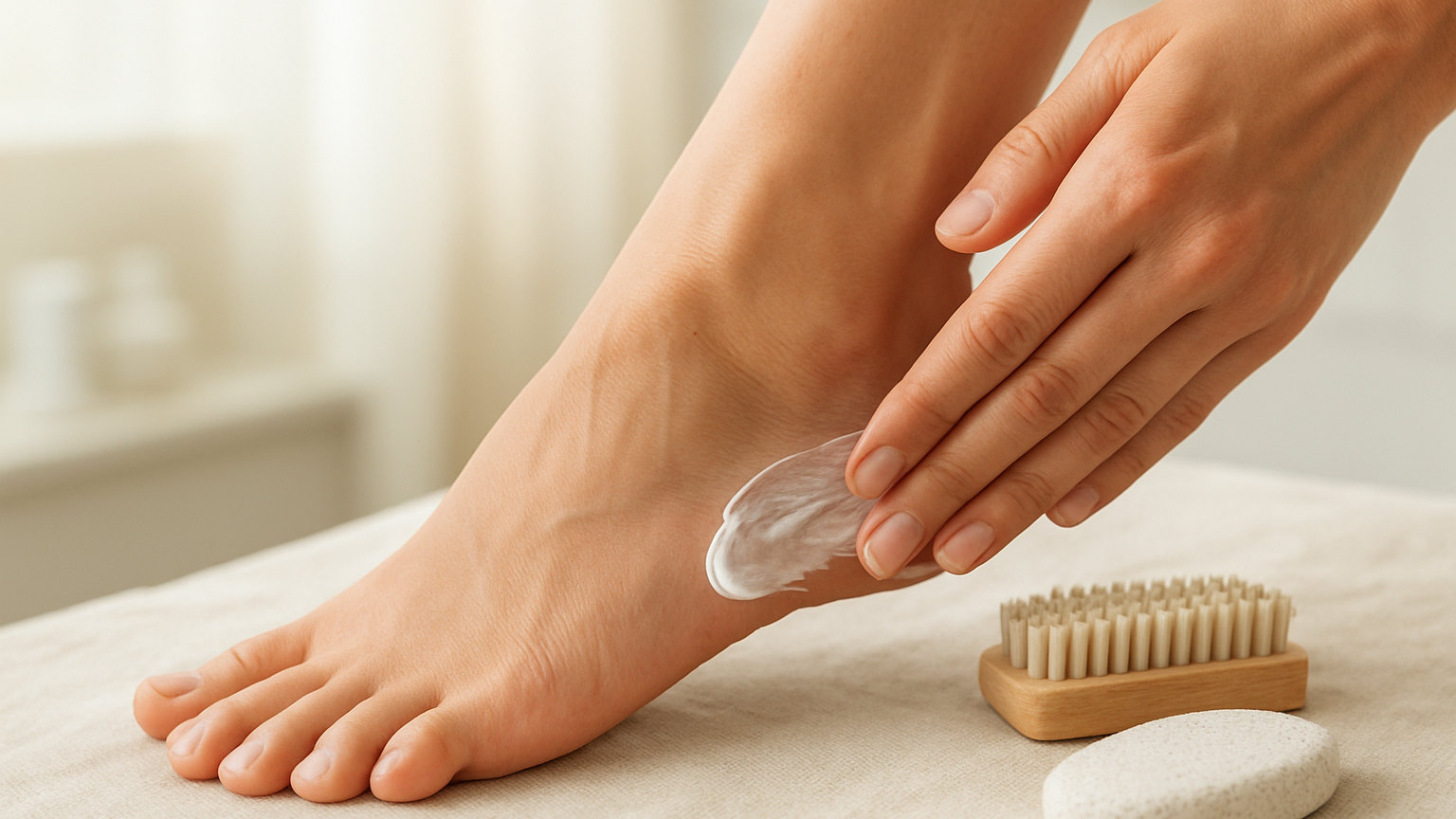
Feet are the most neglected part of most routines and the part where neglect causes practical problems rather than cosmetic ones. What they need is modest and specific.
What is genuinely daily?
Wash with soap and water, and dry thoroughly between the toes, which is where fungal infection starts.
Change socks. Alternate shoes so each pair dries out for twenty-four hours.
Moisturise, on the tops and soles rather than between the toes.
A quick look, which takes seconds and matters considerably for anyone with diabetes, neuropathy or circulation problems, for whom it should be a proper daily check.
What is weekly?
File hard skin gently on dry skin, little and often rather than a large session every few months.
A proper look at the soles, heels and between the toes, using a mirror if you cannot see them easily.
Apply a high-urea cream with cotton socks over it for anyone with hard skin or cracked heels, which is the single most effective foot treatment available.
Antifungal powder or spray in shoes if you are prone to athlete's foot or odour.
What is monthly?
Cut toenails, straight across and not too short, after a bath when they are softer. Every four to eight weeks depending on growth.
File any sharp corners smooth rather than cutting them away.
Check footwear for wear: flattened cushioning, uneven sole wear, and anything that has started rubbing.
Which products actually matter?
A urea cream at twenty per cent or above, which softens thickened skin in a way ordinary moisturiser cannot. This is the one product worth being specific about.
A foot file or pumice, used on dry skin.
Straight-edged nail clippers, kept for feet only.
Antifungal cream and shoe spray if you are prone to athlete's foot.
Everything else in the foot aisle is optional.
What should you avoid?
Blades, credo shavers and metal graters, which are the commonest cause of home foot injuries.
Medicated corn plasters, particularly for anyone with diabetes or circulation problems, since salicylic acid burns healthy skin as readily as a corn.
Removing all the hard skin, since some is protective.
Soaking for long periods routinely, which softens skin excessively and can worsen cracking.
Sharing files, clippers or towels, which spreads fungal infection.
What should you check for?
Cuts, cracks and blisters, particularly any that are not healing.
Redness, swelling, warmth or discharge, which suggest infection.
Changes in nail colour, thickness or shape.
Any new dark mark on the sole or under a nail, which needs a GP appointment rather than watching, since melanoma occurs on the feet and is frequently found late.
Numbness or reduced sensation, which changes the risk of everything else.
How do you get feet ready for sandals?
Start six weeks ahead rather than the night before, since softening thickened skin takes time.
Nightly urea cream with socks. Gentle filing two or three times a week. Nails cut straight across and tidied.
Treat any fungal nail infection early, since a toenail takes twelve to eighteen months to grow out.
Cuticle oil on the toes, which is quick and makes a visible difference.
Who should see a professional routinely?
Anyone with diabetes, peripheral arterial disease or neuropathy, who should not be filing, cutting corns or self-treating anything.
Anyone who cannot reach or see their feet comfortably.
Anyone with thickened nails, recurrent corns, persistent pain or a foot deformity.
NHS podiatry is available for people at higher risk, and a GP can advise on eligibility. For everyone else, one private appointment a year is usually enough to deal with anything the routine above does not.
Does it change with the seasons?
More than most people account for. Summer brings open footwear, which causes the heel to spread and split, along with more barefoot walking, more pool exposure and burnt feet.
Winter brings enclosed shoes worn for longer, thicker socks, damp from rain, and the central heating that dries the skin further. Athlete's foot and odour both peak in winter for that reason, while cracked heels and verrucas peak in summer.
The adjustment is straightforward: more attention to drying between the toes and alternating shoes in winter, and more urea cream, sunscreen and pool precautions in summer.
How long before you see a difference?
Two to four weeks of nightly urea cream before thickened skin softens noticeably, which is longer than most people persist for.
Nails and fungal problems run on a much slower clock, since a toenail takes twelve to eighteen months to grow out completely.


