
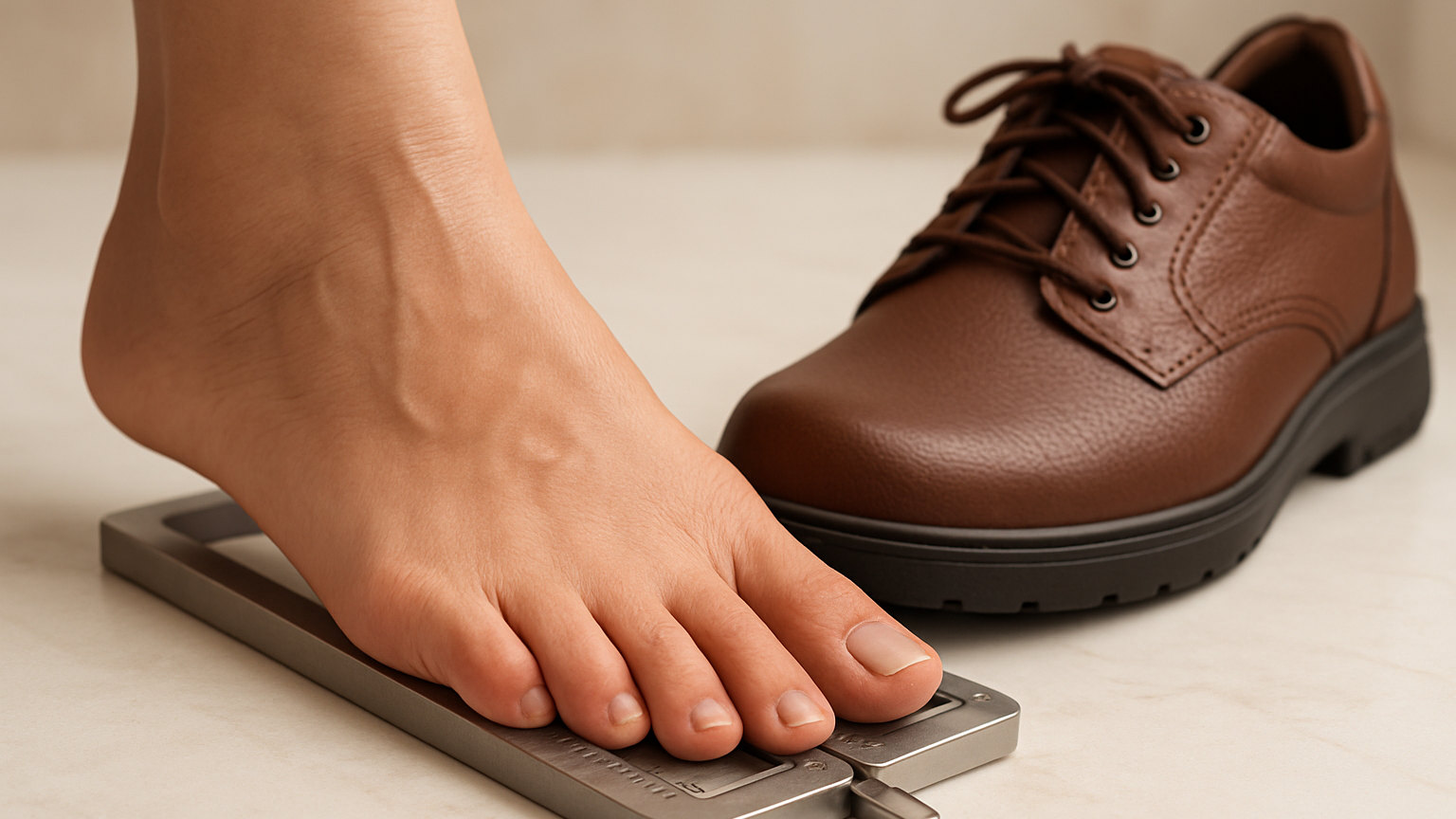
Feet change measurably across adult life. They get longer and wider, the arch drops, the protective fat pad thins, and the skin and nails change. Most people are still buying the size they wore in their twenties.
Why do feet get bigger?
Ligaments and tendons lose elasticity over decades, so the arch flattens and the foot spreads.
The result is a foot that is longer and, more noticeably, wider. It is common to go up a half or full size between thirty and sixty, and to need a wider fitting.
Pregnancy accelerates it, since relaxin loosens ligaments and the change is frequently permanent.
Weight gain contributes, as does long periods of standing.
Having both feet measured every couple of years is worth doing, since wearing shoes that are too short or narrow causes most of the problems in this article.
What happens to the fat pad?
The cushioning pads under the heel and the ball of the foot thin with age, which is called fat pad atrophy.
Less cushioning means more impact transmitted directly to bone, which produces aching in the ball of the foot and heel that is frequently blamed on other things.
It is one of the reasons older feet find hard floors and thin-soled shoes uncomfortable when they did not before.
Cushioned insoles and shoes with genuine sole cushioning address it directly, and going barefoot indoors on hard floors makes it worse.
What happens to the skin?
It becomes drier, since sebaceous glands reduce in number and activity, and there are very few on the feet to begin with.
It becomes thinner and more fragile, so it tears and bruises more easily and heals more slowly.
Cracked heels become considerably more common, and they matter more, since a crack in fragile skin with reduced healing is a genuine infection route.
A high-urea cream daily rather than occasionally becomes the baseline rather than a treatment.
What happens to the nails?
They thicken, grow more slowly, and become harder to cut. The big toenail is usually the worst affected.
Ridging becomes more pronounced. Colour can change to a yellowish tone without any infection being present.
Fungal nail infection becomes considerably more common, and thickened nails are harder to treat topically.
Cutting them after a bath, when softened, and using proper toenail clippers rather than scissors makes it manageable. For anyone who cannot cut them safely, a podiatrist can do it routinely.
What about circulation and sensation?
Circulation to the feet reduces with age and considerably more with diabetes, smoking or peripheral arterial disease.
Reduced sensation from neuropathy means injuries go unnoticed, which is the central risk in older feet.
Cold feet, changes in skin colour, hair loss on the toes and slow-healing wounds are all worth mentioning to a GP.
Anyone who cannot feel a light touch on the sole should be having regular professional foot checks.
What should change about footwear?
Wider fittings, since the foot has spread. Adjustable fastenings, which accommodate swelling and are easier with reduced dexterity.
Genuine cushioning and a firm heel counter. Non-slip soles, which matter for falls prevention as much as for comfort.
Avoid backless shoes and slippers without a heel, which are a recognised falls risk and contribute to cracked heels.
Indoor footwear rather than bare feet on hard floors.
Why does it matter more than it sounds?
Foot pain changes how people walk, which affects balance and increases falls risk. Falls are among the most consequential events in later life.
Reduced mobility from foot problems has knock-on effects on general health that go well beyond the feet.
Nails that cannot be cut, cracked heels and corns are not trivial when the person cannot reach or see their own feet.
What should the routine be?
Check the feet daily, or have someone check them, particularly with diabetes or reduced sensation. Use a mirror for the soles.
Wash and dry thoroughly, especially between the toes. Moisturise with a urea cream daily, avoiding between the toes where damp encourages fungus.
Cut nails straight across after softening, or have a podiatrist do it.
See a podiatrist regularly rather than only when something hurts. NHS podiatry is available for those at higher risk, and it is worth asking a GP about eligibility.


