
Athlete's foot is a fungal infection of the skin, extremely common, and straightforward to treat. It recurs constantly in people who stop treatment as soon as the itching goes, which is the single most useful thing to know about it.
What does it look like?
Most commonly, itchy, cracked, peeling skin between the fourth and fifth toes, which is the tightest gap and stays dampest.
It can also present as dry scaling across the sole and heel in a moccasin pattern, which is frequently mistaken for ordinary dry skin and treated with moisturiser for years.
A third form produces small itchy blisters, usually on the arch or sole.
Redness, a burning sensation and an unpleasant smell are common.
What causes it?
Dermatophyte fungi, principally Trichophyton species, which feed on keratin in the outer skin layer.
They thrive in warm, damp, enclosed conditions, which is precisely what a shoe provides.
It spreads through direct contact with contaminated surfaces: communal showers, changing rooms, poolsides, gym floors and shared towels.
Anyone can get it. The name reflects where it spreads rather than who is susceptible.
What treatments work?
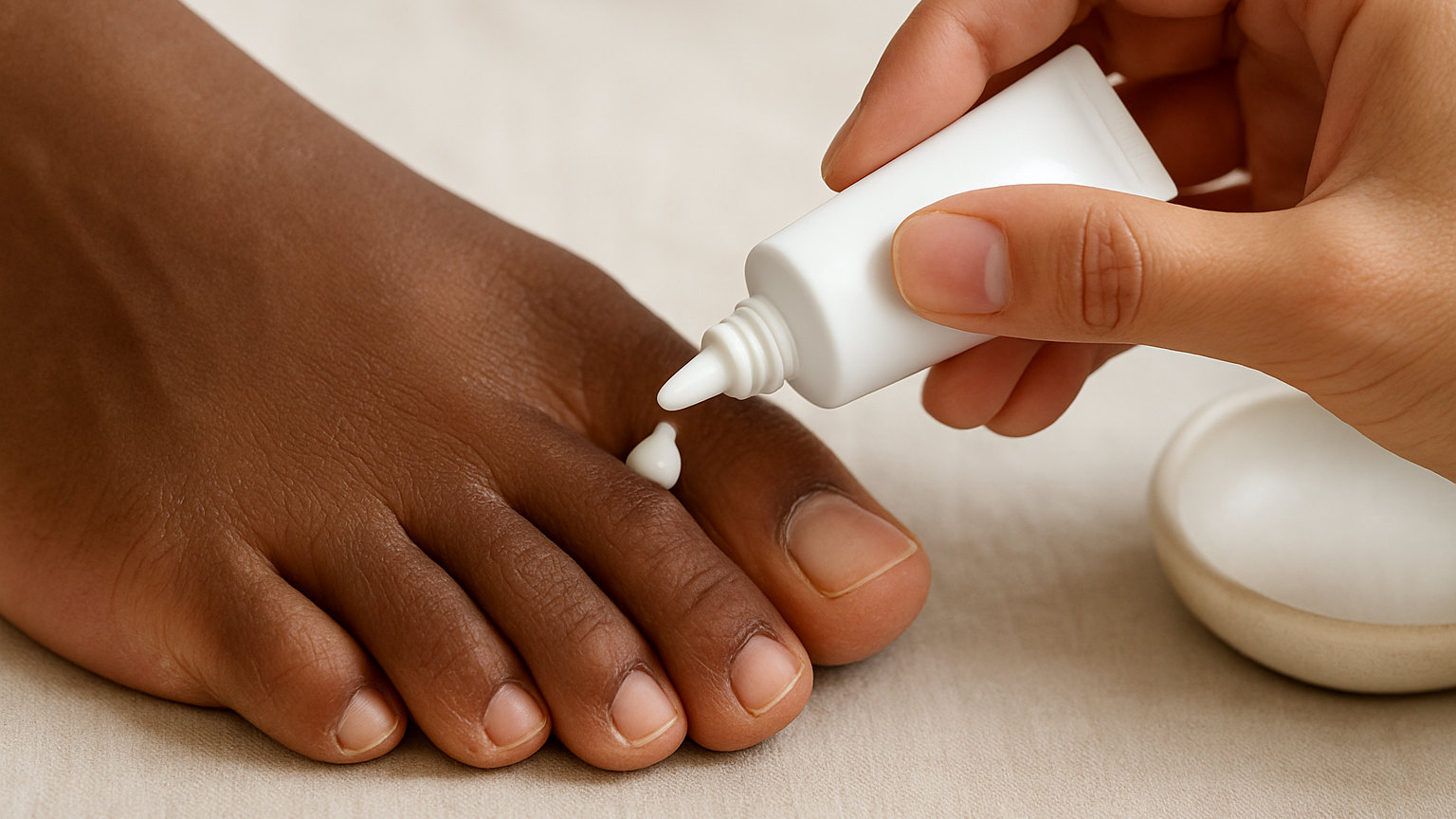
Topical antifungals from a pharmacy, and there is a meaningful difference between the types.
Terbinafine cream is generally the most effective and needs the shortest course, typically one to two weeks.
Imidazoles such as clotrimazole and miconazole work well and need longer, typically four weeks.
Undecenoic acid and tolnaftate preparations are older, cheaper and less effective.
Apply to the affected area and a couple of centimetres beyond it, since the fungus extends further than the visible edge.
Why does it come back?
Because people stop when the symptoms clear rather than when the fungus is gone.
Itching settles within a few days; the infection needs the full course. Continue for at least one to two weeks after it looks completely normal.
Reinfection from shoes and socks is the other cause. The fungus survives in footwear, and putting a treated foot into an untreated shoe restarts it.
Antifungal powder or spray in shoes, alternating pairs, and washing socks at sixty degrees all help.
How do you stop it spreading?
To the nails, which is the most important. Fungal nail infection is considerably harder to treat, taking six to twelve months, and athlete's foot is the usual source. Treating the skin promptly prevents it.
To the groin, producing tinea cruris, which happens when the same towel or the same underwear passes over both. Dry your feet last, and put socks on before underwear.
To other people, via shared towels, bathmats and floors.
Wear flip-flops in communal wet areas without exception.
What else matters?
Drying thoroughly between the toes after every wash, which is where the infection starts and where people skip.
Changing socks daily, and twice if you sweat heavily. Natural fibres or technical socks over nylon.
Alternating shoes so each pair dries for twenty-four hours. Breathable footwear rather than plastic.
Going barefoot at home to let feet dry out.
Is it definitely athlete's foot?
Not always, and treating the wrong thing wastes weeks.
Eczema and contact dermatitis produce itchy scaling that does not respond to antifungals. Psoriasis can look similar on the sole.
Pitted keratolysis produces small craters on the sole with a strong odour and is bacterial, needing antibiotics.
If four weeks of proper antifungal treatment has changed nothing, it is worth reconsidering the diagnosis rather than trying another antifungal.
When should you see a GP?
If it has not cleared after four weeks of treatment used correctly.
If the skin is badly cracked, weeping, or shows spreading redness and warmth, which suggests a secondary bacterial infection.
If the nails are involved, since those need oral treatment rather than cream.
Anyone with diabetes, poor circulation or a weakened immune system should have it seen rather than self-treated, since foot infections escalate quickly in those groups.
What about the shoes themselves?
The part most treatment plans ignore, and the reason many people go round in circles. Fungal spores survive in footwear for months, so a treated foot going back into an untreated shoe is reinfected within days.
Antifungal powder or spray in every pair you wear regularly, applied at the same time you start treating the skin. Alternate pairs so each dries fully for twenty-four hours between wears.
Wash socks at sixty degrees or use a laundry sanitiser, since a cool wash does not kill the fungus. Old trainers worn through a long infection are sometimes worth replacing rather than treating.


