
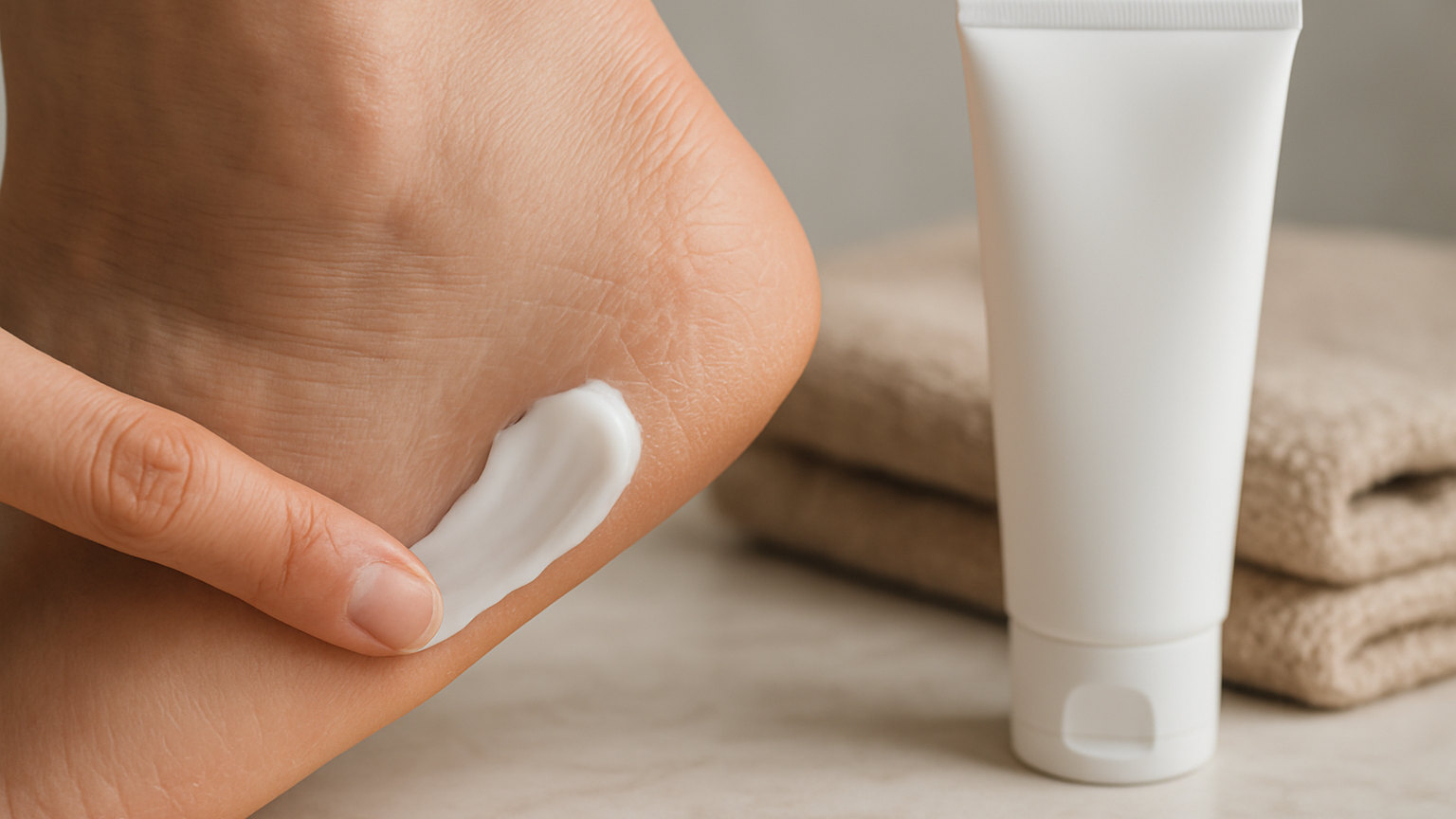
Cracked heels are a mechanical problem before they are a moisture one. Skin thickens under pressure, thickened skin loses flexibility, and inflexible skin splits when it is loaded. Ordinary moisturiser rarely addresses any of that.
Why do heels crack?
Pressure and friction cause the skin to thicken as a protective response, which is a callus and is functional rather than a fault.
Thickened skin has less elasticity. When you walk, the fat pad under the heel spreads sideways, and skin that cannot flex splits at the edge.
Dry skin makes it worse, cold weather makes it worse, and open-backed shoes make it considerably worse because the heel spreads unrestrained with every step.
Who gets them?
Anyone standing for long periods, particularly on hard floors. Anyone wearing open-backed shoes, sandals or flip-flops regularly.
Anyone carrying extra weight, which increases the load on the heel. Anyone with naturally dry skin.
They are also associated with an underactive thyroid, diabetes, psoriasis and eczema, so persistent severe cracking without an obvious cause is worth mentioning to a GP.
Why does ordinary moisturiser not work?
Because the problem is thickened dead skin rather than dehydration alone, and a standard body lotion sits on top of it without penetrating or softening it.
The ingredient that does work is urea. At ten per cent it hydrates; at twenty-five to forty per cent it is keratolytic, breaking down the bonds holding dead cells together and genuinely softening the callus.
Salicylic acid does something similar and is often combined with urea in foot preparations.
Many products sold as foot cream are ordinary moisturisers with a foot on the label. Check the ingredient list for the urea percentage, which is frequently stated.
What is the routine that works?
Apply a high-urea cream at night, generously, to clean dry feet.
Put on cotton socks over it, which keeps it in contact for hours and stops it transferring to bedding. This is the single most effective thing available.
File gently on dry skin, not wet, two or three times a week. Dry filing is more controlled and removes less than you expect, which is the point.
Continue for two to four weeks before judging it. Thickened skin takes time to soften.
How should you file?
Little and often rather than removing a lot in one session, which stimulates the skin to thicken further in response.
A foot file or pumice on dry skin, using light pressure, working across the callus rather than digging at the crack.
Never use a blade or a credo shaver at home. These cause serious injuries and are illegal for non-medical practitioners to use in some settings.
Avoid removing all the hard skin, since some thickening is protective and stripping it entirely leaves the area vulnerable.
What about a deep painful crack?
A fissure that has split into the living skin will bleed and hurt, and it is an open wound rather than a cosmetic problem.
Clean it, apply an antiseptic, and cover it with a plaster or a liquid skin product, which seals it and allows healing.
Heel balm containing urea around the crack rather than in it. Avoid filing the crack itself.
Wear closed-in shoes until it heals, since the spreading is what keeps reopening it.
What about footwear?
This is the part that determines whether it recurs. Open-backed shoes allow the heel fat pad to spread laterally with every step, which is the mechanical cause.
Closed-in shoes with a firm heel counter contain it. Cushioned insoles reduce the pressure.
Silicone heel cups are inexpensive and genuinely effective for anyone whose heels crack every summer.
Going barefoot on hard floors contributes and is worth reducing.
When should you see someone?
Anyone with diabetes should have any foot problem seen rather than treated at home, since reduced sensation and healing turn small cracks into serious infections.
The same applies to anyone with peripheral arterial disease or neuropathy.
For everyone: cracks that are bleeding, painful, weeping, or showing spreading redness, warmth or swelling.
And anything that has not improved after a month of high-urea cream and gentle filing, which a podiatrist can debride properly in one appointment.


