
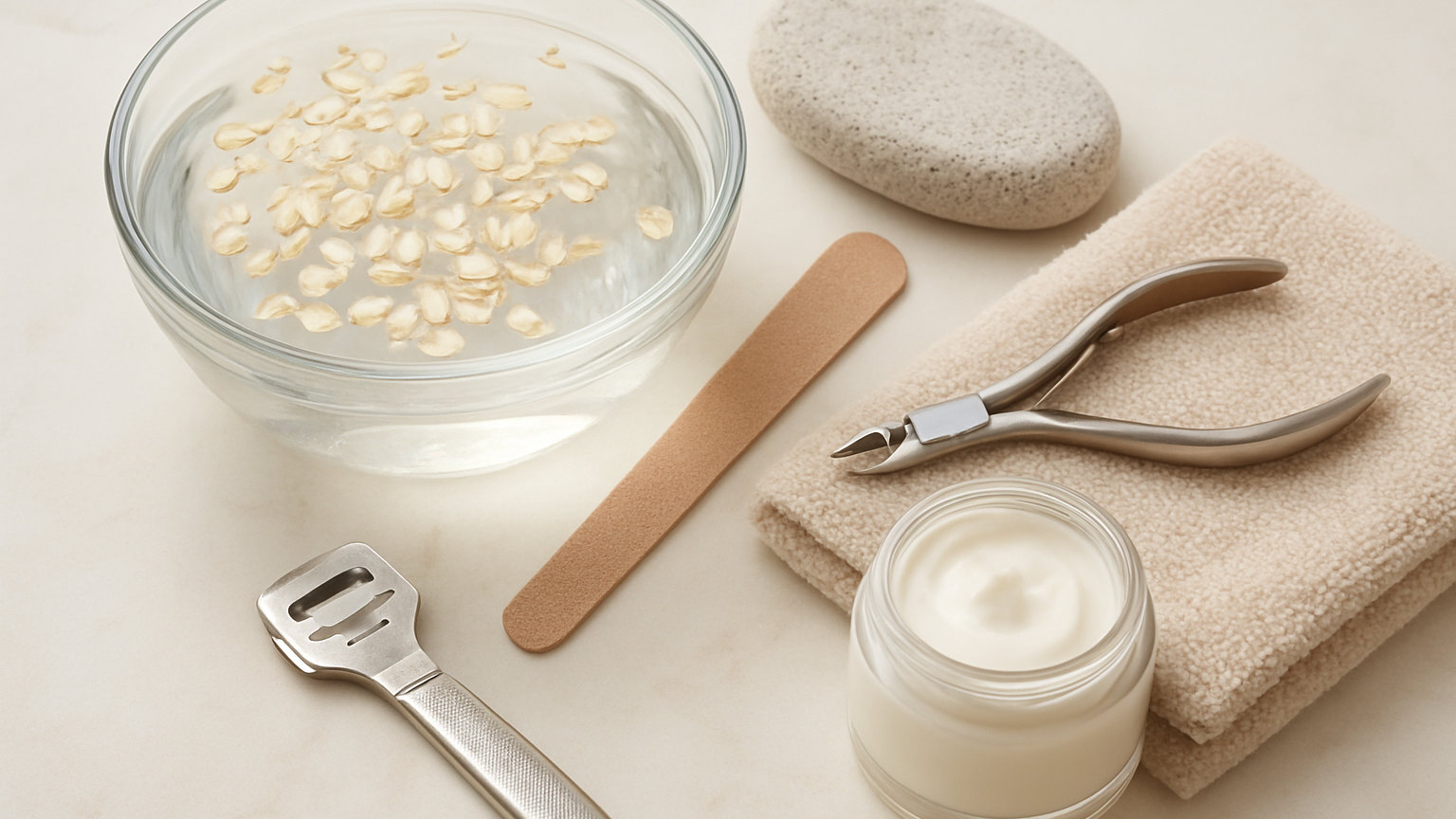
A pedicure at home is easy to do well and easy to overdo. The order matters, and two commonly sold tools cause most of the injuries in this area.
What do you need?
A bowl or bath for soaking. A foot file or pumice. Nail clippers with a straight edge. A nail file, ideally glass or fine grit.
A cuticle pusher, rubber-tipped or wooden. A high-urea foot cream. Toe separators if you are polishing.
Base coat, colour and top coat if you want polish.
Separate tools from the ones you use on your hands, to avoid transferring fungal infection.
What should you not use?
Credo blades and callus shavers, which remove skin with a blade. They are the commonest cause of serious home pedicure injuries, and using them on someone else is illegal for non-medical practitioners in some settings.
Electric callus removers used aggressively, which can strip protective skin entirely.
Cuticle nippers, which remove the seal protecting the nail from infection.
Metal foot graters, which take off far more than intended.
A simple foot file used on dry skin does the job with almost no risk.
What is the order?
Remove old polish first, with an acetone-free remover if you can.
Soak for five to ten minutes in warm water, which softens the nails and skin.
Cut the nails while still slightly softened. Then dry the feet completely.
File hard skin on dry skin rather than wet, which is more controlled.
Push back cuticles gently. Then moisturise, and finally polish if you want to, wiping the nails with remover first to clear the oil.
How should you cut toenails?
Straight across, level with the end of the toe, not rounded at the corners.
Rounding the corners is what causes ingrown toenails, since the nail grows into the skin at the side under pressure from footwear.
Do not cut them too short, which lets the surrounding skin fold over the edge.
File any sharp corner smooth rather than cutting it away.
Why file on dry skin?
Because wet skin is soft and swollen, so you cannot judge how much you are removing and it is easy to take off too much.
Filing dry gives immediate feedback on texture and thickness.
Little and often rather than a large session, since removing a lot at once stimulates the skin to thicken further in response.
Leave some hard skin in place, which is protective. The aim is smooth rather than bare.
What about the cuticles?
Push back gently after soaking, using a rubber-tipped tool or a wooden stick.
Do not cut them. The cuticle seals the gap between nail and skin and cutting it invites infection, which matters more on feet than hands given what they are exposed to.
Cuticle oil daily does more than any pedicure step.
How do you make polish last on toenails?
Wipe each nail with nail polish remover before starting, which removes oil from the moisturiser and is the step that most affects longevity.
Base coat, two thin colour coats with two minutes between, then a top coat. Cap the free edge each time.
Toenail polish typically lasts two to four weeks, considerably longer than fingernails, since the nails grow slowly and the feet are less exposed.
Reapply top coat weekly to extend it.
How often should you do it?
Every four to six weeks for the full routine, matching toenail growth.
Filing and moisturising more often, ideally two or three times a week for the cream and weekly for light filing.
The nightly high-urea cream with cotton socks over it does more for the condition of feet than the pedicure does, and it is the part most often skipped.
Who should not do this at home?
Anyone with diabetes, peripheral arterial disease or neuropathy, who should see a podiatrist rather than filing or cutting at home, since reduced sensation means injuries go unnoticed.
Anyone with a fungal nail or skin infection, which should be treated before any cosmetic work.
Anyone who cannot comfortably reach or see their feet, where a podiatrist or a helper is safer than working blind.


