
Blisters form from shear forces within the skin rather than from surface friction alone. Layers of skin slide against each other repeatedly, separate, and fluid fills the gap. That distinction matters because it explains why some prevention methods work and others do not.
What actually causes them?
Repetitive shear: the outer skin held in place by a sock or shoe while the deeper tissue moves with the bone underneath.
Heat and moisture both make it worse. Damp skin has a higher coefficient of friction and is softer, so it separates more readily.
Pressure alone does not cause blisters; it causes calluses. Movement is the essential ingredient.
This is why blisters appear on long walks rather than long periods of standing.
How do you prevent them?
Reduce the movement. Properly fitting shoes are the foundation, since a shoe that slips at the heel or allows the foot to slide forward guarantees shear.
Lace properly, using a heel-lock lacing technique for anything long, which holds the heel in place.
Wear socks that fit without wrinkling, and consider double-layer socks or a thin liner sock, which allows the two layers to slide against each other rather than against your skin.
Keep feet dry: moisture-wicking socks, changing socks midway on a long walk, and antiperspirant on the soles at night.
Tape or apply a barrier to known hotspots before you start, rather than after they hurt.
Do lubricants help?
Petroleum jelly and specialist anti-friction balms reduce surface friction and are widely used by runners and walkers.
The evidence is mixed. They work initially and can increase moisture over long durations, which is why some studies find the benefit diminishes after an hour or two.
Powders absorb moisture and can clump when wet.
Tape applied to hotspots is more reliable for long distances, and kinesiology tape or zinc oxide tape both work well.
Should you pop a blister?
Generally not. The intact roof is a sterile biological dressing, and the blister will reabsorb on its own within a few days.
Popping introduces bacteria and slows healing.
The exception is a large, painful or tense blister in a position where it will burst anyway, such as under the ball of the foot when you still have to walk.
How do you drain one safely if you must?
Clean the area with soap and water or an antiseptic.
Sterilise a needle with an antiseptic wipe. Pierce at the edge, not the centre, ideally in two places at the lower edge so it can drain.
Press gently to release the fluid and leave the roof of skin in place, which protects the raw skin underneath.
Apply an antiseptic and cover with a dressing. Do not remove the loose skin until it separates naturally.
What dressing works best?
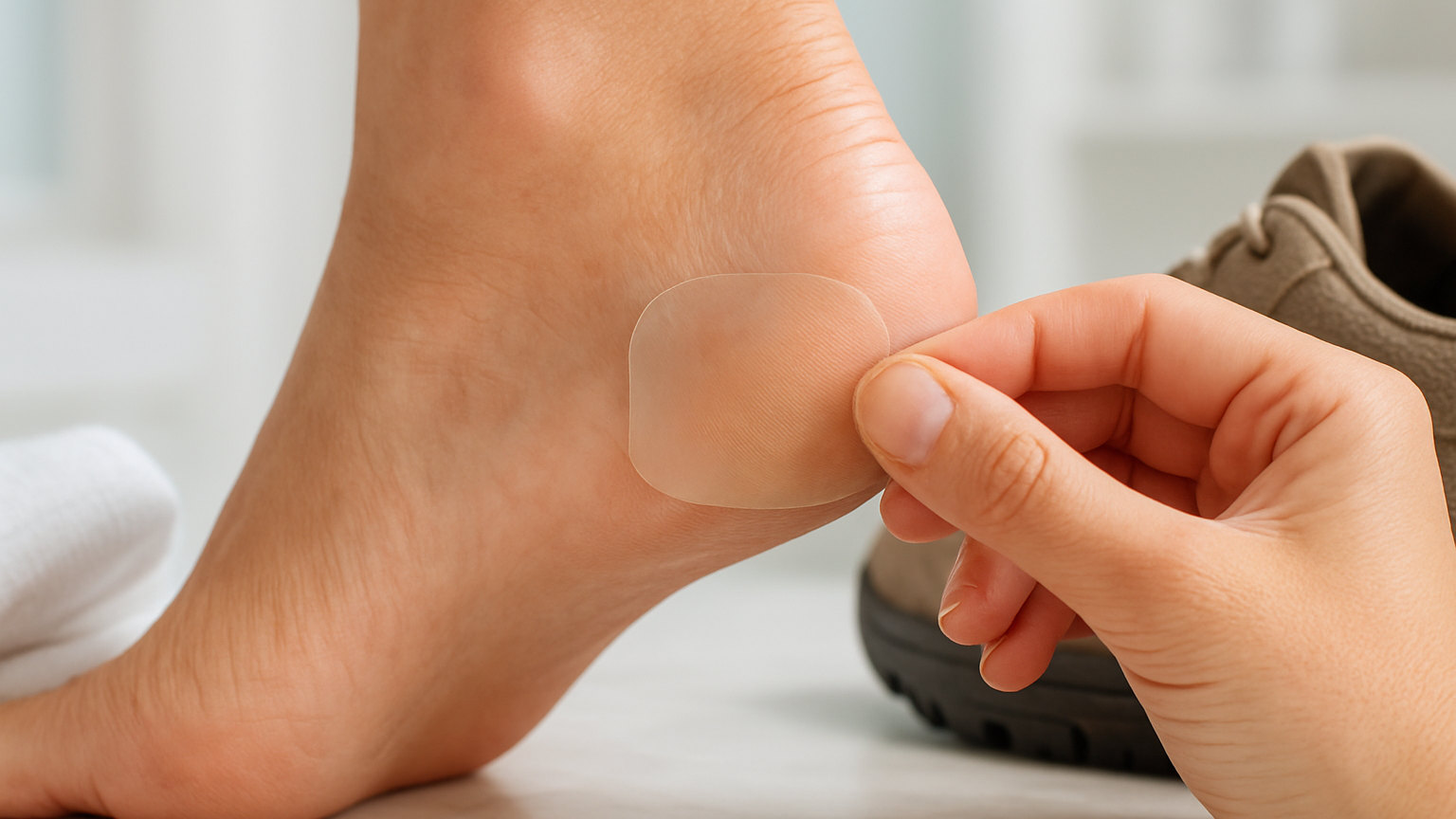
Hydrocolloid blister plasters, which are considerably better than ordinary plasters. They form a gel over the wound, cushion the area, and stay on for several days.
Leave them in place until they start to lift on their own rather than peeling them off to check, which removes healing tissue.
For a hotspot that has not yet blistered, a hydrocolloid dressing or tape applied immediately prevents it developing.
Ordinary fabric plasters move around and frequently make it worse.
What about blood blisters?
A blood blister forms when small blood vessels are damaged alongside the shear, usually from a pinch or a harder impact.
Treat it the same way and be more reluctant to drain it, since the broken vessels increase infection risk.
Cover, protect and let it reabsorb. See a GP if it is large, extremely painful, or shows signs of infection.
When should you see someone?
Signs of infection: increasing pain, spreading redness, warmth, pus, or a fever.
Blisters that keep recurring in the same place, which suggests a footwear or gait problem a podiatrist can address.
Anyone with diabetes, neuropathy or poor circulation should have any blister seen rather than managed at home, since a small blister on a foot with reduced sensation can become a serious ulcer.
And blisters appearing without friction, which can indicate a skin condition or a reaction rather than a mechanical problem.


