
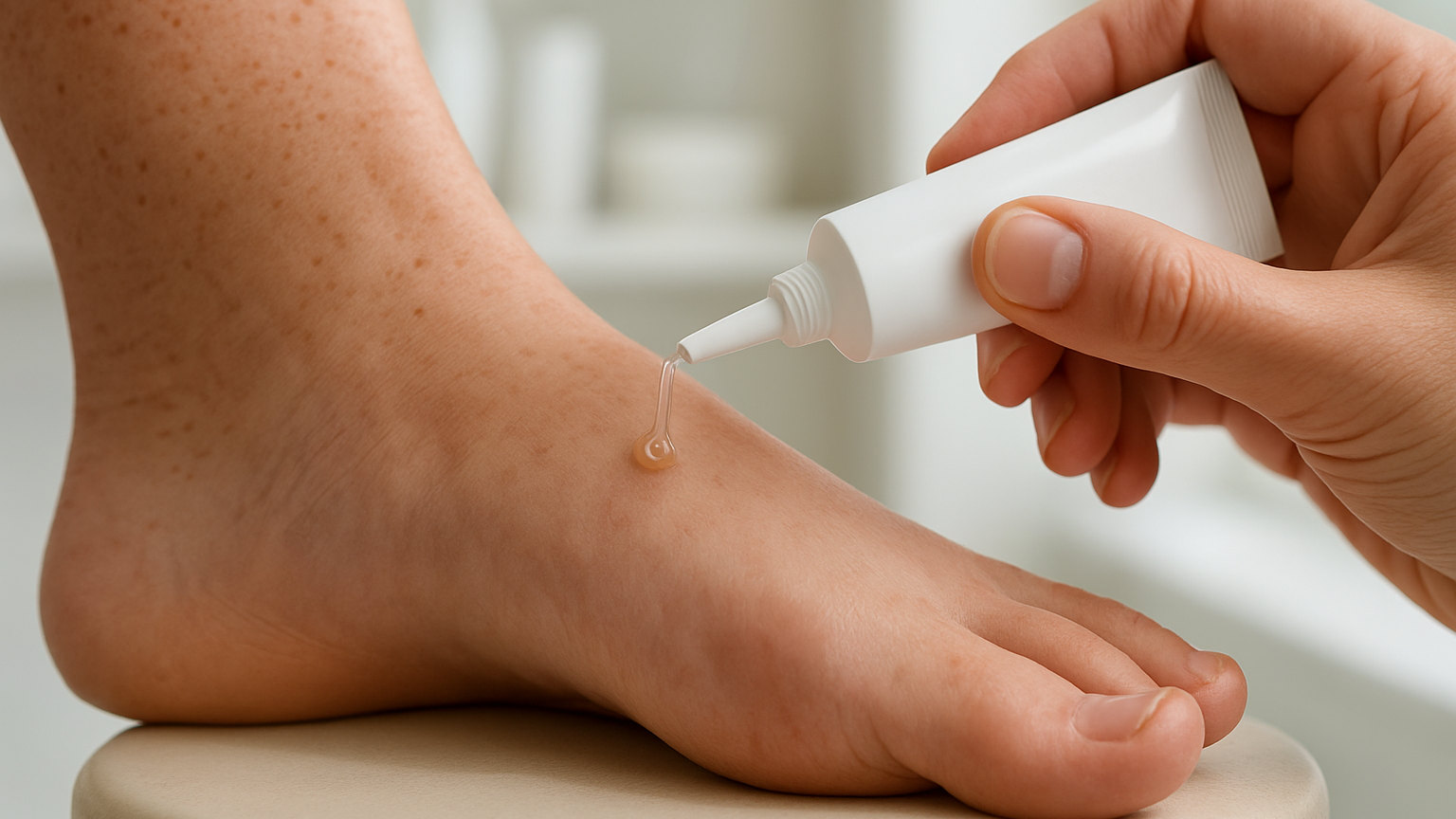
A verruca is a wart on the sole of the foot, caused by human papillomavirus infecting the outer skin layer. It is a viral infection rather than a growth, and the most likely outcome is that your immune system clears it eventually without any treatment at all.
How do you get one?
Direct contact with the virus, usually through walking barefoot on contaminated wet surfaces: swimming pools, changing rooms, communal showers and gym floors.
The virus enters through small breaks in the skin, so damp, softened or cut skin is more susceptible. This is why they are so strongly associated with swimming.
They can also spread from one part of your own body to another, and from person to person via shared towels or floors.
They are more common in children and adolescents, and in anyone with a weakened immune system.
How do you tell a verruca from a corn?
A verruca frequently has small black dots within it, which are tiny clotted capillaries rather than seeds or roots.
It interrupts the natural skin lines on the sole, which continue uninterrupted over a corn.
Verrucas are typically more painful when squeezed from the sides; corns hurt more with direct downward pressure.
A verruca can appear flat because body weight presses it inward, and it may have a rough, cauliflower-like surface under the hard skin.
If you are unsure, a pharmacist or podiatrist can tell you.
Do they need treating?
Not necessarily. Around two thirds clear on their own within two years, and the majority in children clear considerably sooner as the immune system recognises the virus.
Treatment is worth considering if it is painful, spreading, in an awkward position, or has persisted for a long time.
Treating them does not dramatically shorten the timeline in many cases, which is worth knowing before starting a months-long regimen.
What treatments work?
Salicylic acid, available from pharmacies as a gel, paint or medicated plaster. It is the best-evidenced treatment.
It works by removing layers of infected skin gradually, and it requires daily application for up to twelve weeks. Most failures are from stopping too early.
Soak the foot, file the surface gently with a dedicated file or pumice used only for this, apply the acid, and cover. Protect surrounding skin with petroleum jelly.
Cryotherapy with liquid nitrogen, available from some GPs and podiatrists, freezes the tissue. Usually several sessions two to three weeks apart, and it is painful.
Combining salicylic acid with cryotherapy works better than either alone.
What about duct tape and home remedies?
Duct tape occlusion has been studied with mixed results. Some trials found it comparable to cryotherapy and others found no benefit over placebo.
It is cheap and harmless, so it is a reasonable thing to try alongside salicylic acid rather than instead of it.
Banana skin, garlic and apple cider vinegar circulate widely with no meaningful evidence. Vinegar can cause chemical burns on the surrounding skin.
Do not attempt to cut a verruca out, which risks infection, scarring and spreading the virus.
How do you stop them spreading?
Wear flip-flops in communal showers, changing rooms and around pools.
Cover the verruca with a waterproof plaster or a verruca sock for swimming, which most pools require anyway.
Do not share towels, socks or footwear. Use a separate file or pumice for the affected foot and do not use it elsewhere.
Avoid picking or scratching it, which spreads the virus to adjacent skin and produces the clustered mosaic pattern.
Keep feet dry, since damp softened skin is more susceptible.
How long does treatment take?
Twelve weeks of daily salicylic acid is a realistic course, and longer is common.
Cryotherapy typically needs three to six sessions.
Abandoning treatment at four weeks because nothing visible has happened is the commonest reason it appears not to work.
When should you see a GP or podiatrist?
Anyone with diabetes, poor circulation or neuropathy should not self-treat, since salicylic acid on skin with reduced sensation carries a genuine risk.
Anyone with a weakened immune system. Anyone whose verruca is bleeding, changing shape or colour, or is painful enough to affect walking.
Anything that has not responded to twelve weeks of proper treatment, or anything you are not certain is a verruca.


