
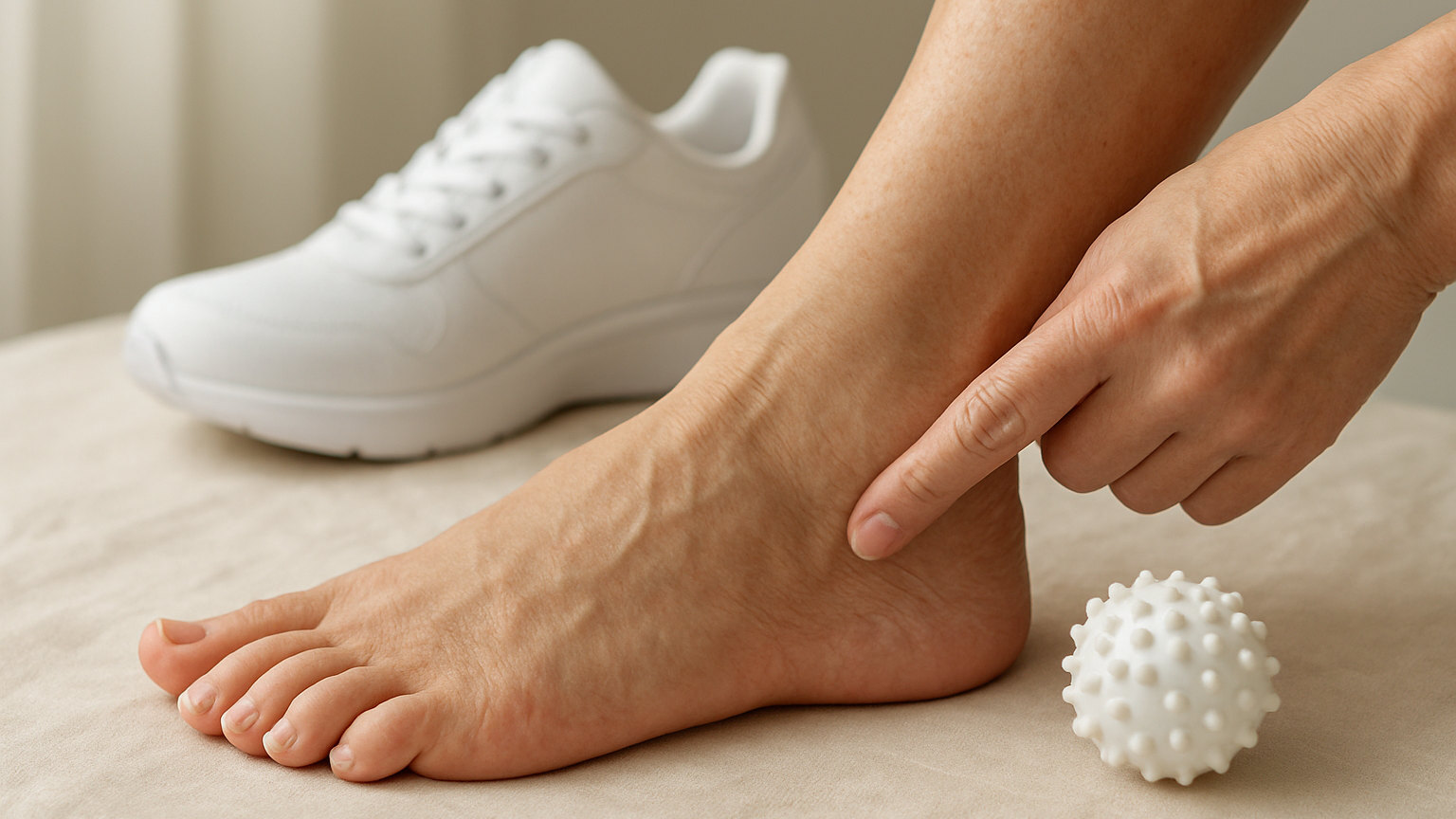
Foot pain is common, usually mechanical, and generally treatable. Where it hurts narrows the likely cause substantially, which makes it worth locating precisely before deciding what to do.
What causes heel pain?
Plantar fasciitis is the commonest, accounting for the majority of heel pain in adults.
The characteristic feature is pain in the first few steps after getting out of bed or after sitting, which eases with walking and returns after rest. It is felt at the front of the heel where the fascia attaches.
It is a degenerative rather than inflammatory condition despite the name, caused by repetitive strain on the band of tissue running along the sole.
Risk factors include long periods standing, unsupportive footwear, tight calves, high or flat arches, and weight gain.
Achilles tendinopathy causes pain at the back of the heel instead, worse with activity.
How do you treat plantar fasciitis?
Calf and plantar fascia stretching, done consistently, which has the best evidence of anything self-directed.
Rolling the sole over a frozen water bottle or a ball, which combines stretch and cooling.
Supportive footwear with cushioning and arch support, worn indoors too rather than going barefoot on hard floors.
Off-the-shelf insoles, which help many people.
Reducing the aggravating activity temporarily rather than stopping entirely.
It typically takes several months to settle, and most cases resolve within a year. A podiatrist or physiotherapist can help if it does not.
What causes pain in the ball of the foot?
Metatarsalgia, a general term for pain under the metatarsal heads, caused by excess pressure from high heels, thin soles, high-impact activity or a foot shape that loads one area.
Morton's neuroma, a thickening of nerve tissue usually between the third and fourth toes, producing burning pain, numbness or the sensation of standing on a pebble. Narrow shoes and heels are strongly implicated.
A stress fracture, which produces localised pain worsening with activity and is common in runners and after a sudden increase in training.
Sesamoiditis, affecting the two small bones under the big toe joint.
What causes pain in the toes?
Bunions, where the big toe joint deviates and the joint becomes prominent and painful. Largely genetic, worsened by narrow footwear.
Hammer, claw and mallet toes, where toes bend abnormally, often causing corns on the tops.
Gout, which typically produces sudden severe pain, redness and swelling in the big toe joint, frequently at night. This needs medical assessment.
Ingrown toenails, from cutting nails rounded rather than straight.
Arthritis of the big toe joint, producing stiffness and pain on pushing off.
What causes arch pain?
Plantar fasciitis extending forward along the sole.
Flat feet or fallen arches, which are common and only a problem if painful. Adult acquired flatfoot from tendon dysfunction produces progressive pain on the inner ankle and arch.
High arches, which distribute weight over a smaller area and cause pressure pain.
Tight footwear or a sudden change in activity.
What helps generally?
Footwear with cushioning, arch support and a firm heel counter, worn consistently rather than only outdoors.
Calf stretching, since tight calves increase load through the foot in almost every one of these conditions.
Strengthening the small muscles of the foot, which is increasingly recommended and often overlooked.
Reducing impact temporarily and building back gradually rather than resting completely.
Weight management where relevant, since the foot carries several times body weight during walking.
What should you not do?
Ignore pain lasting more than a few weeks, which is when most of these become harder to treat.
Continue in the footwear that caused it. Push through sharp pain, particularly if a stress fracture is possible.
Rely on painkillers alone without addressing the mechanical cause.
When should you see someone?
Pain lasting more than two to three weeks despite sensible measures.
Sudden severe pain, particularly with redness and swelling, which may be gout, infection or a fracture.
Any inability to bear weight, numbness, or a visible deformity.
Pain accompanied by fever or spreading redness, which needs same-day attention.
And anyone with diabetes, who should have any foot pain assessed promptly given the risks of unnoticed injury.


