
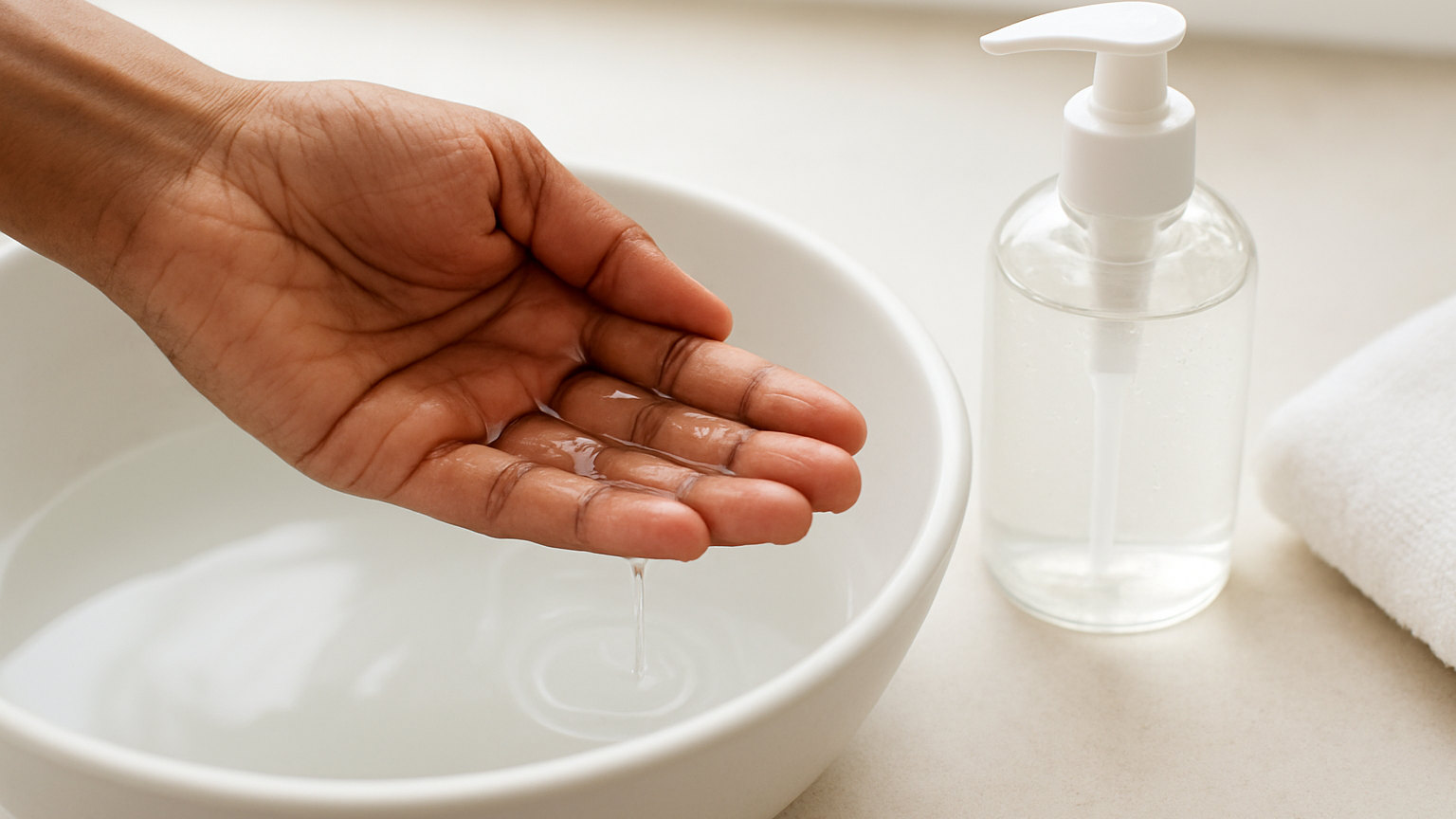
The single most useful fact here is that the vagina cleans itself. It maintains an acidic environment and a bacterial population that keep it healthy, and washing inside it disrupts both. The vulva, on the outside, needs washing and needs very little.
What is the difference between the vagina and the vulva?
The vagina is the internal canal. The vulva is everything on the outside: the labia, the clitoris, the vaginal opening and the surrounding skin.
The distinction matters because the advice differs completely. The vagina should not be washed internally at all. The vulva should be washed, gently, with water.
Most products marketed for intimate hygiene blur this deliberately, and a good deal of unnecessary irritation follows.
Why is the vagina self-cleaning?
Lactobacilli, the dominant bacteria in a healthy vagina, produce lactic acid, keeping the pH at around 3.8 to 4.5. That acidity suppresses the growth of other organisms.
Discharge carries dead cells and bacteria outward continuously, which is the cleaning mechanism.
Anything that raises the pH or disturbs the lactobacilli makes infection more likely rather than less.
Why is douching harmful?
Because it flushes out the lactobacilli and raises the pH, removing the protection rather than adding to it.
Douching is associated with an increased risk of bacterial vaginosis, pelvic inflammatory disease, and complications in pregnancy.
It also masks symptoms that would otherwise prompt a diagnosis, so problems are found later.
No medical body recommends it. If you have symptoms that make you want to douche, those symptoms are the thing to address.
How should you wash the vulva?
Plain warm water, once a day, using your hand rather than a flannel or sponge.
If you prefer to use something, an unfragranced emollient or a pH-balanced wash designed for the area, used externally only.
Wash front to back. Rinse thoroughly and pat dry rather than rubbing.
Between the folds of the labia is where secretions and product residue accumulate, so gentle attention there rather than avoiding it.
What causes most irritation?
Products, in most cases. Fragranced soaps and shower gels, bubble baths and bath bombs, fragranced wipes, intimate deodorants and sprays, and heavily fragranced laundry products.
Overwashing, which strips the skin and disrupts the barrier.
Tight synthetic clothing and prolonged damp from swimwear or gym kit.
Latex or spermicide sensitivity. Shaving and waxing.
Panty liners worn daily, which trap moisture and heat.
What about intimate wipes and deodorants?
Wipes are convenient and frequently fragranced, and regular use is a common cause of contact dermatitis.
Intimate deodorants and sprays mask odour without addressing its cause, and the fragrance is a direct irritant on thin skin.
A normal vulva has a scent. That is not a problem to be corrected, and a genuinely abnormal smell is a symptom to investigate rather than to cover.
If you want something for freshening during the day, plain water or an unfragranced wipe used occasionally is the safer option.
What about men?
The same principles: plain water, daily, gently.
For anyone uncircumcised, retracting the foreskin and washing underneath with water then drying thoroughly prevents smegma build-up and balanitis, which is inflammation of the head of the penis.
Do not use soap under the foreskin, which is a common cause of irritation and dryness.
Never force a foreskin that does not retract easily, particularly in children, where it is normal for it to remain attached for years.
When should you see a GP?
A change in the colour, consistency or smell of discharge, particularly if it is grey, green, frothy or has a strong fishy odour.
Itching, soreness or burning that persists despite stopping all products.
Any lump, ulcer, sore or bleeding. Any pain during sex or when passing urine.
White patches, thickened or shiny skin, or changes in the shape of the vulva, which can indicate lichen sclerosus and needs treatment.
These are common, treatable and worth raising rather than managing with more products.


