
Intimate skin reacts more than skin anywhere else because three factors combine: the hair is coarse and curly, the skin is thin and folded, and the area is warm, occluded and moist for most of the day.
What should you do immediately afterwards?
Rinse with cool water and pat dry rather than rubbing.
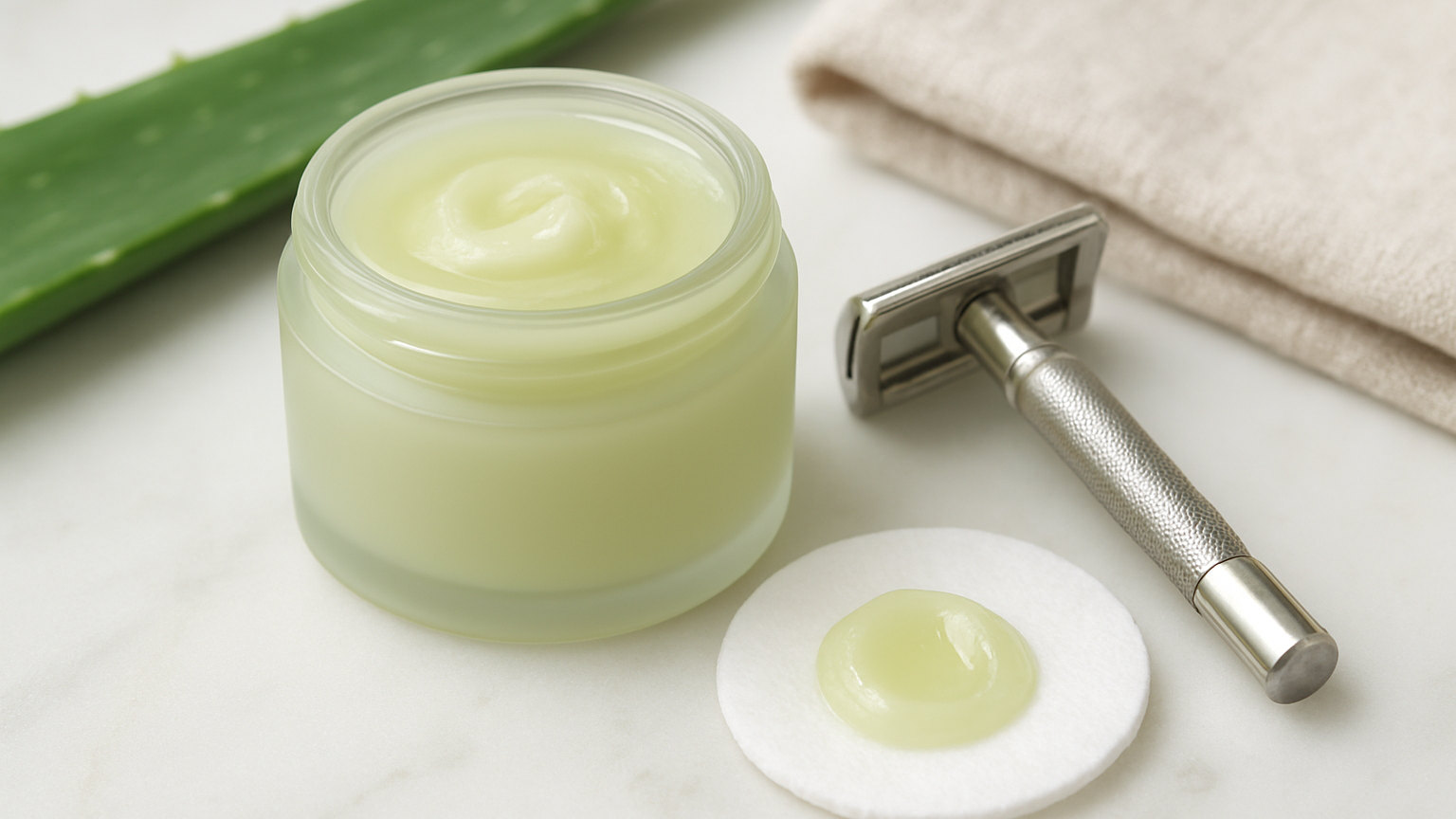
Apply something bland: an unfragranced emollient, aloe vera gel, or a plain barrier balm. Nothing fragranced, nothing with alcohol, nothing active.
Wear loose cotton underwear and loose clothing for the rest of the day.
Avoid heat for twenty-four hours: no hot baths, saunas, steam rooms, hot tubs or heavy exercise, since follicles are open and warmth encourages bacteria.
No swimming, and no sun on the area.
Why do ingrown hairs happen here?
Pubic hair is among the coarsest on the body and grows from curved follicles, so a freshly cut sharp tip points back toward the skin.
Shaving against the grain or stretching the skin taut cuts the hair below the surface, which is precisely the mechanism.
Tight clothing and friction push emerging hairs back down.
Dead skin over the follicle opening blocks the hair from breaking through.
How do you prevent them?
Do not shave too close. This is the central adjustment and the hardest to accept.
Shave with the grain, use a fresh blade, do not stretch the skin, and trim rather than shave where you can.
Exfoliate gently two or three times a week between sessions, not immediately before or after. A chemical exfoliant with salicylic or glycolic acid works better than a scrub and causes less friction.
Moisturise, since dry skin makes it harder for hair to break through.
Extend the interval between sessions where possible.
How do you treat one?
Leave it alone in the first instance, since most resolve within a week or two as the hair works free.
Warm compresses for ten minutes several times a day, which softens the skin and encourages the hair to surface.
A salicylic acid product applied to the area to clear the follicle opening.
Do not dig at it with tweezers or a needle, which introduces bacteria and is a common route to scarring and lasting dark marks.
If a loop of hair is clearly visible above the surface, it can be lifted gently with sterilised tweezers without digging.
What is folliculitis and how is it different?
Infection of the follicles themselves, producing small pustules each centred on a hair, usually appearing one to three days after hair removal.
Ingrown hairs appear later, are tender rather than pustular, and have a hair visible beneath the surface.
Folliculitis usually settles within a week with warm compresses, keeping the area clean and dry, and avoiding further hair removal.
Do not squeeze, which spreads it to adjacent follicles.
See a pharmacist or GP if there is spreading redness, increasing pain, significant swelling or a boil-like lump.
What about the marks left behind?
Post-inflammatory hyperpigmentation, which is more common and more persistent in deeper skin tones.
It fades over three to twelve months provided the area is not repeatedly re-inflamed, which is the difficult part when hair removal continues.
Azelaic acid and niacinamide help. Picking is the largest controllable factor in whether marks form at all.
Avoid unregulated skin lightening creams, which frequently contain mercury or potent steroids and cause lasting harm, and are marketed hardest at exactly the people most affected.
Is a different method better?
For many people, yes. Trimming with a guard avoids the ingrown hair mechanism almost entirely and is the lowest-risk option.
Waxing removes hair from the root, so regrowth emerges softer, at the cost of a different set of ingrown hair risks.
Laser hair removal is the most effective long-term answer for chronic razor bumps and is often recommended medically rather than purely cosmetically for that reason.
And leaving the hair is a legitimate option. Pubic hair reduces friction and offers some protection, and its removal is a fashion rather than a hygiene requirement.
When should a bump be checked?
Recurrent painful lumps and boils in the groin, underarms or under the breasts, which can indicate hidradenitis suppurativa. It affects around one in a hundred people, is frequently mistaken for ordinary boils for years, and early treatment matters.
Any lump that is painless, hard, growing or persistent beyond a few weeks.
Any ulcer, sore or blister, which needs assessing rather than assuming it is from shaving.
And any lump in the groin crease, which contains lymph nodes and is not always a skin problem.


