
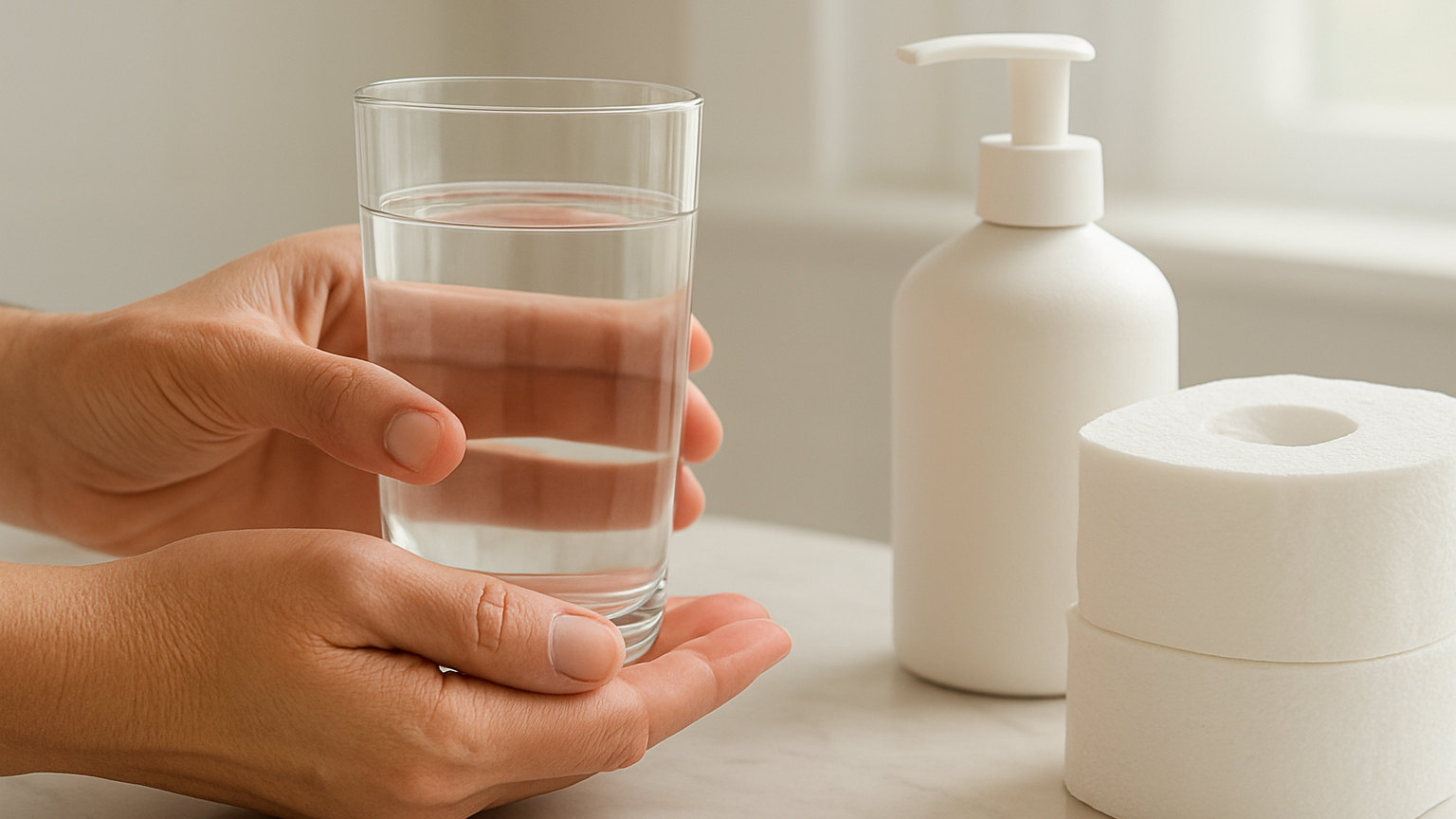
Urinary tract infections are extremely common, particularly in women, because the urethra is short and sits close to the anus. Some prevention advice has reasonable evidence behind it, and some is repeated without any.
Why are women more affected?
The female urethra is around four centimetres long compared with roughly twenty in men, so bacteria reach the bladder more easily.
Its opening also sits close to the vagina and anus, which is where the bacteria responsible, usually E. coli from the bowel, come from.
Around half of women will have at least one UTI in their lifetime, and a substantial proportion have recurrent episodes.
Risk increases after the menopause, when falling oestrogen thins the tissue and changes the local bacterial population.
What are the symptoms?
Burning or stinging when passing urine. Needing to go frequently and urgently, often producing very little.
Cloudy or strong-smelling urine, and lower abdominal discomfort.
Blood in the urine, which is common with cystitis and always warrants medical assessment.
In older adults, confusion or a general decline can be the main presentation rather than urinary symptoms, which is worth knowing.
Which prevention advice has evidence?
Drinking more fluid, which has good supporting evidence. A trial in women with recurrent UTIs found that increasing water intake substantially reduced episodes.
Passing urine after sex, which is widely recommended and has modest supporting evidence. Sex is a well-established trigger.
Wiping front to back, which is sensible on mechanistic grounds.
Vaginal oestrogen after the menopause, which has good evidence for reducing recurrent UTIs and is under-used.
Not delaying passing urine when you need to.
What about cranberry?
The evidence is mixed and better than it was. Cranberry contains proanthocyanidins, which appear to reduce the ability of E. coli to adhere to the bladder wall.
Reviews suggest cranberry products may modestly reduce recurrent UTIs in women who get them frequently, while doing little for the general population or for treating an active infection.
Cranberry juice contains a great deal of sugar and a low concentration of the active compounds. Capsules are more concentrated.
It is worth trying for recurrent infections and is not a treatment for an active one.
What about D-mannose?
A sugar that appears to work by a similar mechanism, binding to E. coli so it is flushed out rather than adhering.
Early small studies were encouraging. A larger UK trial published more recently found no significant reduction in recurrent UTIs compared with placebo, which has tempered enthusiasm considerably.
It is generally safe and worth discussing with a GP rather than relying on. Anyone with diabetes should be aware it is a sugar.
What does not help?
Douching, which disturbs the protective vaginal bacteria and increases risk.
Fragranced washes, bubble baths, bath bombs and intimate sprays, which irritate the urethral opening.
Restricting fluid to avoid needing the toilet, which is counterproductive.
Antibiotics kept from a previous course and taken speculatively, which contributes to resistance and can mask a different problem.
What else reduces risk?
Cotton underwear and avoiding very tight clothing, which reduces moisture and heat.
Showering rather than bathing, particularly avoiding sitting in fragranced bath products.
Changing out of damp swimwear or gym kit promptly.
Considering contraception, since spermicides and diaphragms are associated with increased risk.
Treating constipation, which is a recognised contributor, particularly in children.
When should you see a GP?
Symptoms that do not settle within a day or two, or any symptoms in men, children, pregnant women or older adults, all of which need assessment rather than waiting.
Blood in the urine.
Urgently, if there is fever, back or flank pain, shivering, nausea or vomiting, which suggest a kidney infection.
Recurrent infections, meaning two in six months or three in a year, which warrant investigation and may be managed with vaginal oestrogen, a standby antibiotic supply or low-dose preventive antibiotics.
Pharmacies in England can now assess and treat uncomplicated UTIs in women under a specific scheme, which is worth knowing when a GP appointment is difficult.


