
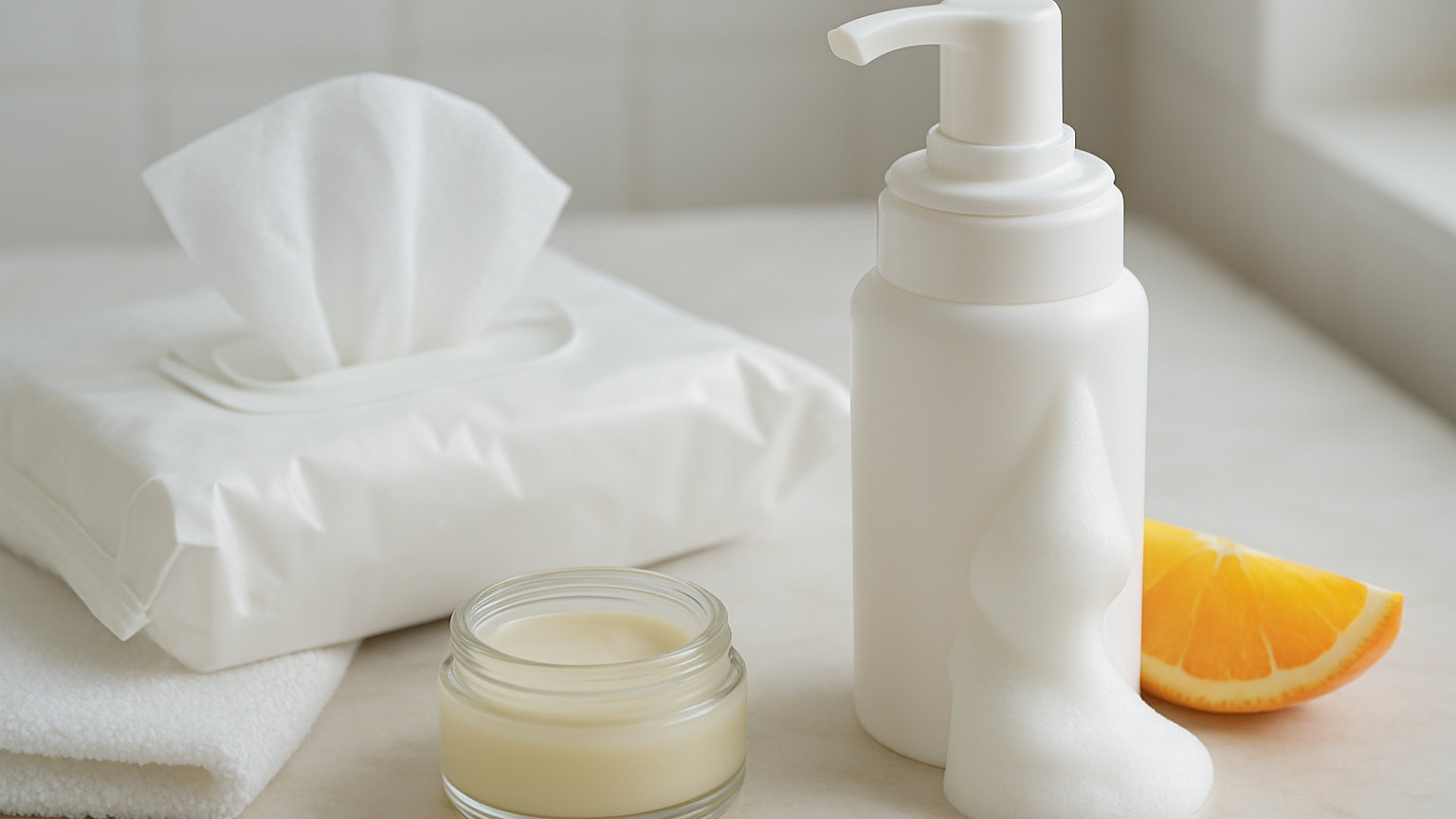
A short list of products accounts for a large share of intimate irritation seen in general practice and gynaecology clinics. Several of them are sold specifically for the area, which is the awkward part.
Why is fragrance the main problem?
Fragrance is the commonest cause of contact allergy in cosmetics generally, and intimate skin is thinner, more permeable and more occluded than skin elsewhere.
That combination means a fragrance tolerated on the arms can cause significant irritation here.
It also applies to fragrance described as natural, since essential oil components including linalool, limonene and geraniol are recognised allergens.
Fragrance-free is the phrase to look for, since unscented can mean a masking fragrance was added.
What should not go anywhere near it?
Douches, which flush out the protective bacteria and are associated with increased risk of bacterial vaginosis and pelvic inflammatory disease.
Intimate deodorants and sprays, which mask rather than treat and irritate directly.
Bubble bath and bath bombs, which are surfactants and fragrance sitting against the vulva for a prolonged soak. They are a recognised cause of vulval and urinary irritation, particularly in girls.
Soap and shower gel on the vulva, or under the foreskin.
Talcum powder in the genital area, which is no longer recommended.
What about vaginal steaming and detox products?
Vaginal steaming has no evidence of benefit and carries a genuine risk of burns, which have been reported.
The vagina does not require detoxification, and there is no mechanism by which steam would achieve it.
Herbal pessaries and detox pearls marketed online have caused documented cases of irritation, infection and retained foreign bodies.
Jade eggs and similar objects are porous, cannot be reliably sterilised, and are not recommended by any gynaecological body.
Anything promising to tighten, cleanse or detoxify internally is best avoided entirely.
What about wipes?
Convenient and a common cause of contact dermatitis, particularly when used daily.
The preservatives and fragrance are the usual culprits, and methylisothiazolinone in particular caused a significant rise in reactions before restrictions.
Occasional use of an unfragranced wipe is reasonable. Daily use as a substitute for washing is where problems develop.
Water and a hand does the job better.
What about hair removal products?
Depilatory creams should only be used on genital skin if the product specifically states it is suitable for the bikini line, and even then following the instructions exactly with a patch test.
Chemical burns in this area are genuinely serious and not uncommon.
Never use a body depilatory cream on intimate skin, and never leave any depilatory on longer than stated to remove stubborn hair.
Home waxing kits on internal or very sensitive areas are best left to a professional.
What about numbing and treatment creams?
Anaesthetic creams containing lidocaine or benzocaine, sold for itching, are themselves a frequent cause of contact allergy and can worsen the problem they were bought for.
Antifungal creams used repeatedly without a confirmed diagnosis delay identification of other conditions, particularly lichen sclerosus.
Steroid creams should be used as prescribed rather than borrowed from another prescription, since potency matters and prolonged use thins skin.
Antiseptics such as tea tree oil applied neat cause irritation and burns.
What about lubricants?
Avoid anything with fragrance, flavouring, warming, tingling or cooling effects, all of which are irritants.
Avoid products with very high glycerin content, which can encourage thrush in susceptible people.
Oil-based products damage latex condoms, which makes them unreliable as contraception and protection.
Look for a pH close to vaginal pH and a suitable osmolality, since very concentrated products can damage the tissue lining.
What should you use instead?
Plain warm water for washing, using your hand.
An unfragranced emollient as a soap substitute, a moisturiser and a barrier. This is what dermatologists and gynaecologists recommend, and it costs very little.
Cotton underwear, unfragranced detergent, no fabric conditioner, and loose clothing.
Unfragranced menstrual products.
And, for any symptom lasting more than a couple of weeks, a GP rather than another product.


