
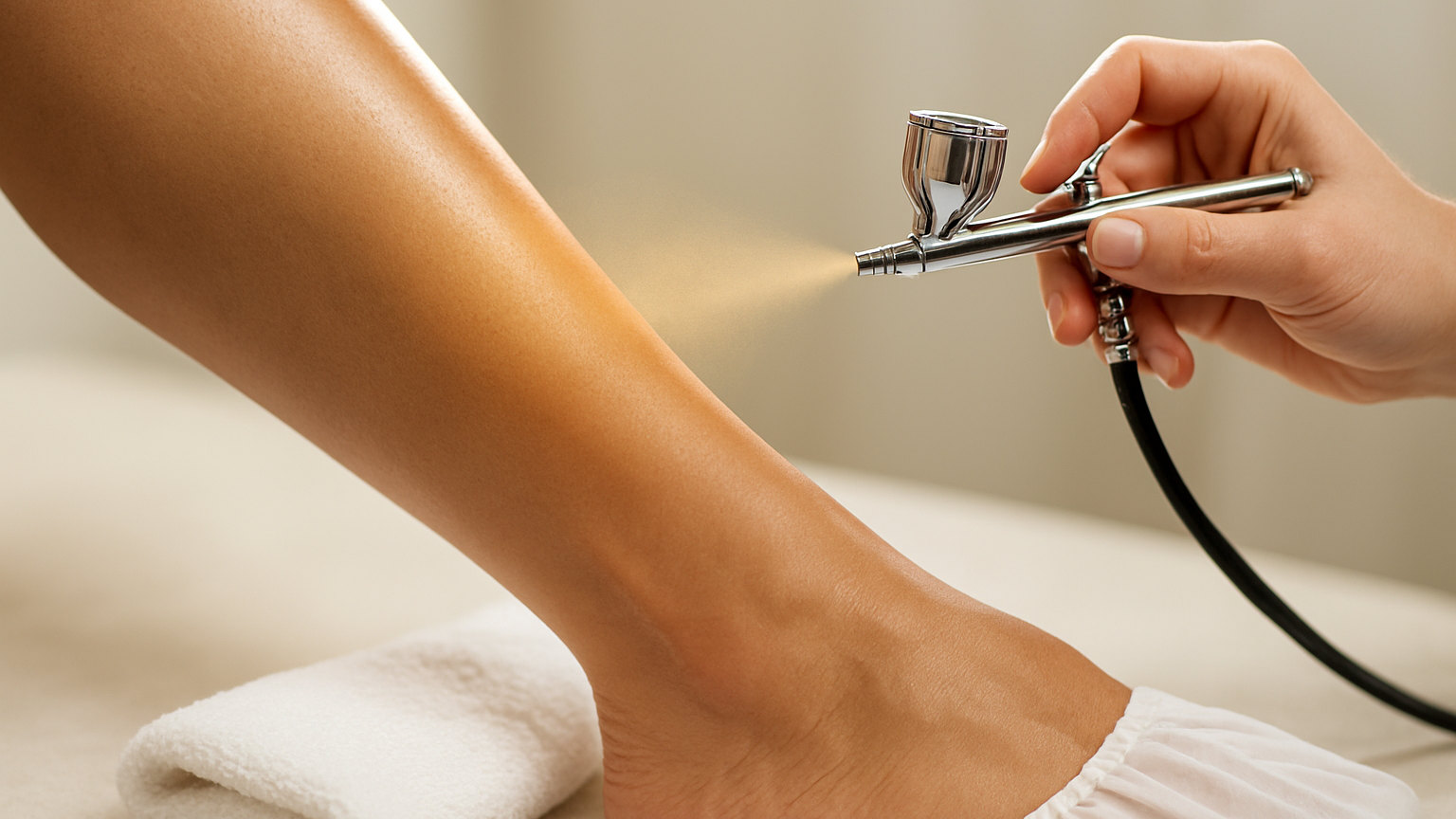
A professional spray tan generally produces a more even result than home application, since someone else can see your back and the product is applied in a fine controlled layer. The preparation matters as much as at home, and there are a couple of safety points worth understanding.
How should you prepare?
Exfoliate twenty-four hours beforehand rather than on the day, using a mitt or scrub rather than an oily product.
Do any shaving or waxing at least twenty-four hours before, and preferably forty-eight for waxing, so follicles have closed.
Arrive with clean skin and no moisturiser, deodorant, makeup or perfume, all of which act as a barrier and cause patches.
Remove jewellery. Wear loose dark clothing and open shoes to leave in.
Do not have a manicure or pedicure immediately beforehand, since oils used will resist the tan.
What happens in the booth?
You will be offered disposable underwear or the option to wear your own, and either is normal. Tan lines follow whatever you wear.
A barrier cream is applied to palms, soles, nails and sometimes elbows and knees to stop those areas grabbing colour.
The therapist sprays in sections, asking you to hold positions. It takes ten to twenty minutes.
You will be given a shade recommendation, and going one shade lighter than you think on a first visit is sensible advice.
What are the safety points?
DHA is approved for application to the skin and is not approved for inhalation or for contact with the eyes, lips or other mucous membranes.
That is why protective eyewear, nose filters and a lip balm barrier are offered, and why you should hold your breath and close your eyes while the face is being sprayed.
Use them. A salon that does not offer them is not following standard practice.
Ventilation in the booth matters for the same reason, and reputable salons use extraction.
Who should avoid it?
Anyone with a known allergy to DHA or to any ingredient in the solution. A patch test is available and worth asking for if you have reactive skin.
Anyone with broken skin, sunburn, eczema flares or recent cosmetic procedures in the area.
Anyone with asthma or respiratory conditions should mention it, since the aerosol can be irritating even with protection.
Pregnancy is generally considered fine for topical DHA, and many salons decline as a precaution and because of the inhalation question. It is worth asking rather than assuming.
What should you do afterwards?
Avoid water entirely for the development time specified, which is usually between four and eight hours and sometimes overnight for rapid formulations.
No showering, swimming, exercise, washing hands beyond necessity, or anything causing sweating.
Wear loose dark clothing. Avoid tight straps and waistbands, which leave pressure marks.
Rinse with warm water and no soap until the guide colour runs clear, then pat dry and moisturise once cool.
How do you make it last?
Moisturise twice daily with a fragrance-free cream, applied to damp skin.
Shorter cooler showers, patting dry, and avoiding exfoliation, swimming and saunas.
Expect five to ten days. Hands and feet fade first regardless of what you do.
What can go wrong?
Patches where a barrier was present: moisturiser, deodorant residue or a missed spot.
Dark knees, elbows and knuckles where barrier cream was not applied or was insufficient.
Pressure marks from clothing during development. Runs from sweating.
Too dark a shade, which is the commonest regret and the reason to start lighter.
Most of these fade within a few days, and a good salon will advise on fixing an obvious problem.
Is it better than doing it yourself?
For evenness, generally yes, particularly on the back. For cost, no, since a home bottle covers several applications for the price of one appointment.
A reasonable approach is a salon tan before an event and a gradual tanner at home for maintenance, which gets the even base without the repeat cost.


