
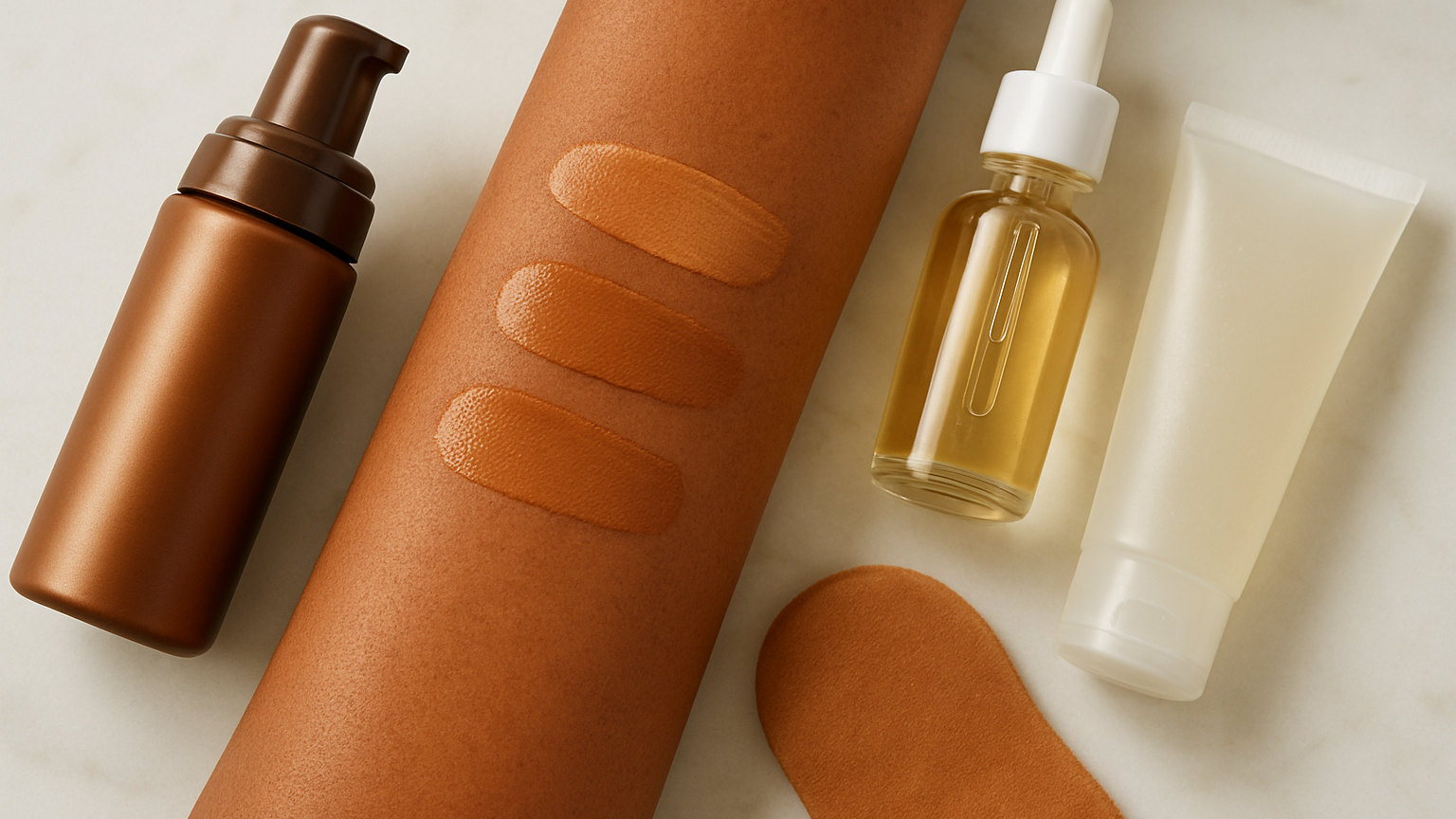
Every self-tan uses the same active ingredient, so the differences between them come down to concentration, format, undertone and how forgiving they are to apply. Format is the decision that matters most.
What are the formats?
Mousse, which is the most popular. It contains a guide colour so you can see where you have been, dries quickly and is relatively forgiving.
Lotion and cream, which are more moisturising and slower to dry. They give a more gradual result and are harder to see as you apply.
Tanning water, which is clear, very light and dries almost instantly. It builds gradually and is difficult to streak, though the lack of guide colour means missed patches are invisible until development.
Sprays and mists, which are convenient for the back and deposit less product, so the result is lighter.
Drops, which are added to your own moisturiser and let you control the strength precisely.
Gradual tanners, which are moisturisers with low DHA, building colour over several days.
Which suits a beginner?
A gradual tanner, without question. Low concentration means mistakes are barely visible, there is no development period to sit through, and colour builds slowly enough to stop when you like it.
The trade is that it takes three or four applications to reach a noticeable colour.
After that, a mousse with a guide colour is the natural next step, since seeing where you have applied is the main practical help available.
How do you choose a shade?
One step lighter than you think. The bottle colour is the guide colour, not the result, and the developed shade is usually deeper than expected.
Light or medium for fair skin, medium for mid tones, and dark for deeper skin tones, and building with two light applications is more controllable than one dark one.
Ultra dark and express formulations are for people who tan regularly and know how their skin responds. They are the commonest cause of an orange result on a first attempt.
What is undertone and does it matter?
Considerably, and it is the main reason the same shade looks different on different people.
Green or olive-based tans counteract orange and suit fair to medium skin with cool or neutral undertones.
Violet-based tans counteract yellow and produce a cooler, deeper result, suiting olive and deeper skin tones.
Warm or golden-based tans suit warm undertones and go orange on cool ones.
If everything you use goes orange, switching to a green or violet base is more effective than switching brand.
What about development time?
Express or rapid formulations develop in one to three hours, so you shower off the guide colour sooner and control the depth by timing.
Standard formulations need six to eight hours, usually applied overnight.
Express products suit anyone who cannot sleep in tan or who wants to adjust depth by shower timing. They contain higher DHA, so mistakes develop faster too.
What suits the face?
A dedicated facial product or tanning drops, which are lighter and less likely to congest.
Body mousse on the face is a common cause of breakouts and of an uneven hairline.
Drops mixed into your usual moisturiser give the most control, since you can start with one drop and build.
Does price matter?
Less than format and shade. The active ingredient is inexpensive, and mid-range products from supermarkets and pharmacies perform comparably to salon brands.
What you pay more for is the fragrance masking, the undertone formulation and the guide colour quality, which affect the experience rather than the result.
Freshness matters more than price. DHA degrades over time and once opened, so a cheap fresh bottle outperforms an expensive one from last summer.
What is worth having?
A tanning mitt, which is not optional if you want an even result and stain-free palms.
A gradual tanner for maintenance between full applications.
A tan remover if you tan regularly, which saves a good deal of scrubbing.
And a separate small mitt or brush for the face, hands and feet.


