
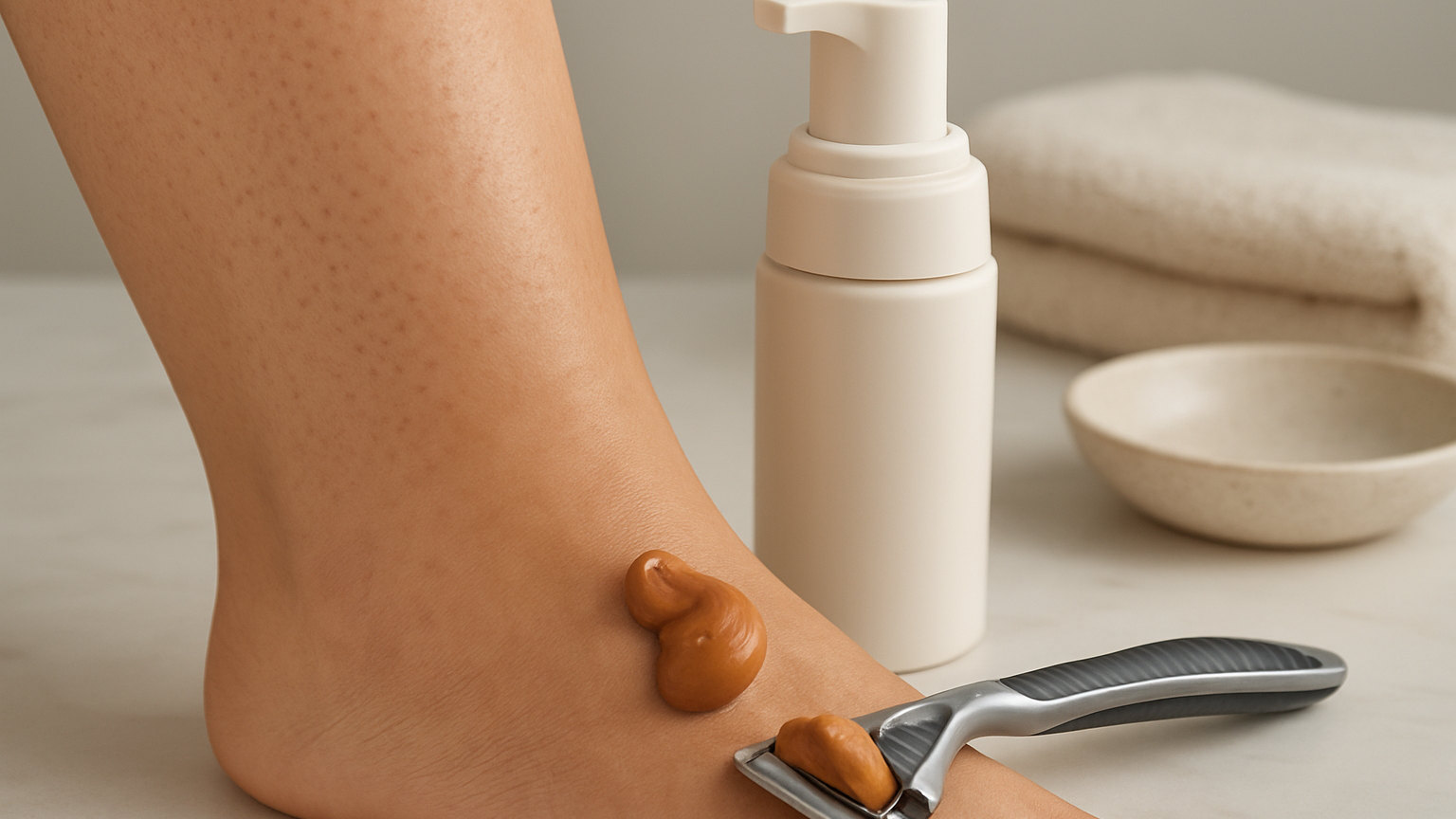
Hair removal and fake tan interact in two ways that matter: freshly opened follicles take up colour as dark dots, and any removal method that abrades the skin strips the tan with it. The sequence and the gap between them fix both.
What is the correct order?
Hair removal first, then exfoliate, then tan. Always in that order.
Removing hair after tanning takes the colour with it, since shaving and waxing both remove surface skin cells and the tan lives in those cells.
Exfoliating between the two clears any residue and gives an even base.
How long should you leave between them?
Twenty-four hours after shaving, minimum. Forty-eight is better if your skin reacts.
Twenty-four to forty-eight hours after waxing, sugaring or epilating, since the follicles are open wider and stay open longer.
Applying tan onto freshly opened follicles produces small dark dots at each hair, which is one of the more recognisable self-tan mistakes and is entirely avoidable.
Laser sessions need longer: the clinic will usually ask you to arrive with no tan at all, since the pigment interferes with the treatment and increases burn risk.
Can you shave over an existing tan?
Yes, and it will lighten the area. A blade removes surface cells along with the hair, so each shave takes a layer of colour.
Use a sharp blade, a proper shaving cream and light pressure, which removes less than a blunt blade dragging across the skin.
Shave with the grain rather than against, which is gentler on the surface.
Expect to lose colour on the legs faster than elsewhere if you shave every couple of days, and top up with a gradual tanner rather than a full reapplication.
What about waxing over a tan?
It removes it almost completely from the waxed area, since wax adheres to the skin surface as well as the hair.
That leaves a pale strip against tanned surrounding skin, which is difficult to blend.
If you wax regularly, tan after each wax rather than trying to preserve colour through one. Booking the wax and the tan two days apart in that order is the practical rhythm.
What about epilating and depilatory creams?
Epilating removes hair from the root and abrades less surface than shaving, so it takes slightly less colour, and it still opens follicles. Leave twenty-four to forty-eight hours before tanning.
Depilatory creams dissolve hair chemically and raise skin pH, which can strip and patch a tan noticeably. They also react unpredictably over developed tan.
Leave at least twenty-four hours after a depilatory cream before tanning, and avoid using one over an existing tan entirely.
Does it change how long the tan lasts?
Considerably. Someone shaving their legs every two days will get three or four days from a tan on the legs while the torso still looks fine after a week.
That uneven fading is the main practical consequence, and it is why legs frequently look patchy first.
Waxing every four to six weeks fits far better with a tanning routine than shaving every other day, which is one of the more persuasive practical arguments for it.
What about the bikini line and underarms?
Both need the full forty-eight hours after hair removal before tanning, since the skin is thin and the follicles are coarse.
Underarms hold tan poorly regardless, since the skin sheds quickly and deodorant lifts colour. Many people simply skip the area.
Apply barrier cream or moisturiser to freshly shaved areas before tanning if the gap has been short, which reduces uptake.
What is the sensible routine?
Day one: remove hair. Day two: exfoliate and moisturise. Day three: tan.
Then maintain with a gradual tanner every two or three days, and repeat the full cycle when the hair needs doing again rather than trying to fit tanning around it.
Anyone tanning for a specific event should work backwards from it, allowing at least three days for the whole sequence.


