
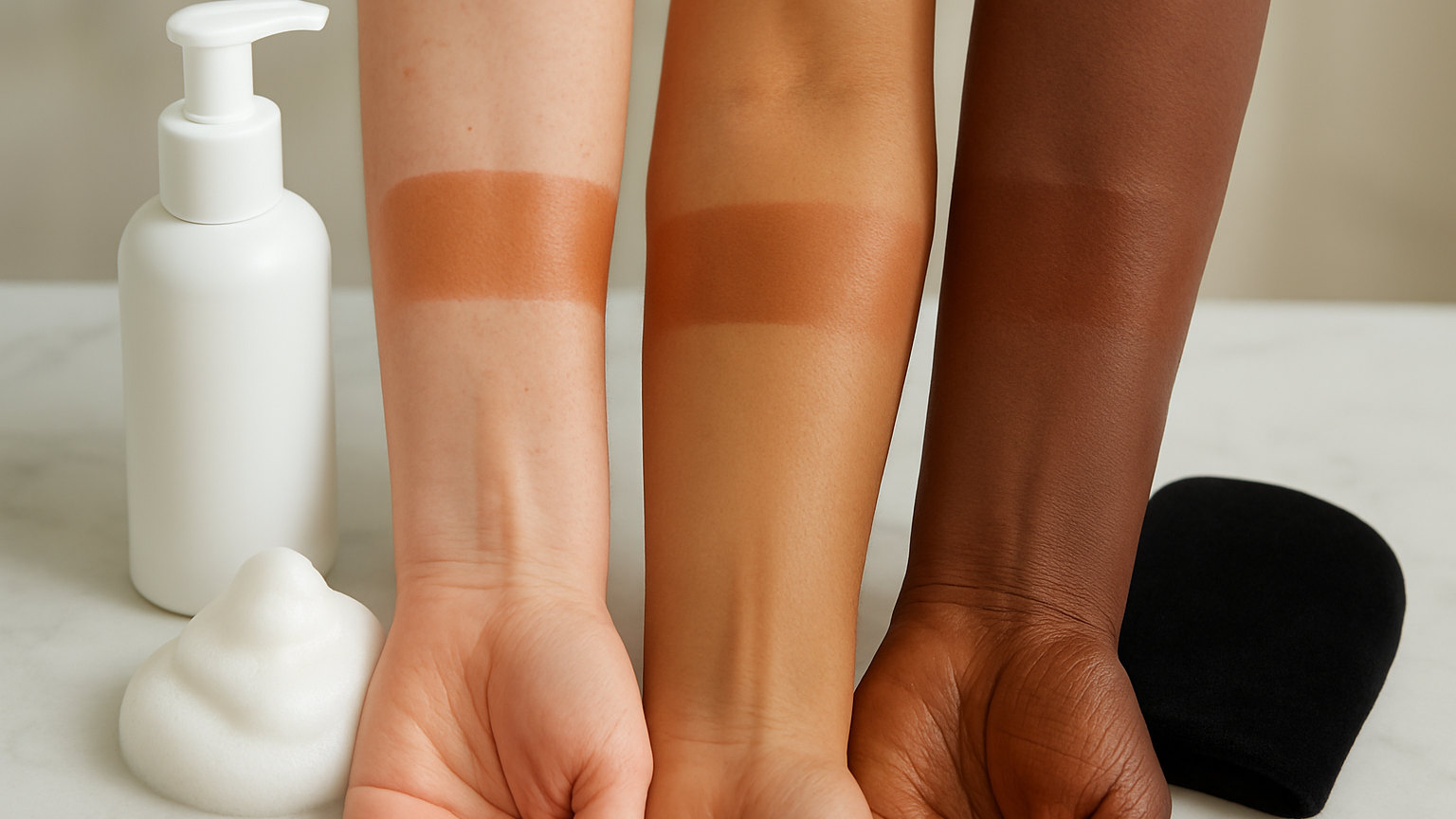
Fake tan reacts with proteins in your own skin, so the same bottle genuinely produces different colours on different people. Undertone matters more than depth, and it is the variable most people never consider.
What is undertone?
The colour beneath the surface of your skin, which stays constant regardless of how tanned or pale you are.
Cool undertones have pink, red or blue beneath. Warm undertones have yellow, peach or golden. Neutral sits between the two, and olive skin has a green undertone that behaves distinctly.
A quick check: veins on the inner wrist appearing blue or purple suggests cool, green suggests warm, and a mix suggests neutral. Whether silver or gold jewellery suits you better points the same way.
Why does it matter for fake tan?
Because tanning products carry their own undertone, and the result is the two combined.
A warm golden tan on warm skin looks deeper and richer. The same product on cool skin frequently reads orange.
A violet-based tan on cool skin looks natural. On very fair warm skin it can look grey or ashy.
Matching the tan base to your undertone resolves most complaints about colour, and it is a more useful adjustment than changing brand.
What suits fair skin?
Light shades and gradual products, building over several applications rather than one dark layer.
Green-based formulations, which counteract orange, are the most reliable choice for fair skin. This is the group most likely to go orange, because there is less natural pigment to blend with.
Avoid ultra dark and express formulations initially, which are the commonest route to an obviously artificial result.
Two light layers a day apart produces a considerably better result than one medium one.
What suits olive skin?
Olive skin has a green undertone, which means green-based tans can look flat or muddy.
Violet or warm golden bases work better, adding depth and richness rather than fighting the natural tone.
Medium to dark shades suit, since olive skin carries depth well and a light tan barely registers.
Olive skin also frequently tans naturally, so fake tan needs to match a depth the skin reaches anyway to look convincing.
What suits deep skin?
Dark and ultra dark formulations, since lighter shades produce no visible difference.
Violet-based products, which counteract any yellow or ashy cast and add richness.
Products specifically formulated for deeper tones, which have become considerably more available and use higher DHA with cooler undertones.
The aim is usually evening out tone and adding luminosity rather than adding depth, which is a different goal from what most tanning marketing assumes.
What about very pale skin that never tans?
Fake tan is particularly useful here, since ultraviolet tanning produces burning rather than colour and carries the highest skin cancer risk.
Start with gradual products and light shades, and accept that a convincing result will be lighter than the marketing images.
Green or neutral bases. Avoid anything described as bronze or golden, which reads orange on very fair skin.
A light, even tone looks considerably better than a dark one that contrasts with the face and hands.
What about uneven pigmentation?
Fake tan develops on the surface layer regardless of what is beneath, so it does not correct pigmentation and can make contrast more or less visible.
Vitiligo, melasma and post-inflammatory marks all remain visible under a tan, though the reduced contrast sometimes makes them less noticeable.
Some people use fake tan specifically to reduce the contrast of pale patches, applying it selectively, which works to a degree and requires practice.
Stretch marks and scars take colour less readily than surrounding skin and can appear paler after tanning.
How do you test before committing?
Apply to a small area on the inner arm and let it develop fully before doing the whole body.
Check the result in daylight rather than bathroom light, which distorts colour considerably.
Give it the full development time before judging, since the guide colour is not the result and most disappointment comes from assessing it too early.


