
The single most useful thing about fixing fake tan is timing. Product that has not developed comes off with a wet cloth. Developed colour is in the skin cells and has to be removed with them.
What can you fix immediately?
Anything within the first ten to twenty minutes, before the reaction has progressed.
A damp flannel, a baby wipe or a micellar water pad removes fresh product entirely.
Work quickly and blend rather than scrubbing at one spot, which creates a pale patch instead of a dark one.
This is why applying a small area first and checking is worth doing with an unfamiliar product.
What removes developed tan?
Exfoliation, since the colour is in cells that have to be shed.
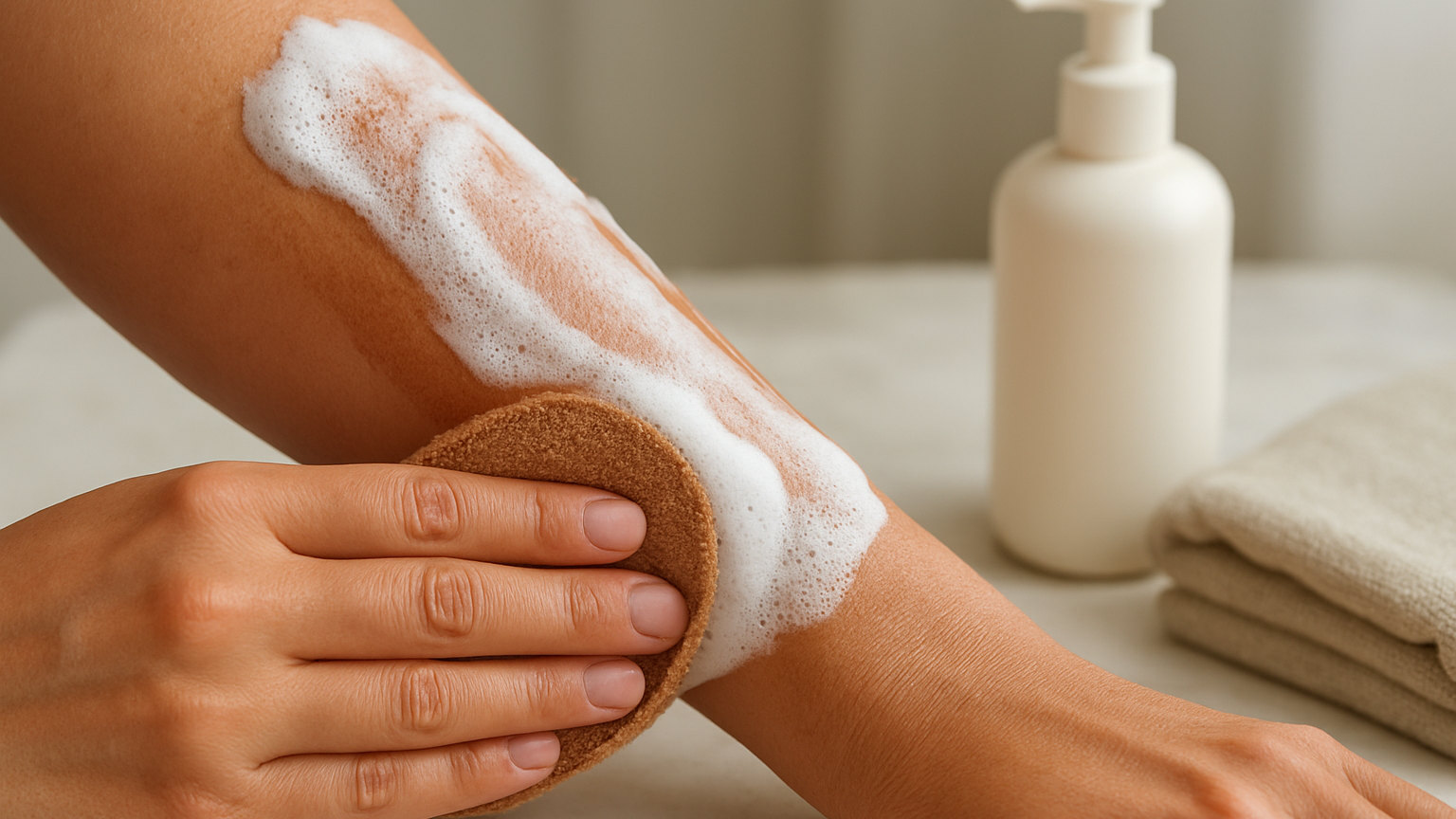
An exfoliating mitt with a body scrub, used on damp skin after a warm bath or shower, which softens the surface layer first.
A dedicated tan remover, which usually contains an acid or an enzyme to loosen the cells and works considerably faster than scrubbing.
A long soak in a warm bath with bath oil, followed by a mitt, which is the cheapest effective method.
Expect to need two or three attempts for a heavy application rather than one.
What household remedies work?
Lemon juice, which is acidic and lifts colour. Effective on small patches, and drying and irritating on large areas or sensitive skin.
Bicarbonate of soda made into a paste, which acts as a mild physical exfoliant with a pH effect.
Baby oil or coconut oil left on for ten minutes before exfoliating, which loosens the surface layer and makes the mitt more effective.
Hair conditioner on the skin for the same reason.
Swimming in a chlorinated pool, which fades tan noticeably and is not precise.
How do you fix streaks?
Blend rather than remove, where possible. A damp mitt worked over the edge of a streak softens the line.
For a dark streak, exfoliate that area specifically with a mitt, working outward so the edges blend.
For a pale streak or a missed area, apply a small amount of gradual tanner to that area only and let it develop, rather than reapplying over the whole limb.
Resist adding more full-strength product to fix a patch, which nearly always makes the contrast worse.
How do you fix dark knees, elbows and knuckles?
These grab colour because the skin is thicker and drier, and they are the commonest complaint.
Exfoliate those areas specifically with a mitt and a scrub, or apply lemon juice for a few minutes and rinse.
A tan remover applied to a cotton pad and held on the area works well.
To prevent recurrence, moisturise those areas immediately before the next application and use only what remains on the mitt.
What do you do about orange?
Orange usually means too much product, an old bottle, or a formulation that does not suit your skin tone.
To reduce it, exfoliate to lift some colour, which lightens the overall depth and the orange with it.
A green-toned or violet-toned product on the next application counteracts it, since those tones sit opposite orange.
Replace product more than six months old, since DHA degrades and produces more orange results.
And build gradually with a lighter shade rather than applying one dark layer, which is the most reliable fix.
How do you fix stained palms and nails?
Wash palms immediately after application, which prevents most of it.
For stained palms, lemon juice with a little sugar as a scrub, or a nail brush with soap and a tan remover.
For nails and cuticles, a cotton bud with micellar water or nail polish remover, used carefully.
For stained fingernails, a buffing block used very lightly, or waiting, since nails grow out.
When should you start again?
If the tan is patchy across a large area, removing it entirely and reapplying produces a better result than patching.
Exfoliate thoroughly, wait a day for any irritation to settle, moisturise, and reapply the following day.
Applying fresh tan over old patchy tan compounds the problem rather than covering it, which is the commonest mistake at this stage.


