
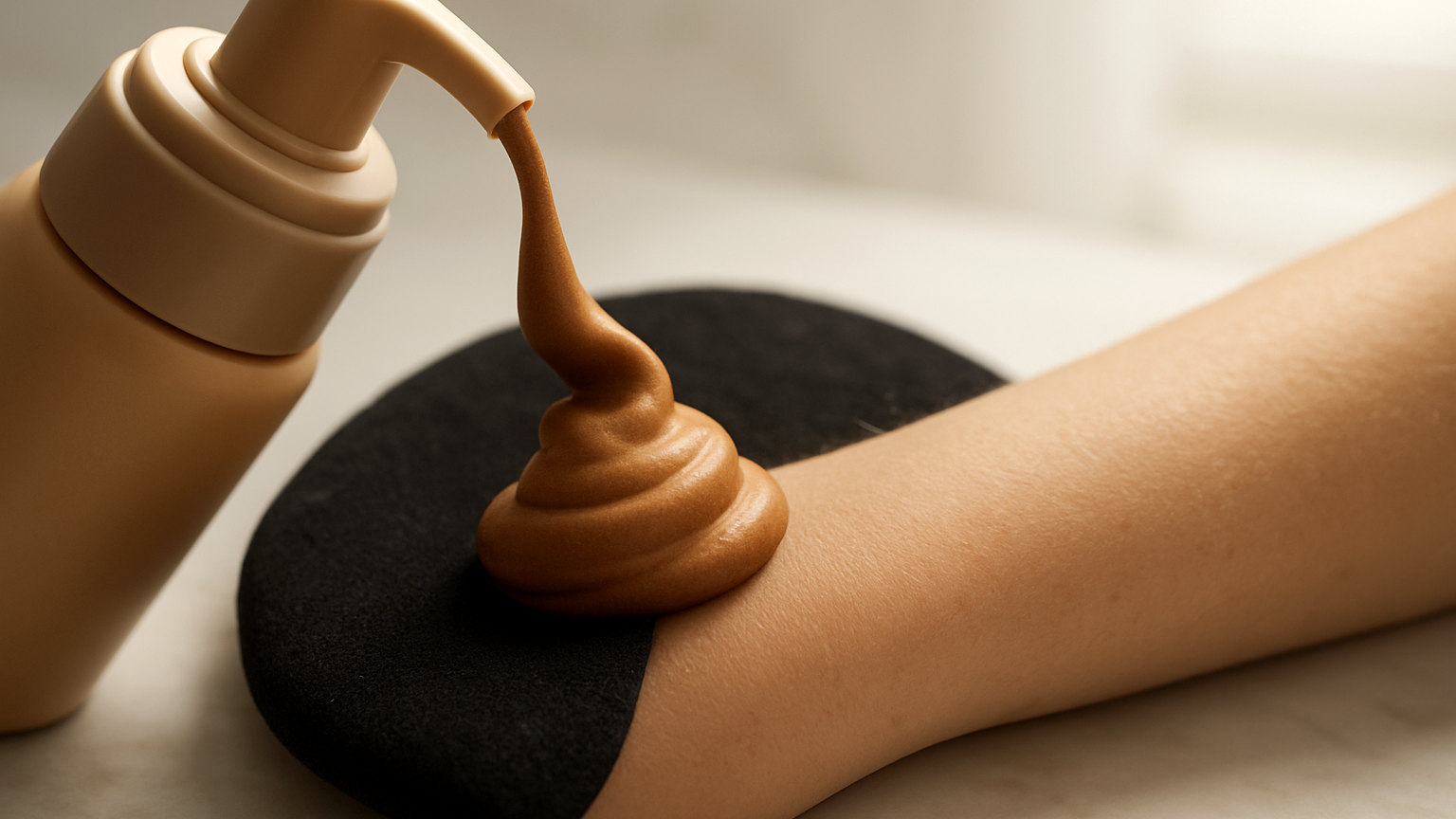
Fake tan is not a dye. The active ingredient reacts chemically with proteins in the outermost dead skin cells to produce brown pigment, and almost everything people find odd about self-tan follows from that.
What is the active ingredient?
Dihydroxyacetone, usually shortened to DHA, which is a simple sugar derived from glycerine or from sugar cane and sugar beet.
It has been used in self-tanning products since the 1960s and is the active ingredient in essentially every self-tan on the market, from cheap mousses to expensive salon solutions.
Concentrations typically run from around three per cent for gradual tanners up to fifteen per cent or more for professional spray solutions.
Erythrulose is sometimes added alongside it. It works by the same mechanism, develops more slowly, and produces a less orange tone, so blends of the two often look more natural and fade more evenly.
What is the chemical reaction?
The Maillard reaction, which is the same process that browns bread crust, seared meat and roasted coffee.
DHA reacts with amino acids in the keratin of dead skin cells, producing brown compounds called melanoidins.
Those compounds are in the cells rather than on them, which is why the colour cannot be washed off and why it fades only as the cells shed.
It has nothing to do with melanin, which is why it provides no protection from ultraviolet light.
Why does it take hours to develop?
Because the Maillard reaction is slow at skin temperature. Initial colour appears within two to four hours, and full development takes eight to twenty-four.
The bronzer in most products, which is a temporary guide colour, appears immediately and washes off. That is what people see first and mistake for the result.
Judging the shade before the full development period is why people apply a second layer too soon and end up considerably darker than intended.
Why does it smell?
The reaction produces volatile compounds as a byproduct, and the characteristic biscuity or slightly sour smell develops as the tan does rather than being present in the bottle.
No fragrance fully masks it, since it is generated on the skin over hours. Products claiming to be odourless generally contain more perfume rather than less of the byproduct.
It is strongest at around six to eight hours and fades after showering off the guide colour.
Sweating and humidity make it more noticeable.
Why does it fade unevenly?
Because the colour lives in the outermost dead cells, and those shed at different rates across the body.
Areas that shed quickly or experience friction lose colour first: hands, feet, knees, elbows, underarms and anywhere clothing rubs.
Exfoliating, swimming, long baths and shaving all accelerate shedding and therefore fading.
Typical wear is five to ten days, which corresponds to the turnover of the outer skin layer.
Why does it go orange on some people?
The tone produced depends on the skin's protein composition and on the formulation, so the same product genuinely produces different results on different people.
Cheaper products with higher DHA and no erythrulose tend toward orange. Over-application produces a deeper, more orange result because more reaction sites are used.
Older product is worse: DHA degrades over time and once opened, producing a more orange tone. A bottle from last summer is a common cause.
Products with a green or violet undertone counteract orange, and building gradually with lighter shades is more reliable than one dark application.
Is it safe?
DHA applied to the skin is considered safe and is approved for cosmetic use in the UK and EU.
The reaction occurs in dead cells at the surface, and absorption into living tissue is minimal.
The area of genuine caution is inhalation and contact with mucous membranes during spray tanning, since DHA is not approved for those routes. Protective eyewear, nose filters and holding your breath during spraying are standard for that reason.
Does it protect against the sun?
No, and this is the most important practical point. Melanoidins are not melanin and provide essentially no ultraviolet protection.
Some studies suggest a marginal effect, on the order of SPF 3 or less, which is not meaningful protection.
Sunscreen is required exactly as it would be on untanned skin, and looking tanned while being unprotected is the specific risk fake tan introduces.


