
A tan is the skin's response to injury. Melanin is produced after ultraviolet radiation has already damaged DNA in skin cells, which means the visible tan is the record of that damage rather than protection against it.
What is actually happening?
Ultraviolet B damages DNA directly, causing the mutations most associated with skin cancer.
Ultraviolet A penetrates more deeply, generating free radicals that damage DNA indirectly and degrade collagen and elastin. It is the main driver of photoageing.
In response, melanocytes produce melanin and transfer it to surrounding cells, where it forms a cap over the nucleus to shield DNA from further damage.
That response takes days. The damage prompting it has already occurred.
Does a tan protect you?
Barely. A tan on lighter skin provides an estimated sun protection factor of around three, and some estimates put it lower.
For comparison, the minimum recommended sunscreen is SPF 30. A tan is therefore roughly a tenth as protective as the least you should be using.
Naturally deeper skin has considerably more inherent protection, estimated at up to SPF 13 in the deepest tones, and it is still not sufficient and does not prevent skin cancer.
Does a base tan help before a holiday?
No, and this is one of the more persistent and damaging beliefs in this area.
Building a base tan means deliberately damaging your skin in advance so that you can damage it further with slightly less immediate burning.
The protection gained is minimal, and the DNA damage accumulated is real and additive. Studies have found no meaningful protective benefit.
Sunbed base tans are worse, since they deliver concentrated ultraviolet A.
What about sunbeds?
The World Health Organization classifies ultraviolet-emitting tanning devices as carcinogenic to humans, in the same category as tobacco and asbestos.
Use before the age of thirty-five is associated with a substantially increased risk of melanoma, and the risk increases with the number of sessions.
In the UK it is illegal for under-eighteens to use them commercially. Coin-operated unsupervised salons remain a particular concern.
There is no safe level of sunbed use for cosmetic purposes, and the vitamin D argument is not supported, since sunbeds emit predominantly ultraviolet A while vitamin D synthesis requires ultraviolet B.
Is gradual sun exposure safer than burning?
Burning is worse, and gradual exposure is not safe.
Sunburn, particularly in childhood, is strongly associated with melanoma risk. Avoiding it matters.
Cumulative exposure without burning is associated with other skin cancers, particularly squamous cell carcinoma, and with the majority of visible skin ageing.
So gradual is less bad rather than fine, and the distinction is worth keeping.
What about tanning injections and pills?
Melanotan injections, sold online and through gyms, are unlicensed in the UK. They stimulate melanin production and carry reported risks including nausea, changes to moles, and cases of melanoma.
They are frequently sold as needle products of unknown purity, which adds injection risks to pharmacological ones.
Tanning pills containing canthaxanthin are not authorised as food supplements in the UK and have been associated with retinal deposits and liver problems.
Neither is a safe route to colour.
So what is the safe option?
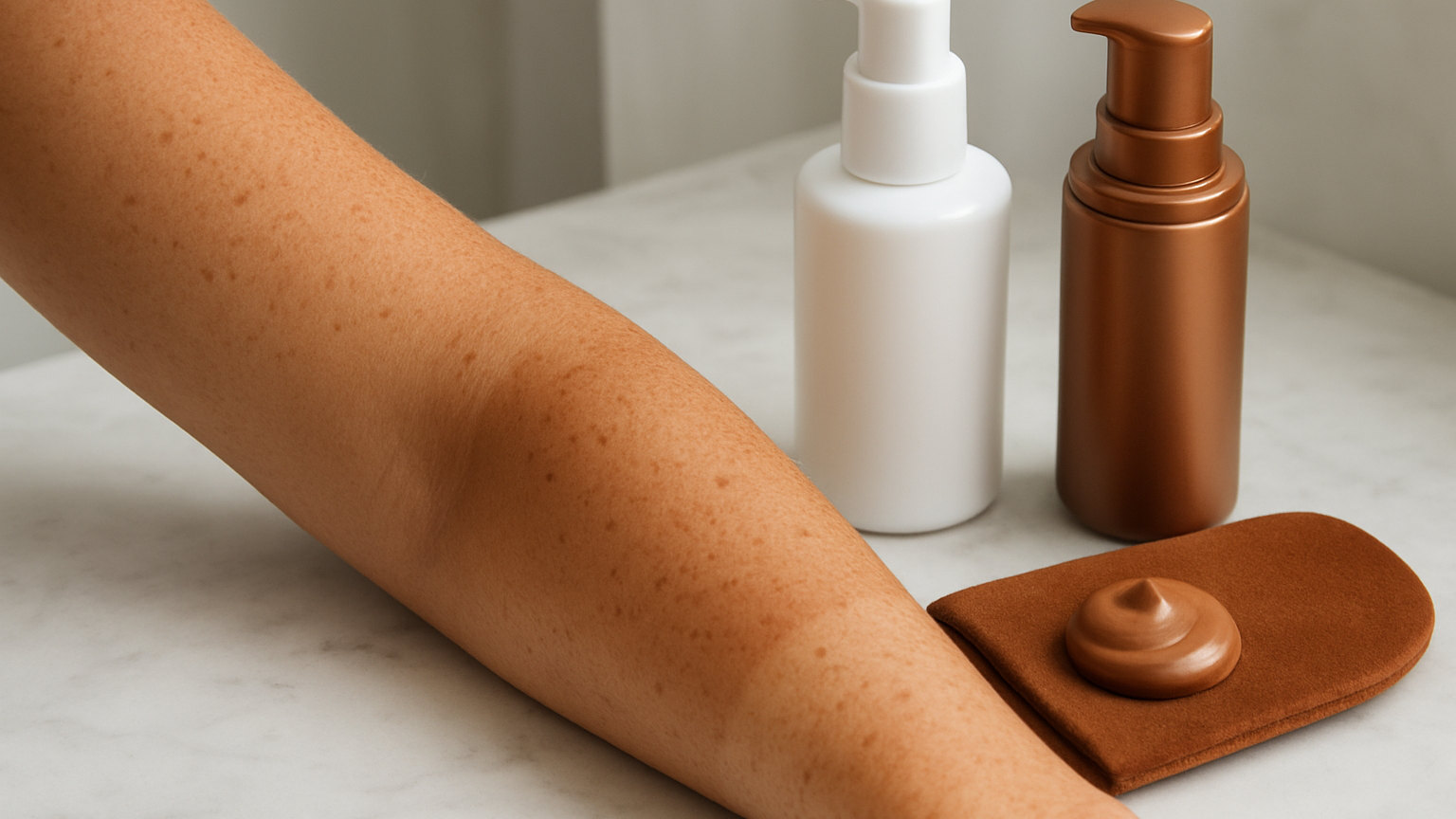
Self-tanning products using dihydroxyacetone, which reacts with amino acids in the outermost dead skin cells to produce a brown colour.
The reaction is confined to the surface layer, it does not involve ultraviolet exposure, and it does not damage DNA. It fades as those cells shed over five to ten days.
It provides no sun protection whatsoever, which is the point people most often miss. Sunscreen is still required.
What is the honest summary?
There is no safe tan from ultraviolet exposure, whether from the sun or a sunbed. The tan is the damage.
If you want the colour, fake tan achieves it without the risk. If you want to be outdoors, that is entirely reasonable and warrants sunscreen, clothing and shade rather than avoidance.
What about vitamin D?
The one genuine argument for sun exposure, and it needs less than people assume.
Short periods of exposure to bare skin, well before any reddening, are sufficient for synthesis, and going beyond that adds damage without adding vitamin D, since production plateaus.
In the UK the sun is too weak for synthesis between roughly October and March regardless of exposure, which is why a daily supplement is advised through those months for most people. Deliberately tanning to raise vitamin D is not a sensible trade at any time of year.


