
Fake tan lives in the outermost dead skin cells and fades as those cells shed. Everything that extends it slows that shedding, and everything that shortens it speeds it up. That single principle covers all the practical advice.
How long should it last?
Five to ten days for a full-strength application, which corresponds roughly to the turnover of the outer skin layer.
Gradual tanners fade faster, typically three to five days, since the colour is lighter to begin with.
Legs and torso hold it longest. Hands, feet, face and underarms fade first, since those areas shed faster and experience more friction and washing.
What makes it fade faster?
Exfoliating, which removes the coloured cells directly.
Long hot baths and showers, which soften and loosen the outer layer.
Swimming, particularly in chlorinated pools, and hot tubs.
Saunas and steam rooms, and anything causing heavy sweating.
Shaving, which physically removes surface cells along with the hair.
Friction from tight clothing, towels and bags.
Acids and retinoids used on the body, which accelerate cell turnover by design.
What extends it?
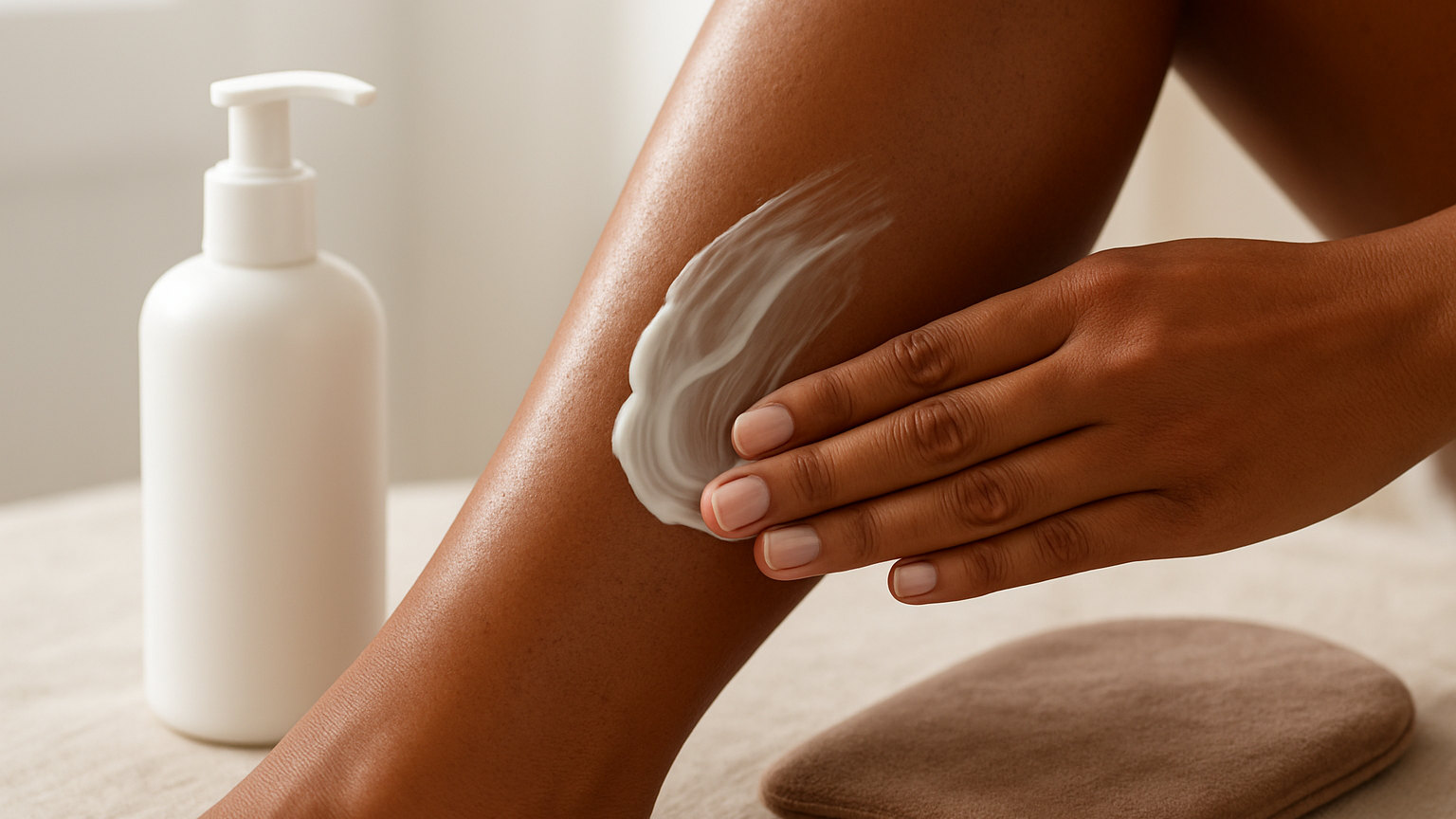
Moisturising twice daily, which is the single most effective thing. Well-hydrated cells shed more slowly and hold colour more evenly.
Apply within three minutes of washing, on damp skin, using a fragrance-free cream. Oil-based products can lift colour, so a cream is safer than a body oil.
Shorter, cooler showers. Patting dry rather than rubbing.
A gradual tanner or a tinted moisturiser every two or three days to top up rather than reapplying a full tan.
What about the first shower?
Wait the full development time before the first rinse, which is usually four to eight hours and sometimes overnight depending on the product.
Rinse with warm rather than hot water, without soap or shower gel, until the guide colour has run clear.
Pat dry rather than rubbing. Moisturise once the skin has cooled.
Avoid exfoliating for at least twenty-four hours afterwards.
How do you top it up?
Little and often rather than a full reapplication, which is what causes build-up in the dry areas.
A gradual tanning moisturiser every two to three days maintains colour without a development period or a guide colour to shower off.
If reapplying a full tan, exfoliate first to remove uneven remnants, since applying over patchy old tan compounds the patchiness.
Three to four full applications before a proper reset with a tan remover is a reasonable rhythm.
How do you fade it evenly?
The problem is usually that fading is patchy rather than that it fades at all.
Exfoliate the whole body evenly with a mitt or a scrub, paying attention to the areas that hold colour longest.
A long warm bath softens the skin and makes exfoliation more effective. Some people use a hair conditioner or a body oil on the skin for ten minutes beforehand, which loosens the surface layer.
A dedicated tan remover works faster and is worth having if you tan regularly.
Does the product matter?
Somewhat. Higher DHA concentrations last slightly longer, and formulations combining DHA with erythrulose fade more evenly.
Mousses and lotions generally last longer than sprays and waters, which deposit less product.
Fresh product matters more than brand. DHA degrades over time and once opened, producing weaker and more orange results, so a bottle from last summer is worth replacing.
What is the realistic expectation?
A week of good colour, with the last few days requiring some management as the hands and feet fade first.
Anyone expecting two weeks from a single application is expecting something the mechanism does not allow, since the cells carrying the colour will have shed by then.
Maintaining with a gradual product rather than chasing a longer-lasting one is the approach that works.
Does it fade differently on holiday?
Considerably faster, and several things combine. Swimming, particularly in chlorinated pools, lifts colour. Heat and sweating speed cell shedding. Sea salt is drying and abrasive.
Sunscreen has to go on regardless, since fake tan offers no protection, and reapplying it repeatedly involves friction that lifts colour further.
The practical approach is a lighter application before travelling and a gradual tanner packed for topping up, rather than a deep tan applied the day before that will be patchy by day three.


