
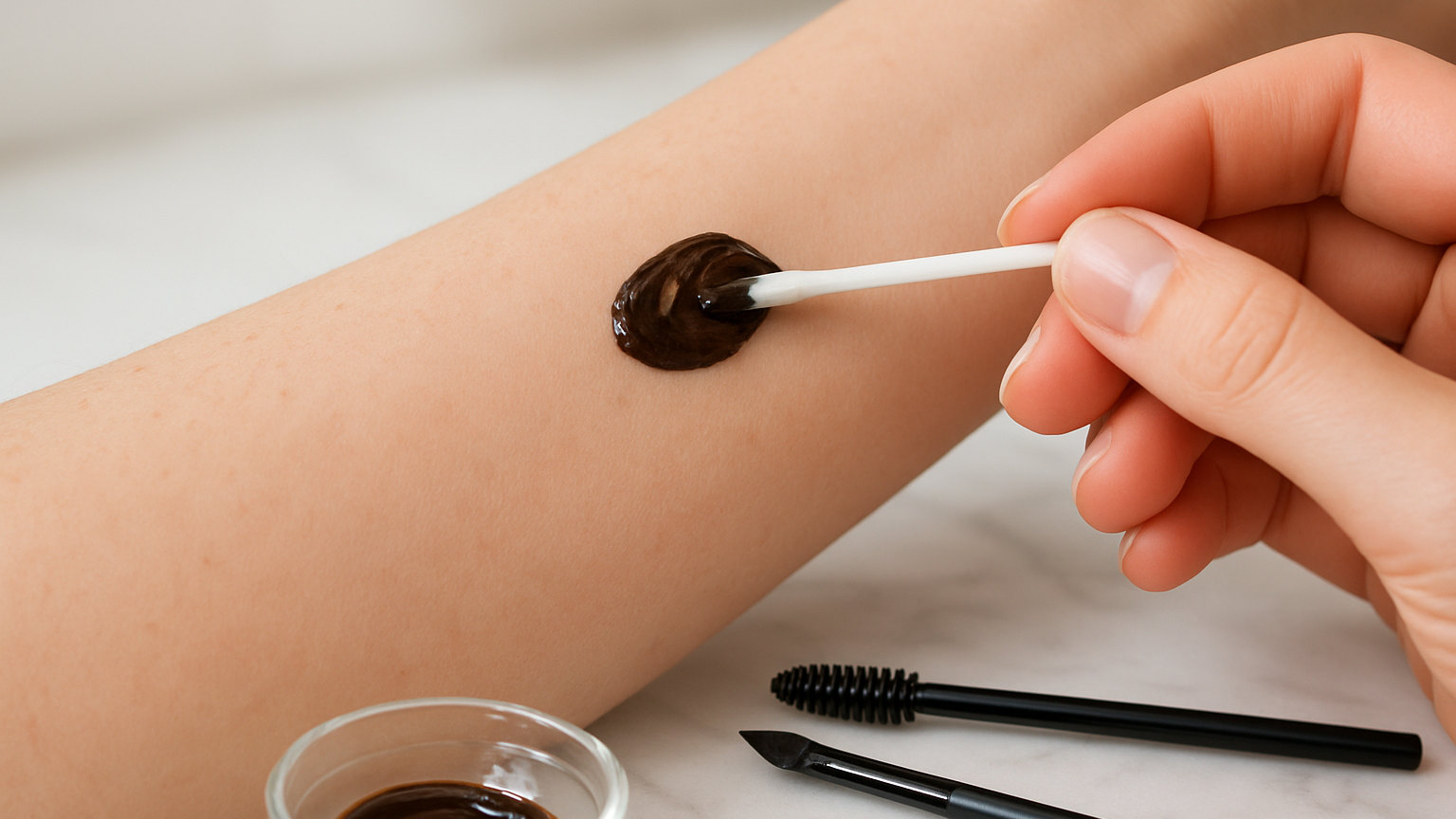
Brow and lash tinting darkens the hairs with a semi-permanent dye, and it produces a genuinely useful result for anyone with fair or greying hairs. It also involves applying dye a few millimetres from the eye, which raises the stakes on the patch test.
What is the dye?
Usually a vegetable-based or oxidative dye formulated specifically for the eye area, mixed with a low-volume peroxide developer.
Professional tints for lashes and brows are different products from hair dye and are formulated to be gentler. That does not make them free of the compounds that cause reactions.
Some contain paraphenylenediamine or related dyes, which are the compounds responsible for the significant allergic reactions to hair colour.
Why does the patch test matter so much?
Because allergic reactions to these dyes can be severe, and because the affected area is the eyelid, where swelling is dramatic and uncomfortable.
Sensitisation develops with repeated exposure, so someone can have tints for years and then react suddenly. A previous uneventful tint tells you nothing about the next one.
A patch test twenty-four to forty-eight hours before every appointment is the standard, and any salon that offers to tint without one on a first visit should be avoided.
Anyone who has had a black henna temporary tattoo is at particularly high risk of sensitisation to these dyes.
What are the risks?
Allergic contact dermatitis of the eyelids, producing swelling, redness, itching and weeping. In severe cases the swelling can close the eye.
Chemical irritation of the eye itself if the tint runs, which causes pain and can damage the cornea.
Rarely, more serious eye injury. There have been documented cases of significant harm from lash tinting, which is why some jurisdictions restrict it and why technician training matters.
What is the legal position in the UK?
Worth knowing, because it is frequently misunderstood. Products for tinting lashes and brows are regulated as cosmetics, and manufacturers specify that they must be patch tested.
Some products are not approved for use on lashes specifically, and using a brow tint on lashes is outside its intended use.
Salons should be insured and following manufacturer instructions. Ask what product is being used and whether it is approved for the area.
How long does it last?
Brows: three to four weeks, fading gradually as the hairs shed and new untinted ones grow through.
Lashes: four to six weeks, similar to the lash growth cycle.
Both fade rather than growing out with a line, since the hairs are short.
What does the appointment involve?
Petroleum jelly or a barrier cream applied around the area to prevent staining the skin. For lashes, protective pads under the lower lashes and eyes kept closed throughout.
The tint is applied and left for five to fifteen minutes depending on the depth wanted, then removed with damp pads.
The whole thing takes fifteen to twenty minutes and is frequently combined with shaping or a lash lift.
What about henna brows?
Henna brow products stain the skin as well as the hair, which produces a fuller shaded effect lasting up to two weeks on the skin and longer on the hairs.
Pure henna is generally well tolerated. The concern is compound products containing added dyes, including paraphenylenediamine, which are sometimes marketed as henna and carry the same allergy risk.
Ask what is in it and patch test regardless.
What if you react?
Rinse the area thoroughly with cool water. An antihistamine helps itching. Cold compresses reduce swelling.
Seek urgent medical attention for significant swelling, eye pain, vision changes or discharge.
Once sensitised, the allergy is permanent, and it extends to hair dye containing the same compounds. That is worth knowing, since a reaction to a lash tint means being careful with hair colour thereafter.
What are the alternatives?
Brow pencil, powder or tinted gel, which achieve a similar result daily with no chemistry at all.
Mascara for lashes, which does the same job and is removed each night.
Both are the sensible option for anyone who has reacted before, and for anyone who would rather not have dye applied near their eyes at all.


