
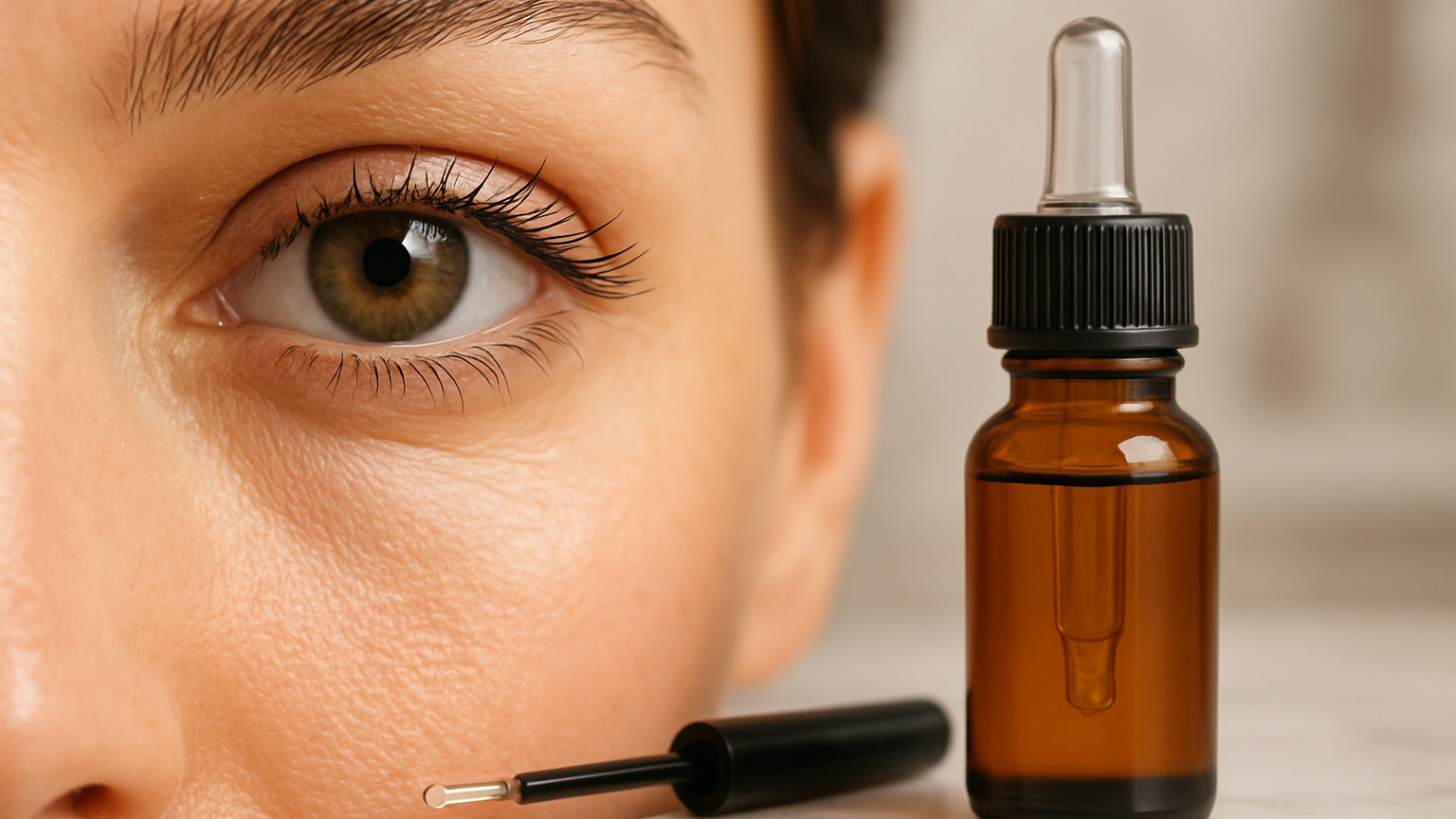
Lash serums divide sharply into one ingredient with genuine clinical evidence and a large category of cosmetic products with considerably less. The first has side effects worth understanding before starting.
What actually works?
Bimatoprost, a prostaglandin analogue originally developed to treat glaucoma. Patients using it as eye drops were noticed to grow longer, thicker, darker lashes, and it was subsequently licensed for that purpose.
It works by extending the growth phase of the lash cycle and increasing the number of hairs in that phase. The evidence is strong and the results are real.
In the UK it is a prescription-only medicine. Products containing it cannot be legally sold over the counter.
What are the side effects?
The important one is iris pigmentation change. Prostaglandin analogues can permanently darken the coloured part of the eye, particularly in people with hazel, green or mixed-colour irises.
This is permanent and it is why the medication carries specific warnings. It occurs more often with eye drops than with careful application to the lash line, and the risk is not zero either way.
Other effects include darkening of the eyelid skin, which usually reverses on stopping, redness and itching of the eyelids, and dry eye.
Anyone with glaucoma or any eye condition should not use these without ophthalmological advice, since they affect intraocular pressure.
What about over-the-counter serums?
Most contain peptides, panthenol, biotin, amino acids and conditioning oils. These improve the condition and appearance of existing lashes and have limited evidence for genuinely increasing growth.
Some produce a visible improvement over three to six months, which may be a combination of reduced breakage, better conditioning and lashes reaching their full potential length rather than snapping early.
That is a real benefit and it is a different mechanism from what bimatoprost does.
What about serums containing prostaglandin analogues?
This is where it becomes complicated. Some cosmetic lash serums, particularly those bought online or from outside the UK, contain prostaglandin analogues such as isopropyl cloprostenate.
These are structurally related to bimatoprost and carry the same risks, including iris pigmentation change, without prescription oversight or medical supervision.
They are not permitted in cosmetic products in the UK and EU, and products containing them have been subject to recalls and warnings. Checking the ingredient list for anything ending in prost is a reasonable precaution.
How long do results take?
Bimatoprost shows a difference at four to eight weeks and a full result at twelve to sixteen. Cosmetic serums typically claim similar timeframes and deliver less.
All of them stop working when you stop. Lashes return to their previous state over several weeks to a few months as the cycle turns over.
How should you apply one?
To a clean, dry lash line, once daily, usually at night. A single stroke along the upper lash line only, using the applicator provided.
Less is better. Excess product running into the eye or onto the surrounding skin is what causes eyelid darkening and irritation.
Remove contact lenses first, and do not apply to the lower lash line, which increases the amount reaching the eye.
Who should avoid them?
Anyone with glaucoma, ocular hypertension or a history of eye surgery, without ophthalmological advice.
Anyone pregnant or breastfeeding, since safety has not been established. Anyone with eye infections, blepharitis or contact dermatitis around the eyes.
Anyone with light or mixed-coloured eyes who is not prepared to accept a permanent colour change.
What is the sensible position?
If you want a genuine increase in lash growth, bimatoprost through a prescriber is the evidenced route, with a proper discussion of the iris risk.
If you want lashes in better condition, a peptide-based cosmetic serum is low risk and modest benefit.
What is not sensible is buying an unregulated serum online that produces dramatic results, since the reason it works is usually an ingredient that should have come with medical supervision.
Do they work on eyebrows too?
Bimatoprost does, and it is used off-label for brows with reasonable results, though the licensed indication is lashes.
The same caveats apply, with one addition: applying it to the brow means a larger area of skin exposure than a thin line along the lash base, which increases the chance of surrounding skin darkening. It also cannot revive a follicle destroyed by decades of plucking, which is the situation most people asking about brow serums are actually in.


