
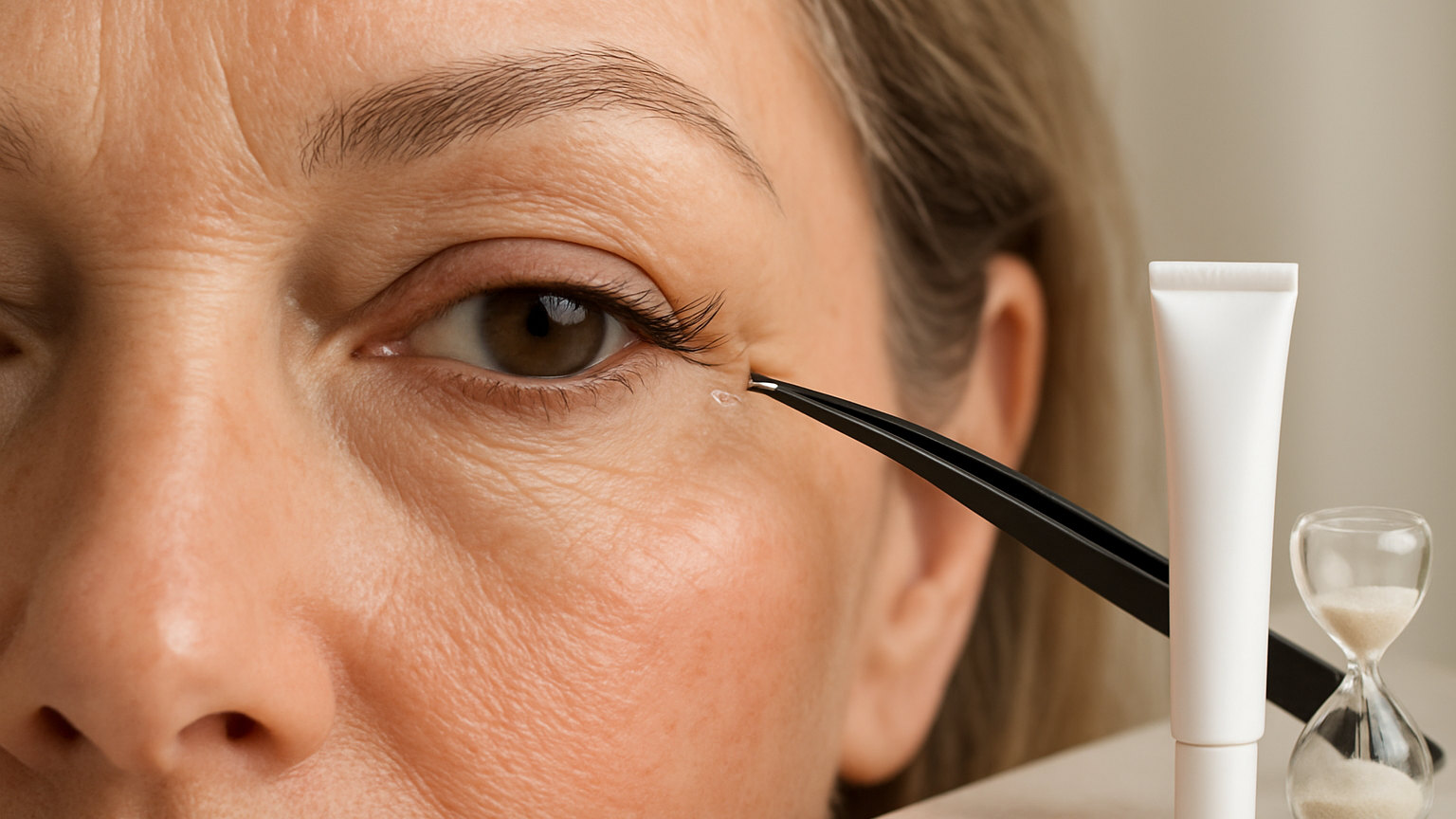
False lashes fail in two ways: the glue is not ready, and the strip does not fit. Both are avoidable, and neither has anything to do with how expensive the lashes are.
What are the options?
Strip lashes, a full band applied in one piece. Easiest to remove, most obvious if misapplied, and reusable.
Cluster or individual lashes, applied in small sections along the lash line. More natural, more fiddly, and better for adding to specific areas.
Magnetic lashes, which sandwich the natural lashes between two strips or attach to a magnetic liner. No glue, easier to remove, and less secure.
Self-adhesive strips, which are convenient and generally less reliable than applying glue yourself.
How do you make them fit?
Measure the strip against your lash line before applying anything. Most strips are made longer than the average eye.
Trim from the outer end, never the inner, since the inner lashes are shorter and shaped for the corner. Cut a little at a time.
The strip should start a few millimetres from the inner corner rather than at it, which is the most common placement error and the reason lashes feel like they are poking the corner of the eye.
Bend the band into a curve and hold it for a few seconds before applying, which helps it follow the shape of the lid.
How long should you wait for the glue?
Thirty to sixty seconds, which is the single most important detail and the one most often skipped.
Applied wet, glue slides and will not hold. Waiting until it becomes tacky rather than liquid is what makes the difference between lashes that stay put and lashes that lift at the corner by lunchtime.
Apply a thin line along the band, slightly heavier at each end, using the applicator or a cocktail stick rather than squeezing directly from the tube.
What is the technique?
Curl your natural lashes and apply mascara first, which gives the false lashes something to grip and blends the two.
Look down into a mirror held below eye level rather than straight ahead, which gives a clear view of the lash line.
Place the centre of the band first, as close to the natural lash line as possible without touching the waterline. Then press down the inner corner, then the outer.
Push the false lashes and your natural ones together gently with a fingertip or the back of tweezers to blend them.
Tweezers or a lash applicator give considerably more control than fingers.
How do you hide the band?
Eyeliner over the top, applied after the lashes are on, which covers any visible glue and creates a continuous line.
Black glue rather than clear, which dries dark and disguises itself. Clear glue is better for anyone not wearing liner.
Placing them close enough to the natural lash line matters more than any covering. A gap is what makes them look applied.
How do you remove them?
Not by pulling, which takes natural lashes with them and is the main cause of damage.
Soak a cotton bud in micellar water or an oil-based remover and hold it against the band for twenty to thirty seconds to dissolve the glue.
Then peel gently from the outer corner inward. It should come away with no resistance.
Remove them every night. Sleeping in false lashes leads to lash loss and eye irritation.
How do you clean and reuse them?
Peel the dried glue off the band with tweezers immediately after removal, while it is still soft.
Clean the lashes with micellar water on a cotton bud, working from base to tip. Let them dry on a clean surface and return them to the case, which keeps the shape.
Good quality strips last ten to twenty wears. Discard them when the band warps or the lashes become sparse.
What are the risks?
Allergic reaction to the glue, which contains latex in some formulations and cyanoacrylate in others. Patch test on the inner wrist before a first use.
Eye irritation and infection from glue contacting the eye or from reusing dirty lashes.
Traction damage from repeated pulling. And blepharitis from glue residue accumulating along the lash line, which is why proper removal every night matters.


